
10 Best Eco Friendly Pest Control Solutions for Your Home
You walk into the kitchen at 7 a.m. and find a trail of ants marching across your counter — straight toward last night’s crumbs. Your first instinct might be to grab a can of spray, but then your toddler wanders in barefoot, or your dog starts sniffing around the cabinet. Suddenly, dousing your kitchen in chemical pesticides doesn’t feel like the right move.
You’re not alone. More homeowners are making the switch to eco friendly pest control — not because it’s trendy, but because it genuinely works, and it keeps the people (and animals) you love out of harm’s way. This guide covers the best natural pest control methods, top products you can buy today, and even DIY recipes you can mix up at home.
Why Choose Eco Friendly Pest Control Over Conventional Methods?
Conventional pesticides typically contain synthetic pyrethroids, organophosphates, or neonicotinoids — compounds that are effective at killing insects but come with a list of concerns for household exposure. The EPA and the
National Pesticide Information Center (NPIC)
both acknowledge that repeated or high-level exposure to certain chemical pesticides has been linked to neurological effects in children and toxicity risks for pets, particularly cats and small dogs.
Non-toxic pest control, by contrast, relies on mechanisms that are either physically abrasive, biologically targeted, or derived from plant compounds that break down quickly in the environment. Here’s how they stack up:
| Feature | Chemical Pest Control | Eco Friendly Pest Control |
|---|---|---|
| Active ingredients | Synthetic chemicals | Plant-based, mineral, or biological |
| Safe around kids & pets | Often not immediately | Generally yes, when used as directed |
| Environmental impact | Can persist in soil/water | Biodegrades relatively quickly |
| Effectiveness | Fast-acting, broad kill | Varies; best with consistent application |
| Residual odor/residue | Often strong | Mild to none |
| Cost | Low upfront | Comparable or slightly higher |
| Resistance risk | High over time | Lower for most methods |
The tradeoff is real: eco friendly options sometimes require more frequent application or a layered approach. But for a household with crawling babies or curious pets, that tradeoff is almost always worth it. This is the foundation of integrated pest management (IPM) — using the least-toxic method first, escalating only if needed, and focusing on prevention as much as elimination. The
EPA’s IPM principles page
is a great resource if you want to go deeper on this philosophy.
The Best Natural Pest Control Methods That Actually Work
1. Diatomaceous Earth (DE)
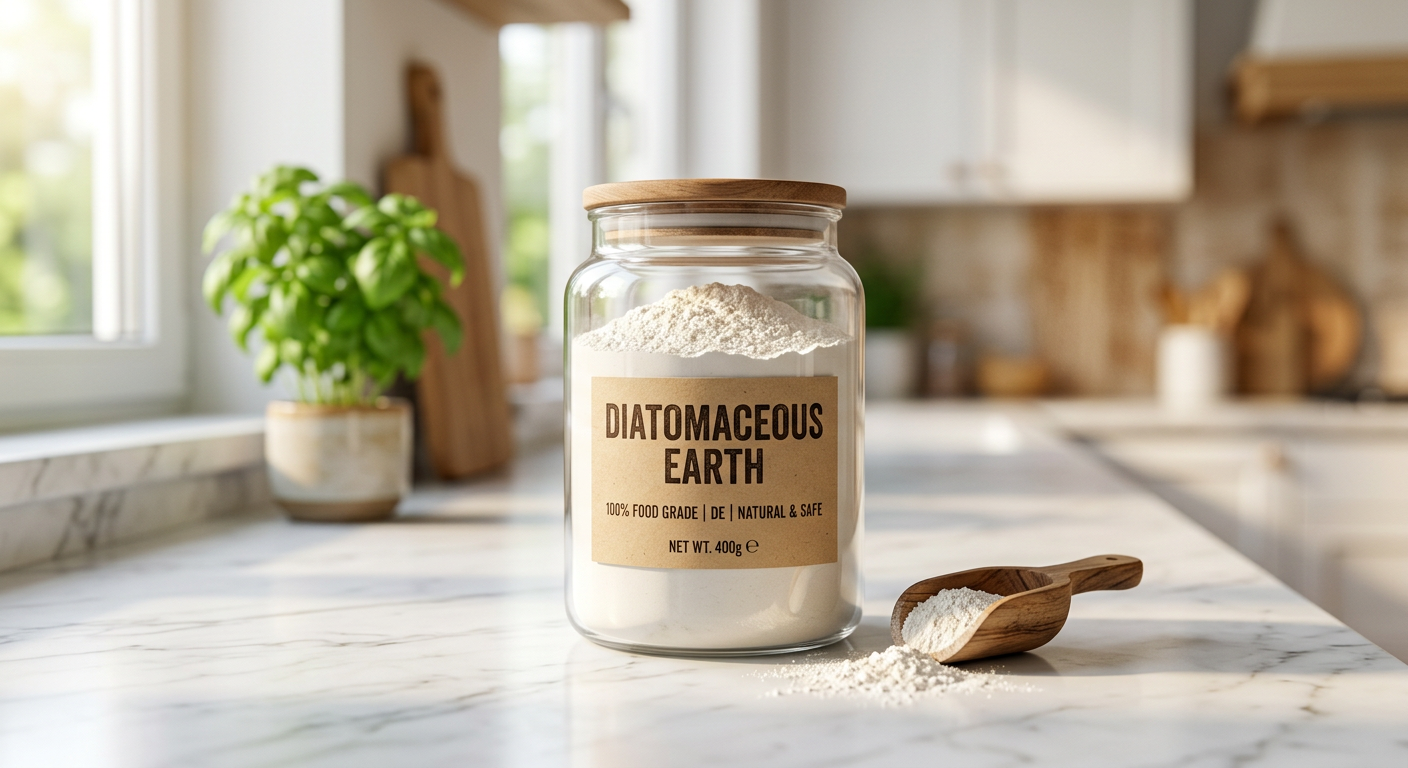
Diatomaceous earth is one of the most reliable tools in the natural pest control methods toolkit. It’s a fine powder made from fossilized algae, and while it looks harmless, its microscopic sharp edges cut through the exoskeletons of insects — causing them to dehydrate and die. It works on ants, roaches, fleas, bed bugs, and many beetles.
How to use it: Dust a thin layer along baseboards, under appliances, around door frames, and in cabinet corners. For outdoor use, apply around the perimeter of your home’s foundation. Always use food-grade diatomaceous earth (not pool-grade, which is chemically treated).
[image:1]
Pros: Inexpensive, long-lasting if kept dry, safe for humans and pets when food-grade
Cons: Must be reapplied after rain or mopping; inhaling large amounts of dust is irritating, so use a mask when applying
👉 Shop Food-Grade Diatomaceous Earth [AFFILIATE LINK]
2. Neem Oil
Neem oil is pressed from the seeds of the neem tree and contains a compound called azadirachtin, which disrupts the reproductive and feeding cycles of insects. It’s one of the most effective plant-based insecticides available and is widely used in organic gardening.
How to use it: Mix 2 tablespoons of neem oil concentrate with 1 teaspoon of mild liquid soap and 1 quart of warm water. Shake well and apply to plant leaves (top and bottom) or spray along entry points indoors.
Alt: “natural neem oil spray for organic pest control”
Pros: Effective on a wide range of pests, safe for beneficial insects when applied correctly (avoid spraying blooms), breaks down within days in soil
Cons: Has a strong garlic-like odor; needs reapplication every 7–14 days outdoors
👉 Shop Neem Oil Concentrate [AFFILIATE LINK]
3. Essential Oil Pest Sprays
Peppermint, eucalyptus, cedarwood, lavender, and clove oils are among the most effective essential oil pest sprays for deterring insects. Peppermint oil in particular is well-documented for repelling spiders, ants, and mice because they find the menthol compounds overwhelming.
How to use it: Add 10–15 drops of peppermint essential oil to a spray bottle with water and a small amount of dish soap (to emulsify). Spray along windowsills, door gaps, and anywhere you’ve seen pest activity.
👉 Shop Peppermint Oil Pest Spray [AFFILIATE LINK]
See also: Best Essential Oils for a Chemical-Free Home [INTERNAL LINK]
Top Eco Friendly Products for Indoor and Outdoor Pest Control
Top 7 Eco Friendly Pest Control Products We Recommend
-
Food-Grade Diatomaceous Earth — The all-purpose mechanical killer for crawling insects. Works on contact with no residual toxicity to mammals. Apply dry for best results.
👉 Shop Now [AFFILIATE LINK] -
Peppermint Oil Pest Spray (Ready-to-Use) — Pre-mixed sprays are convenient for quick application. Look for formulas that include clove and rosemary oil for broader coverage.
👉 Shop Now [AFFILIATE LINK] -
Neem Oil Concentrate — Dilute and apply as a foliar spray for garden pests or mix into a home perimeter spray. Best for aphids, fungus gnats, whiteflies, and more.
👉 Shop Now [AFFILIATE LINK] -
Ultrasonic Pest Repeller — These plug-in devices emit high-frequency sound waves that are inaudible to humans and most pets. Results vary, but they’re a low-effort, chemical-free home addition.
👉 Shop Now [AFFILIATE LINK] -
Cedar Wood Pest Repellent Blocks — Cedar contains natural oils that repel moths, silverfish, and spiders. Place in closets, drawers, and storage areas. Refresh with cedar oil when the scent fades.
👉 Shop Now [AFFILIATE LINK] -
Organic Insecticidal Soap Spray — Kills soft-bodied insects like aphids, mites, and mealybugs on contact by disrupting their cell membranes. Safe to use on vegetables up to the day of harvest.
👉 Shop Now [AFFILIATE LINK] -
Non-Toxic Ant Bait Stations — Borate-based bait stations attract foraging ants, which carry the bait back to the colony and eliminate it at the source. Enclosed stations keep bait away from children and pets.
👉 Shop Now [AFFILIATE LINK]
How to Make Your Own Non-Toxic Pest Repellents at Home
Organic pest repellent options don’t have to come from a store. Several highly effective blends use ingredients you likely already have.
All-Purpose Bug Spray
- 1 cup water
- 1 cup white vinegar
- 15 drops tea tree oil
- 10 drops peppermint oil
- 5 drops eucalyptus oil
Combine in a spray bottle, shake before each use, and apply along baseboards, entryways, and under sinks. Particularly effective for ants and spiders and leaves no harmful residue.
Outdoor Mosquito Deterrent
- 1 cup witch hazel
- 30 drops citronella oil
- 20 drops lemon eucalyptus oil
- 10 drops lavender oil
Spray on outdoor furniture, porch screens, and plant pots (avoid spraying on blooms to protect pollinators). Reapply every 4–6 hours.
Roach-Repelling Powder
Mix equal parts baking soda and sugar. Sugar lures roaches; baking soda disrupts their digestive system when ingested. Sprinkle behind appliances and inside cabinet corners. Combine with a ring of diatomaceous earth for a one-two punch.
See also: DIY Home Pest Prevention Tips [INTERNAL LINK]
Eco Friendly Pest Control for Specific Pests
Ants
The key with ants is disrupting the scent trail and eliminating the colony, not just the visible workers. Spray peppermint oil along their entry trail to break pheromone signals. Follow up with non-toxic bait stations so workers carry the bait back to the queen. Seal cracks with caulk once the trail is inactive.
Mosquitoes
Remove standing water first — even a bottle cap holds enough water for mosquito larvae. Add Bacillus thuringiensis israelensis (Bti) dunks to birdbaths and rain barrels; this naturally occurring bacteria kills larvae without harming wildlife. Plant citronella, lemon balm, or catnip near seating areas as passive deterrents.
See also: How to Keep Mosquitoes Out of Your Yard Naturally [INTERNAL LINK]
Roaches
Roaches are harder to eliminate with single-ingredient solutions, but a layered approach is very effective. Apply diatomaceous earth in dark, humid areas (under the fridge, inside cabinet hinges). Place borate-based bait stations near their activity zones. Reduce moisture with a dehumidifier and seal food in airtight containers.
Spiders
Most household spiders are actually beneficial (they eat other pests), but if you’d rather they stayed outside, essential oil sprays work well. Peppermint and tea tree oil applied along window frames and in corners will keep them from settling in. Cedar blocks in storage areas act as a passive deterrent.
Our Top Eco Friendly Pest Control Picks
Here’s a quick-reference guide to our top-recommended products for families with kids and pets:
Best mechanical killer for crawling insects; safe, affordable, and long-lasting.
Shop Now [AFFILIATE LINK]
Convenient ready-to-use formula for ants, spiders, and general deterrence.
Shop Now [AFFILIATE LINK]
Best for garden and outdoor pests; powerful plant-based insecticide.
Shop Now [AFFILIATE LINK]
Low-maintenance plug-in option for ongoing passive protection.
Shop Now [AFFILIATE LINK]
Perfect for closets and storage; naturally repels moths and silverfish.
Shop Now [AFFILIATE LINK]
Essential for vegetable gardens; kills on contact with no harmful residue.
Shop Now [AFFILIATE LINK]
The most effective way to eliminate ant colonies without open chemical exposure.
Shop Now [AFFILIATE LINK]
Frequently Asked Questions
Is eco friendly pest control effective against serious infestations?
Yes, but it often requires a multi-method approach and more patience than chemical sprays. For severe infestations — particularly roaches, termites, or bed bugs — you may need to combine several natural methods simultaneously (bait stations + diatomaceous earth + essential oil barriers) and maintain them consistently for 2–4 weeks. For structural pest issues like termites, consult a pest management professional who offers IPM-based treatments.
What is the safest pest control method for homes with pets?
Food-grade diatomaceous earth and plant-based essential oil sprays are among the safest options. Avoid products containing tea tree oil around cats specifically, as felines can’t metabolize certain terpenes. Borate-based ant baits are also safe when used in enclosed stations that prevent direct pet contact. Always check product labels for species-specific warnings.
Can I make my own natural pest repellent at home?
Absolutely. A simple mix of peppermint essential oil, white vinegar, and water makes an effective spray for ants and spiders. Baking soda and sugar can deter roaches, while citronella and lemon eucalyptus oil work well as outdoor mosquito repellents. Full recipes are in the DIY section above.
How does diatomaceous earth kill insects?
Diatomaceous earth works mechanically, not chemically. The microscopic fossilized algae particles have sharp edges that pierce an insect’s outer waxy layer (the cuticle). Once that protective barrier is compromised, the insect loses moisture rapidly and dies from dehydration — typically within 24–72 hours. Because it’s a physical process, insects cannot develop resistance to it the way they can to chemical pesticides.
Make the Switch — Your Family Will Thank You
Dealing with pests is frustrating enough without adding the worry of chemical exposure to the mix. The good news is that eco friendly pest control has come a long way — today’s natural options are more effective, more accessible, and more affordable than ever before.
Whether you start with a jar of food-grade diatomaceous earth under the sink or build out a full layered system using neem oil, cedar blocks, and bait stations, every step toward natural pest control methods is a step toward a healthier home. Your kids can crawl on the kitchen floor. Your dog can sniff along the baseboards. And you can sleep knowing you didn’t trade one problem for another.
Ready to get started? Browse our top picks above, and don’t forget to check out our guides on
how to keep mosquitoes out of your yard naturally and
DIY home pest prevention tips for even more ways to pest-proof your home the safe way.
Ready to protect your family with safer, smarter pest control?