This post contains affiliate links. If you buy something through one of my links, I may earn a small commission at no extra cost to you. I only recommend products I’ve actually tested or researched thoroughly.
The Room-by-Room Zero Waste Home Swap Guide You’ll Actually Use
For two years I thought I was making progress on zero waste home swaps. Turns out I was just moving plastic from one drawer to another. The kitchen looked cleaner. The bathroom still had six bottles of stuff I couldn’t pronounce. I wasn’t reducing waste — I was reorganizing it.
This guide covers the swaps that actually stuck for me, room by room. Kitchen first, then bathroom, then laundry. No overwhelming lists. No “buy everything at once” energy. Just the replacements that cut the most plastic and chemicals with the least friction — tested in a real apartment, in 2026, by someone who is not naturally a minimalist.
- Zero waste home swaps work best when you go room by room — not all at once
- The kitchen is the highest-impact starting point (dishes, food storage, paper towels)
- Bathroom swaps target the most chemical-heavy products: cleaner, shampoo, soap packaging
- Laundry swaps reduce both plastic waste and synthetic fragrance exposure
- You don’t need to replace everything — even 3-4 swaps per room makes a real difference
Why Starting Room by Room Actually Works
Most zero waste guides hand you a list of 47 things to buy and call it a plan. That’s not a plan. That’s a reason to close the tab and do nothing.
Going room by room works because it gives you a single focus. You finish one space, you see the result, and you actually want to keep going. I started with my kitchen because that’s where I used the most single-use plastic. One month in, I’d cut out paper towels, plastic wrap, and four cleaning products. The bathroom came next. The laundry room was last — and honestly the easiest once I’d built the habit.
According to the EPA’s waste reduction guidelines, the average American generates over 4 pounds of trash per day. A significant portion of that comes from single-use household products that have direct reusable replacements. That’s not a guilt trip — it’s a signal that small swaps add up fast.
Kitchen Zero Waste Swaps: The Highest-Impact Room
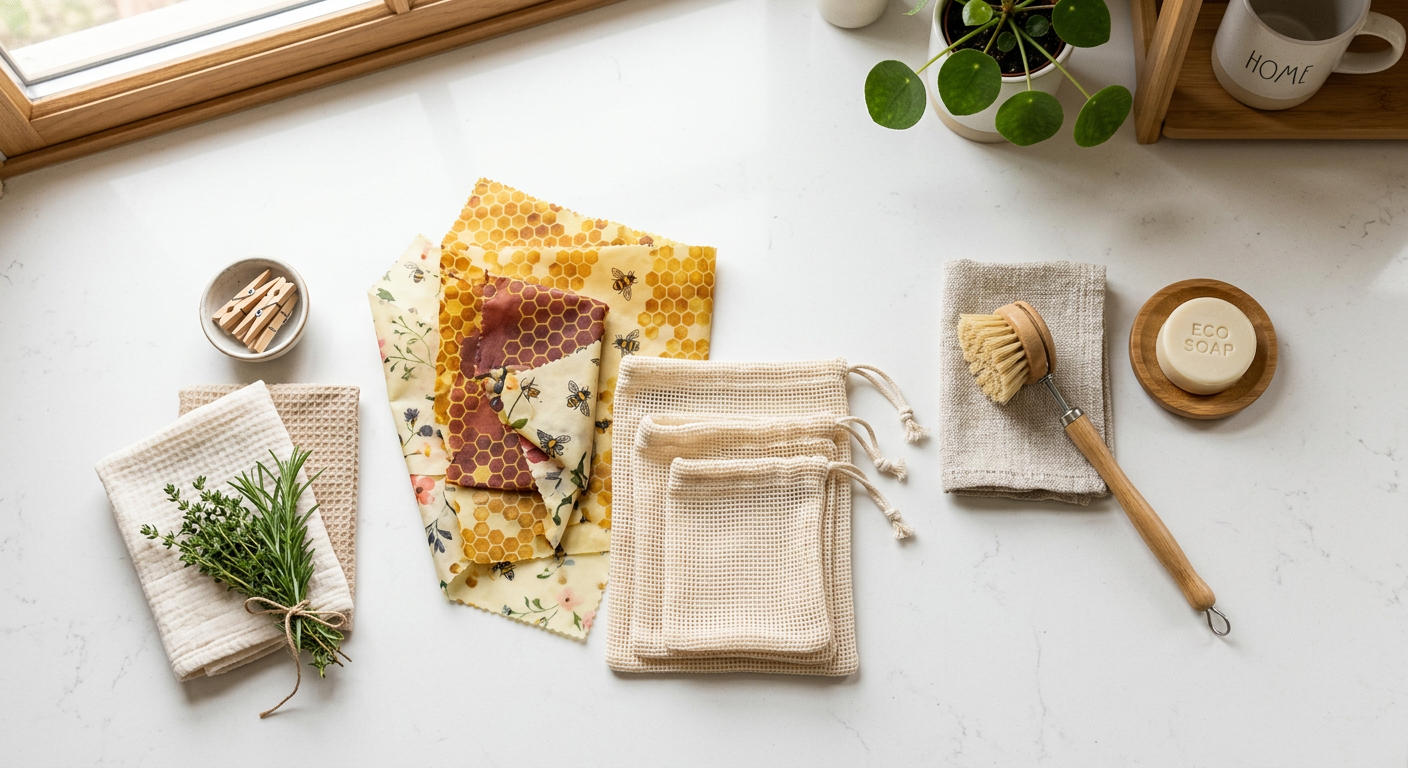
The kitchen is where most household plastic waste originates. Paper towels, plastic wrap, single-use bags, dish soap bottles — it adds up to a lot of trash for one room. The good news is that every single one of those has a direct, affordable replacement.
Paper Towels — Best Swap for Everyday Spills and Messes
Swedish dishcloths are the one swap I recommend to literally everyone. They’re made from cellulose and cotton, absorb 20 times their weight in liquid, and one cloth replaces up to 17 rolls of paper towels according to the manufacturer. They’re also compostable at end of life. My parents were skeptical. Now my dad won’t use anything else.
The trade-off: they take a day or two to dry fully between uses, so you’ll want two or three on rotation.
Replaces up to 17 rolls of paper towels, machine washable, fully compostable.
Plastic Wrap — Best Swap for Covering Bowls and Wrapping Food
Beeswax wrap is the most requested swap I get asked about. It’s made from organic cotton coated in beeswax, tree resin, and jojoba oil — no polyethylene, no PVDC. The warmth of your hands molds it around bowls, half-cut fruit, or leftover sandwiches. It’s not airtight the way plastic wrap is, which is the honest trade-off. Don’t use it for raw meat.
I grabbed a set for my own kitchen after noticing I was going through a roll of plastic wrap every two weeks. I’ve had the same three beeswax wraps for eight months.
GOTS-certified organic cotton, beeswax coating, reusable for up to a year with proper care.
Dish Soap — Best Swap to Cut Plastic Bottles
Dish soap bars or concentrated refillable bottles are the easiest kitchen swap most people overlook. A single dish soap bar from a brand like Meliora or Blueland lasts as long as 2-3 plastic bottles of liquid soap, ships in cardboard, and skips the bottle entirely. The EWG’s Guide to Healthy Cleaning gives many liquid dish soaps poor marks for synthetic fragrance and preservative load — bar format naturally avoids most of those additives.
Trade-off: you’ll need a dish brush or scrubbing pad to work it into a lather, which means an extra 10 seconds per wash. Worth it.
Certified B Corp, palm-oil-free, biodegradable formula, ships in a cardboard sleeve.
Bathroom Zero Waste Swaps: Cutting Chemicals and Plastic Bottles
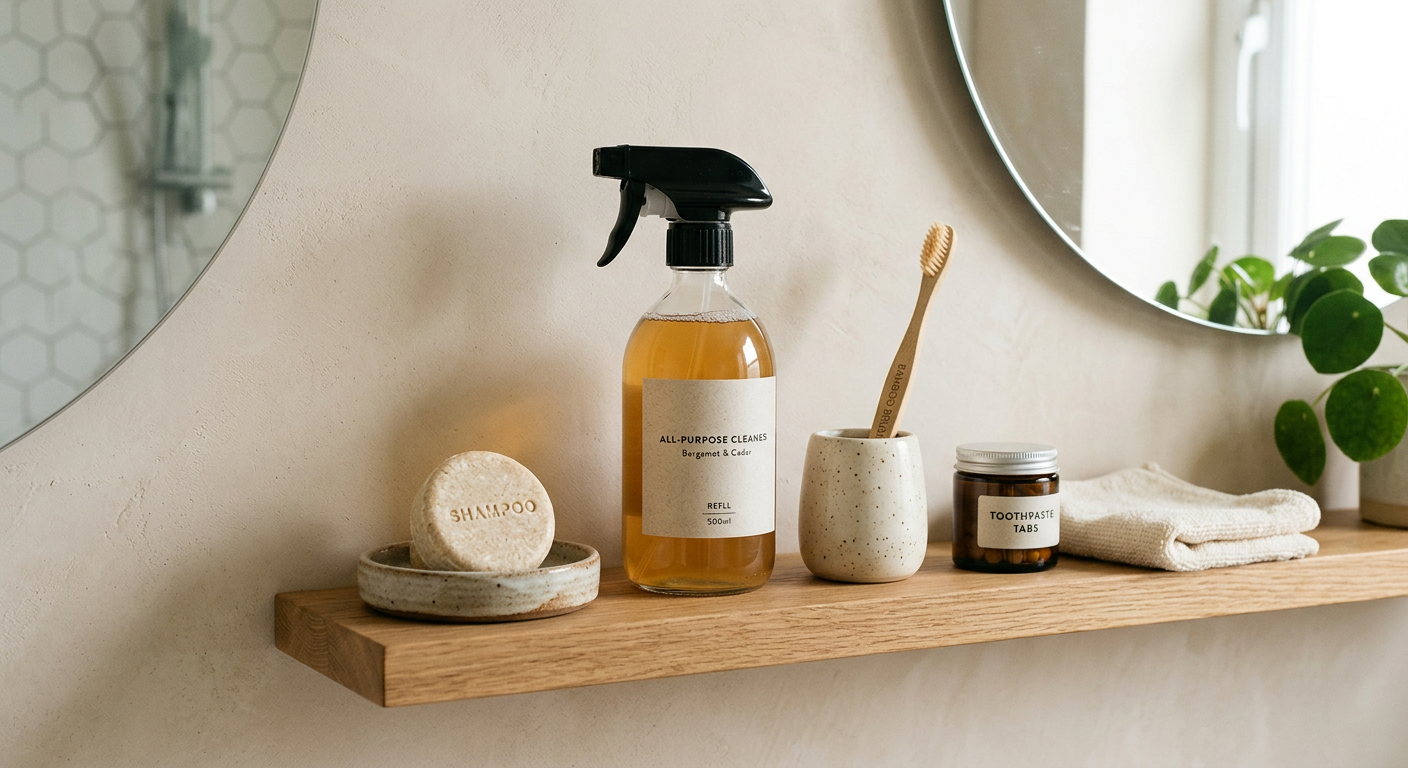
The bathroom is where most households have the highest concentration of synthetic fragrance, preservatives, and single-use plastic. Shampoo bottles, conditioner bottles, body wash, toilet cleaner — it’s a lot of plastic for a small room.
I tackled my bathroom second, and honestly it took longer because I was more attached to my routines. That’s fair. Swap one thing at a time and give it a real trial — at least two to three weeks before deciding it doesn’t work.
Shampoo — Best Swap for Cutting Bottle Waste
Shampoo bars have gotten genuinely good in the last few years. The ones worth using are sulfate-free, pH-balanced, and don’t leave residue — which was the main complaint about early versions. Ethique is the brand I’ve tried most. Their bars are carbon-neutral certified and one bar equals roughly three liquid bottles. The adjustment period is real — your scalp may take one to two weeks to recalibrate oil production. That’s not a flaw, that’s your hair adjusting to not being stripped by harsh surfactants.
My brother asked me what I switched to after noticing my bathroom had zero bottles on the shower shelf. He’s been using the same bar for two months now.
Carbon-neutral certified, sulfate-free, one bar replaces three liquid bottles, ships in compostable packaging.
Bathroom Cleaner — Best Swap for Safer Scrubbing
Most conventional bathroom cleaners contain quaternary ammonium compounds (quats) — disinfectants that the NIH flags as respiratory and skin irritants with repeated exposure. Refillable concentrate systems from brands like Blueland or Branch Basics cut both the chemicals and the single-use bottles in one move. You buy the bottle once and refill with a tablet or concentrate that ships in minimal packaging.
I’ve been using Branch Basics in my bathroom for about six months. It cuts through soap scum without any fumes — which matters in a small bathroom with no window.
EWG Verified, fragrance-free, one concentrate bottle refills multiple product types including bathroom, all-purpose, and glass cleaner.
Laundry Room Zero Waste Swaps: Plastic-Free and Low-Fragrance
The laundry room is the easiest room to swap — and the one most people leave for last. Two products cover almost the entire footprint: detergent and dryer sheets.
Most conventional dryer sheets are single-use, non-recyclable, and coated in synthetic fragrance that the American Lung Association links to indoor air quality concerns. Wool dryer balls replace them entirely. You get 1,000+ loads per set, zero fragrance unless you add a drop of essential oil yourself, and they reduce dry time by 10 to 25 percent by separating clothes in the drum.
For detergent, laundry sheets are the clearest swap. Brands like Tru Earth ship a year’s worth of strips in a cardboard envelope. No plastic jug, no measuring, no spill risk. I sent a pack to my parents because my mom was skeptical that something that thin could actually clean. She’s been using them for four months.
Best Laundry Sheet — For Everyday Loads Without the Plastic Jug
Hypoallergenic, phosphate-free, ships in a recyclable cardboard sleeve — no plastic packaging at any stage.
Best Wool Dryer Balls — For Replacing Dryer Sheets Long-Term
GOTS-certified organic wool, lasts 1,000+ loads, reduces dry time and static without synthetic fragrance.
All 7 Picks at a Glance
Use this table to find the right swap for where you’re starting. You don’t need all seven — pick the one or two that cover the biggest waste source in your home right now.
| Product | Best For | Key Feature | Choose This If… |
|---|---|---|---|
| Wettex Swedish Dishcloth | Replacing paper towels | Replaces 17 rolls, compostable | you go through a roll of paper towels every week |
| Bee’s Wrap 3-Pack | Replacing plastic wrap | GOTS organic cotton, reusable 1 year | you wrap leftovers daily and hate buying plastic wrap |
| Meliora Dish Soap Bar | Replacing liquid dish soap bottles | B Corp, palm-oil-free, cardboard only | you want to cut plastic from the kitchen sink area |
| Ethique Shampoo Bar | Replacing shampoo bottles | Carbon-neutral, equals 3 liquid bottles | your shower shelf has more than 3 bottles on it right now |
| Branch Basics Bathroom Kit | Replacing bathroom cleaner | EWG Verified, refillable, fragrance-free | you clean a small bathroom with poor ventilation |
| Tru Earth Eco-Strips | Replacing laundry detergent jugs | Plastic-free packaging, hypoallergenic | your parents or family asked you what detergent to switch to |
| Friendsheep Dryer Balls | Replacing dryer sheets | GOTS wool, 1,000+ loads | you want to cut fragrance and synthetic chemicals from laundry |
Most people start with either the kitchen or laundry room and see the biggest visible difference there. If you want the single highest-impact swap across all three rooms, the dryer ball set saves the most money and eliminates the most recurring waste over time.
Frequently Asked Questions About Zero Waste Home Swaps
Start with the room where you throw away the most single-use items every week. For most people that’s the kitchen — paper towels, plastic wrap, and dish soap bottles are the top three. Swap one thing, use it up, then move to the next. Trying to overhaul everything at once usually leads to abandoning the whole thing.
Most are, yes. Wool dryer balls last 1,000+ loads. Swedish dishcloths replace 17 rolls of paper towels each. Beeswax wraps last up to a year. The upfront cost is higher, but the cost per use drops significantly after the first few months.
They work on most hair types, but there’s a 1-2 week adjustment period while your scalp recalibrates. During that window your hair may feel heavier or greasier than usual. That’s normal. If it doesn’t improve after two weeks, try a different bar formula — bars for oily hair have different surfactant ratios than bars for dry or color-treated hair.
In the U.S., not much. The term isn’t regulated by the EPA or FTC in a way that requires third-party testing. Look for EWG Verified, NSF/ANSI 305, or USDA Certified Biobased labels instead — those require actual documentation.
No. Beeswax wrap can’t be sanitized at high enough temperatures to safely cover raw meat. Use a reusable silicone bag or a glass container with a lid for that instead.
Three to five targeted swaps in a single room cuts most of the plastic waste in that space. You don’t need to replace every product. Focus on what you use most often and throw away most frequently — that’s where the impact is.