
This post contains affiliate links. If you purchase through our links, we may earn a small commission at no extra cost to you.
Non-Toxic Sunscreen for the Whole Family: Clean Picks for 2026
Most sunscreens at your local drugstore contain oxybenzone. Hawaii banned it. The FDA flagged it. Yet millions of families are rubbing it on their kids every single day.
I dug into this after years of grabbing the same bottle without checking the label. What I found changed how my family does sunscreen. By the end of this guide, you’ll know exactly which filters to avoid. You’ll also know which non-toxic sunscreen works best for every person in your home — babies, toddlers, kids, and adults with all kinds of skin.
- Skip these filters: oxybenzone, octinoxate, homosalate, and octisalate — all flagged by the FDA and EWG for safety concerns.
- Only truly safe active ingredients: zinc oxide and titanium dioxide — both mineral filters with strong safety records.
- Best overall family sunscreen: Native Mineral Sunscreen — clean zinc-only formula, easy to find, and free from oxybenzone and parabens.
- Best for babies and toddlers: Thinkbaby Safe Sunscreen — the first baby product ever to pass the Whole Foods Premium Body Care Standard.
- Mineral sunscreen can leave a white cast — but newer formulas have improved a lot, and a few picks below barely show at all.
The Chemical Sunscreen Ingredients the FDA Still Hasn’t Cleared
What you put on your skin doesn’t stay there. It absorbs — fast.
Here’s the part that surprised me most. In 2019, the FDA said only two sunscreen ingredients had enough safety data to call safe. Those two were zinc oxide and titanium dioxide. Every common chemical filter landed in a “needs more data” group. That was years ago. The data still hasn’t come in. But those same chemicals are still in most drugstore sunscreens.
Here’s what to watch for on labels:
- Oxybenzone: Absorbs into the blood within hours of use (at the levels found in most sunscreens) — Hawaii banned it in 2021 over reef damage, and EWG gives it their highest hazard score.
- Octinoxate: Shows up in human blood, urine, and breast milk in studies — banned with oxybenzone in Hawaii and Key West.
- Homosalate: Builds up in the body faster than it breaks down (at the levels found in most sunscreens) — the EU restricts it, but the U.S. does not.
- Octisalate and Octocrylene: Often paired with the above — octocrylene breaks down into benzophenone over time, a possible cancer-causing agent, especially in hot cars.
Now you know what to skip. Next, let’s talk about what to look for instead.
Why Mineral Sunscreen Is the Safer Pick in 2026
Mineral sunscreen has a bad rep it no longer deserves.
Real talk: I skipped it for years because of the white cast. I tried one and looked like I’d painted my face. Then I tried a few newer formulas. The difference was hard to believe — one blended almost fully into my skin.
Here’s why mineral sunscreen wins. Zinc oxide and titanium dioxide sit on top of your skin. They deflect UV rays instead of starting a chemical reaction in your body. They don’t absorb into your blood. They don’t break down in heat. And they block both UVA and UVB rays with no chemical trade-off.
But not every mineral sunscreen is clean. Some still sneak in fake fragrance, parabens, or harsh preservatives alongside the zinc. The right labels tell you which ones truly cleared every test.
Certifications Worth Trusting on Sunscreen Labels
“Zinc oxide and titanium dioxide are the only two sunscreen ingredients the FDA has confirmed as safe and effective. Everything else is still waiting on the data.”
The Best Non-Toxic Sunscreens for Your Family in 2026
Every pick here uses only zinc oxide or titanium dioxide as active ingredients.
I’ve tested most of these across different activities and skin tones. Several have been my top picks for at least a full summer. Here’s the honest breakdown.
Native Mineral Sunscreen — Best Overall Family Pick
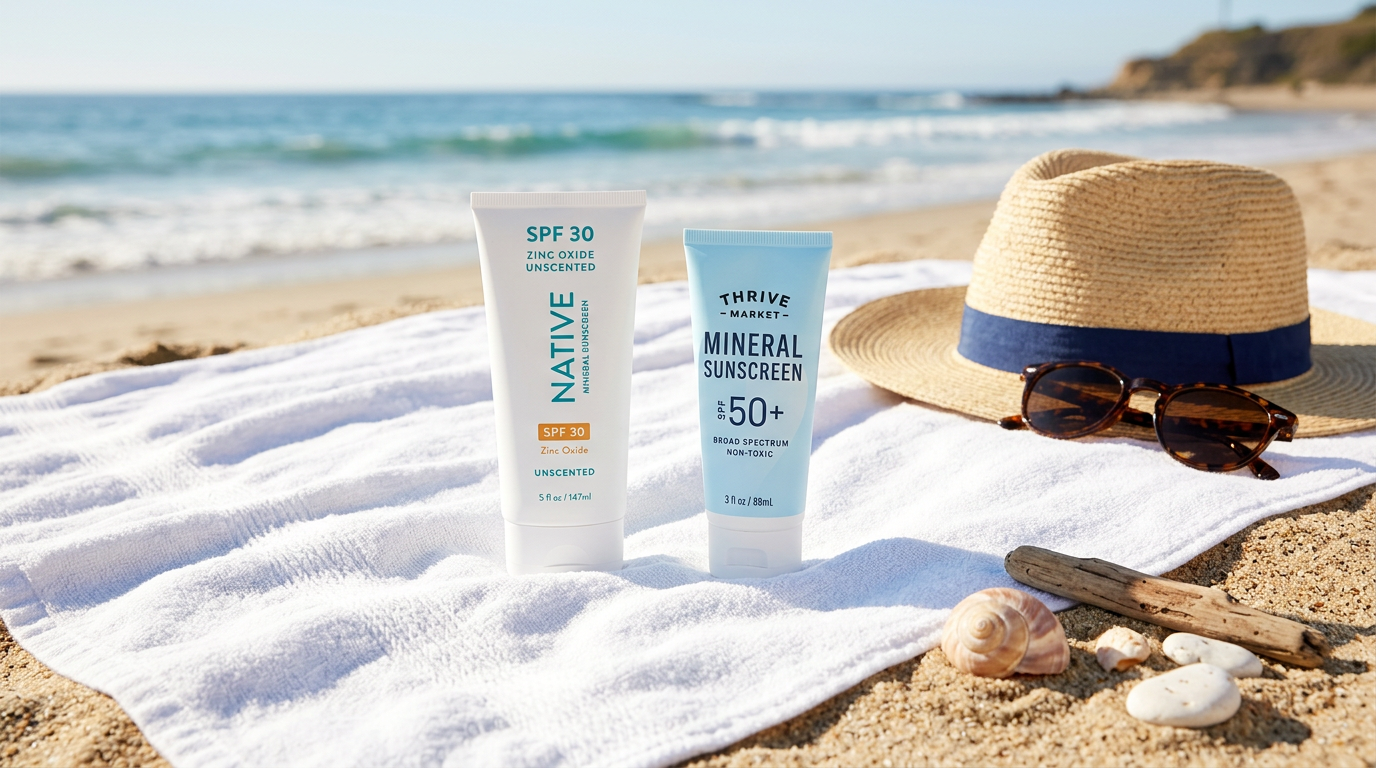
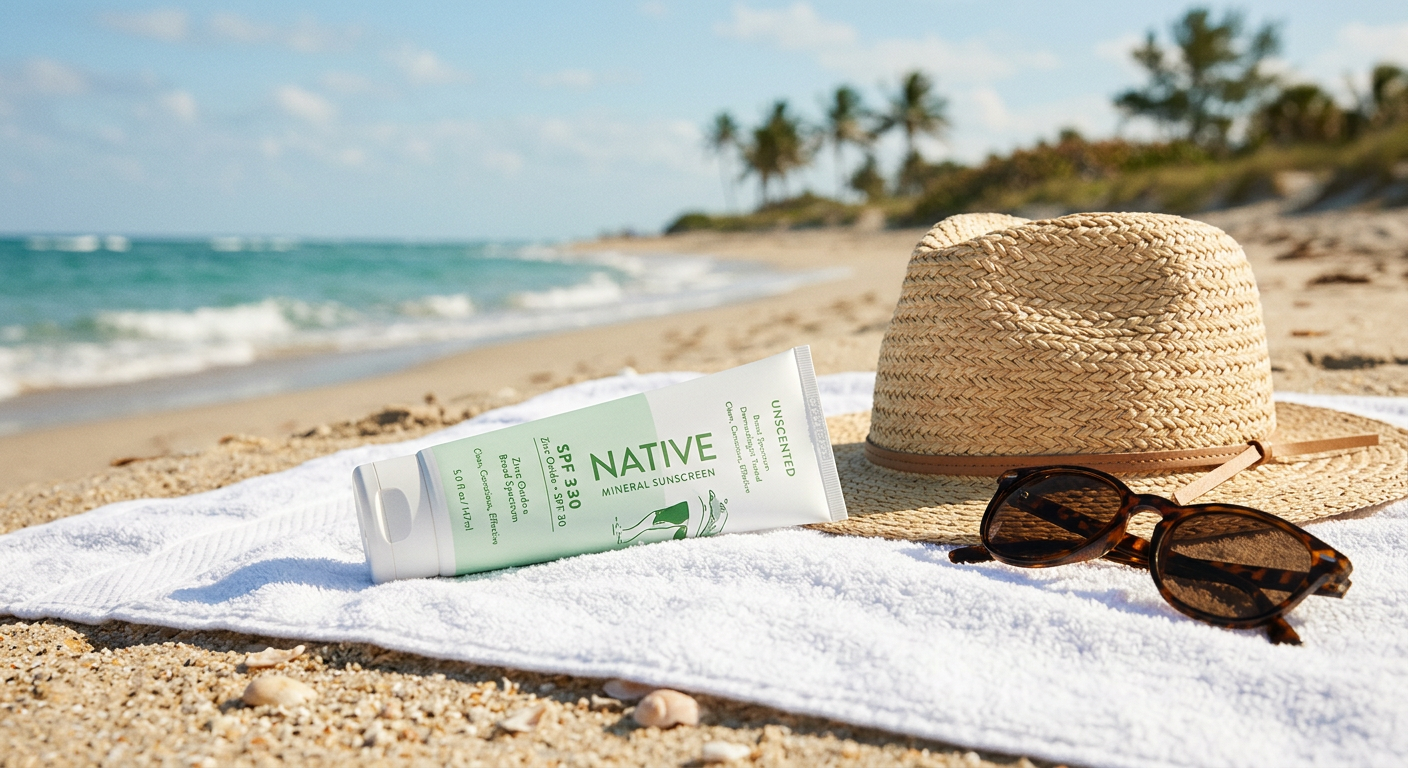
Native is the first one I tell people about. It’s clean, easy to find at Target and Walmart, and built around one active ingredient: zinc oxide. No oxybenzone, no fake fragrance, no parabens. The unscented SPF 30 lotion has just 15 ingredients total — one of the shortest clean lists at a drugstore price.
It’s not the fanciest formula here. But for a product you put on multiple people, many times a day, all summer — that short ingredient list is exactly what you want.
My top family pick — zinc oxide only, free from oxybenzone and parabens, and easy to grab at most drugstores or online.
Thinkbaby Safe Sunscreen SPF 50+ — Best for Babies and Toddlers
Thinkbaby was the first baby sunscreen to pass the Whole Foods Premium Body Care Standard. Zinc oxide only, water-resistant for 80 minutes, free from parabens, PABA, phthalates, and fake fragrance. It goes on smooth and doesn’t cake on young skin the way some mineral options do.
Yes, the price runs higher than drugstore brands. But baby skin absorbs more than adult skin does. This is not the place to cut corners.
The cleanest baby sunscreen I’ve found — built for sensitive infant skin, not just a smaller tube of adult formula.
Attitude Mineral Sunscreen — Best EWG Verified Pick with Skin Benefits
Attitude’s sunscreen is EWG Verified, allergen-free, vegan, and adds aloe vera and vitamin E alongside the zinc. So it feels much more comfortable on adult face skin after hours in the sun. Also, Attitude makes a kids-specific version built for younger skin. Both are worth having in your bag.
The pick for skin that gets dry or tight under mineral sunscreen — the aloe and vitamin E make a real difference on a full beach day.
Thrive Market Mineral Sunscreen — Best Value for Thrive Members
Thrive Market’s own mineral sunscreen uses zinc oxide only and skips parabens and fake fragrance. It also costs much less through a Thrive membership. For families burning through sunscreen all summer, those savings add up fast — and the formula holds up well.
The most budget-friendly clean pick on this list for Thrive members — zinc-only and priced for the reality of applying sunscreen to a full family every day.
Thinksport Mineral Sunscreen Stick SPF 30+ — Best for On-the-Go Use
The stick format changes everything for reapplying on kids. No dripping, no mess, no chasing a squirming child around. Thinksport’s mineral stick is EWG Verified and uses non-nano zinc oxide. It also skips oxybenzone, parabens, phthalates, and fake fragrance entirely. Plus it’s water-resistant up to 80 minutes.
The parenting shortcut nobody talks about enough — an EWG Verified mineral stick that makes reapplication on active kids fast and mess-free.
Native Tinted Mineral Face Sunscreen — Best for Adult Face Use
Most people don’t know this about white cast: the fix often isn’t a new brand — it’s a tinted formula. Native’s tinted mineral face sunscreen uses 20% active zinc oxide and blends well on light to medium skin tones. It cuts the chalky finish that puts most people off mineral sunscreen for their face. Also, it’s fragrance-free, dermatologist-tested, and light enough to wear under makeup or on its own.
The face sunscreen that finally solved the white cast problem for me — blends like a tinted moisturizer and leaves zero grey finish behind.
Every Pick Side by Side — Find Your Match Fast
Different ages, skin types, and summer plans need different formulas — use this table to find your fit fast.
| Product | Best For | SPF | Format | Choose This If… |
|---|---|---|---|---|
| Native Mineral SPF 30/50 | Best overall family pick | 30 or 50 | Lotion | You want a clean zinc-only formula at a drugstore price |
| Thinkbaby SPF 50+ | Babies and toddlers | 50+ | Lotion | Your child is under 3 or has very sensitive skin |
| Attitude Mineral Sunscreen | EWG Verified + skin benefits | 30 or 50 | Lotion | Mineral sunscreen feels drying on your skin |
| Thrive Market Mineral | Best Thrive member value | 30 | Lotion | You go through a lot of sunscreen and need to stretch your budget |
| Thinksport Mineral Stick | On-the-go kids reapplication | 30+ | Stick | You need EWG Verified, mess-free face use for active kids |
| Native Tinted Mineral Face | Adult face use | 30 | Tinted lotion | White cast has kept you away from mineral sunscreen |
One more thing before you decide: even the best mineral sunscreen only works if you use enough. Most people put on about 25–50% of the right amount. The rule is one ounce — a full shot glass — for a full body use. For just your face and neck, a nickel-sized amount works. More than you think. Every single time.

Frequently Asked Questions About Non-Toxic Sunscreen
A non-toxic sunscreen uses only mineral active ingredients — zinc oxide and titanium dioxide — instead of chemical filters like oxybenzone or homosalate. It also skips fake fragrance, parabens, and phthalates. The fastest check is EWG Verified approval or a score of 1–2 on EWG’s Skin Deep database — look up any brand before you buy.
Based on what we know now, yes. The FDA said in 2019 that zinc oxide and titanium dioxide are the only two sunscreen ingredients with enough safety data to be called safe and effective. Chemical filters like oxybenzone absorb into the blood within hours of use. Several have been restricted by regulators in the EU and Hawaii. For daily family use, mineral formulas are the safer pick.
Yes — the AAP recommends mineral sunscreen for babies over six months old. For babies under six months, keep them out of direct sun instead of using any sunscreen at all. For infants and toddlers, choose a zinc-only formula like Thinkbaby built for young skin — not just an adult formula in a smaller tube.
A few things actually help. First, apply to slightly damp skin and blend in small circles. Then try a tinted formula for your face. Also, look for newer mineral options with finer zinc particles. Native Tinted and Attitude both blend well enough that the cast is barely visible on light to medium skin tones. Deeper skin tones tend to do best with tinted formulas.
Reapply every two hours during sun exposure. Also reapply right after swimming or heavy sweating — even if the label says water-resistant. Water-resistant means it holds up for 40 or 80 minutes in water, not all day. A higher SPF number doesn’t change this rule. Set a phone timer if you lose track of time outside.
Yes. Zinc oxide is actually a broader UV blocker than most chemical filters — it covers both UVA and UVB rays well. The main difference is texture and feel, not how well it protects you. Use the right amount — about a shot glass for full body coverage — and reapply every two hours. Modern mineral formulas have closed the texture gap a lot.