Best Eco Friendly Deodorant That Actually Works All Day
This post has affiliate links. As an Amazon Associate I earn from qualifying purchases, at no extra cost to you. How I pick products.
Natural deodorant gets a bad name because of the first two weeks. Here is what the research actually shows about that stretch, and six eco friendly deodorant picks that held up after it.
Key Takeaways
- Deodorant and antiperspirant do two different jobs. One fights odor, while the other blocks sweat. So switching means your sweat comes back, and that is normal.
- Your armpit bacteria bounce back within days of stopping, not weeks. A Penn State study measured the change over eight days.
- Skip any stick that hides its scent behind the single word fragrance, and skip high-dose baking soda if your skin reacts.
- The aluminum worry is weaker than most blogs claim. Going without is still a fine choice, just not an urgent one.
- Give one stick two full weeks before you judge it. Because most people quit on day four.
One July a few years back I gave up on natural deodorant in the parking lot of a grocery store. I had been using it for nine days. Then I bought the old aluminum stick, used it in the car, and felt both relieved and a little defeated.
Here is the part nobody had told me. Because day nine is roughly the worst of it.
So I want to give you the thing I did not have. First, a clear picture of what happens to your skin in those two weeks. Then six sticks that are worth your money once you are through.
Deodorant and antiperspirant are not the same product
Get this one straight and the rest makes sense.
Most drugstore sticks are antiperspirants. They use aluminum salts to plug your sweat ducts so less sweat reaches the surface. That is why the U.S. treats them as over-the-counter drugs rather than cosmetics.
Deodorant does something else. It does not block sweat at all. Instead, it goes after the bacteria that turn your sweat into smell.
So when you switch and suddenly feel damp again, nothing has gone wrong. Your body is doing what it always did. You just stopped muting it, so now you notice.
What really happens in the first two weeks
This is where most guides get it wrong.
You will read that your skin bacteria need one to three weeks to reset. There is no study behind that number. There is one study that measured what actually happens.
Researchers at Penn State ran an eight-day experiment, published in PeerJ. People used their normal products on day one, stopped for days two through six, then went back to antiperspirant for the last two days.
Two findings stand out. First, the bacteria came back fast. Counts on day five were much higher than on day one or two. Second, the mix of bacteria changed. People who stopped for two or more days ended up dominated by Staphylococcaceae. Lifelong non-users, however, were dominated by Corynebacterium, the group most tied to armpit odor.
Worth knowing
That last detail is the useful one. Long-term non-users and brand-new quitters do not have the same armpits, even though both go without. Your skin really is settling into a different normal, and it takes longer than the five days that study covered. So two weeks is a fair bet. Still, nobody has pinned down the exact number.
Most people quit natural deodorant during the stretch where it is supposed to be bad, then decide the product failed.
One more thing, because it matters for your skin.
You will also see advice to rub a paste of bentonite clay and apple cider vinegar under your arms to speed this up. Please do not. There is no evidence it shortens anything. Worse, vinegar strong enough to sit on skin for fifteen minutes can burn it. Dermatology journals carry case reports of exactly that. One is a chemical burn from topical apple cider vinegar in the Journal of the American Academy of Dermatology.
Wash with plain soap and water. Wait it out. That is the whole method.
What to look for on the label, and what to skip
I used to check for the words aluminum-free and stop there. That is not enough, because plenty of aluminum-free sticks still bother sensitive skin.
Worth looking for
- Magnesium hydroxide fights odor and is the usual swap in sticks built for reactive skin.
- Arrowroot powder soaks up damp without plugging anything.
- Coconut oil or shea butter keeps the stick gliding and is easy on the skin barrier.
- Zinc ricinoleate traps odor molecules and suits most skin types.
- A full ingredient list. A brand that prints all of it is telling you something.
Reasons I put a stick back
- Fragrance with nothing after it. That one word can stand for a whole blend, and the blend does not have to be listed.
- Heavy baking soda if your skin reacts. More on why below.
- Propylene glycol, a common cause of contact rash for some people with daily use.
- Parabens, mostly because they are easy to avoid now. The health case is weaker than you have been told.
Why baking soda stings
Healthy skin sits on the acid side. A study of more than 300 people in the International Journal of Cosmetic Science found natural skin surface pH averages below 5. Baking soda is strongly alkaline, so daily use pushes your skin the wrong way. Some people never notice. Others get red and itchy in a week.
The six eco friendly deodorant picks I would actually buy
Each one gets the annoying part too, because each one has one.
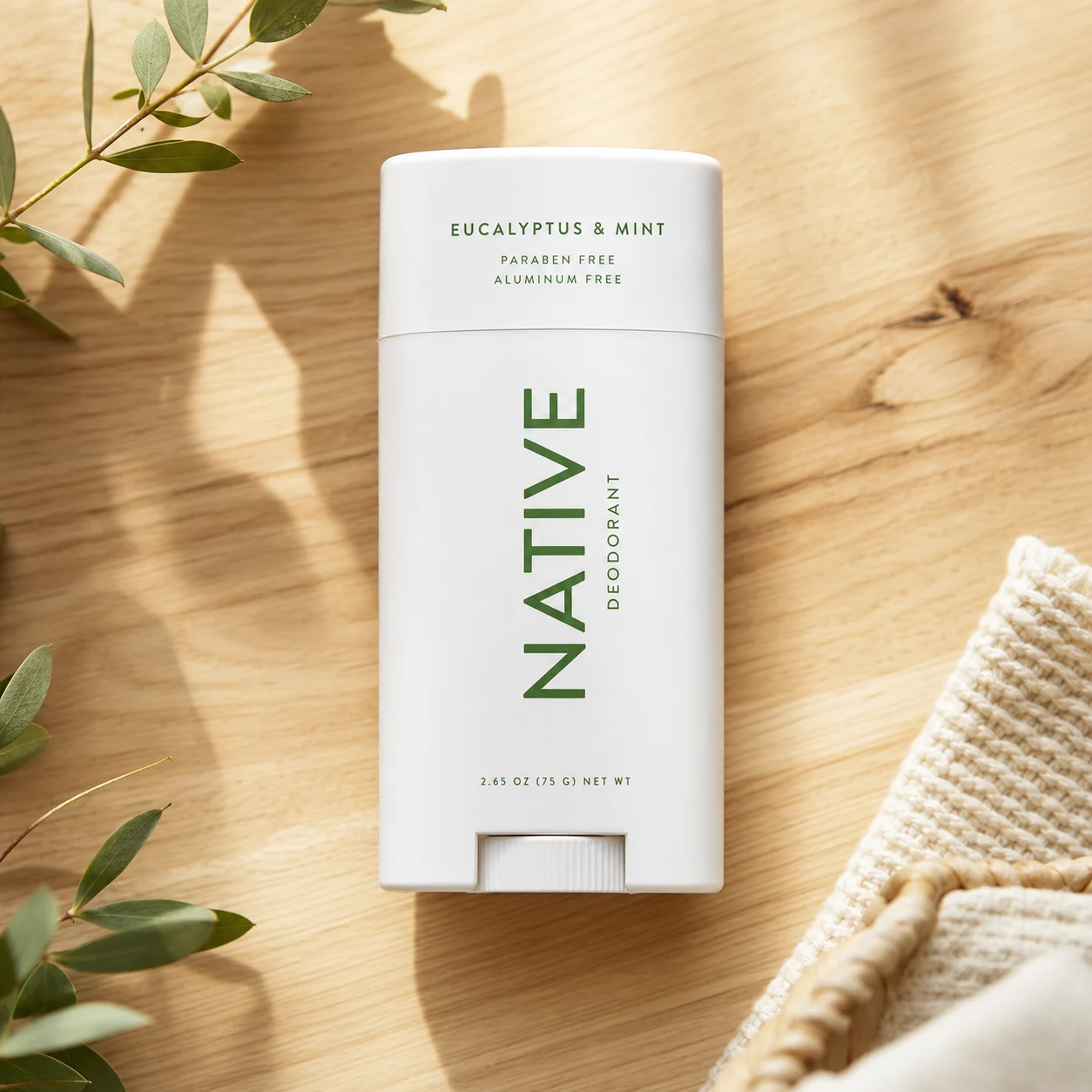
1. Native — best first switch
Best for: people leaving antiperspirant Contains baking soda: yes
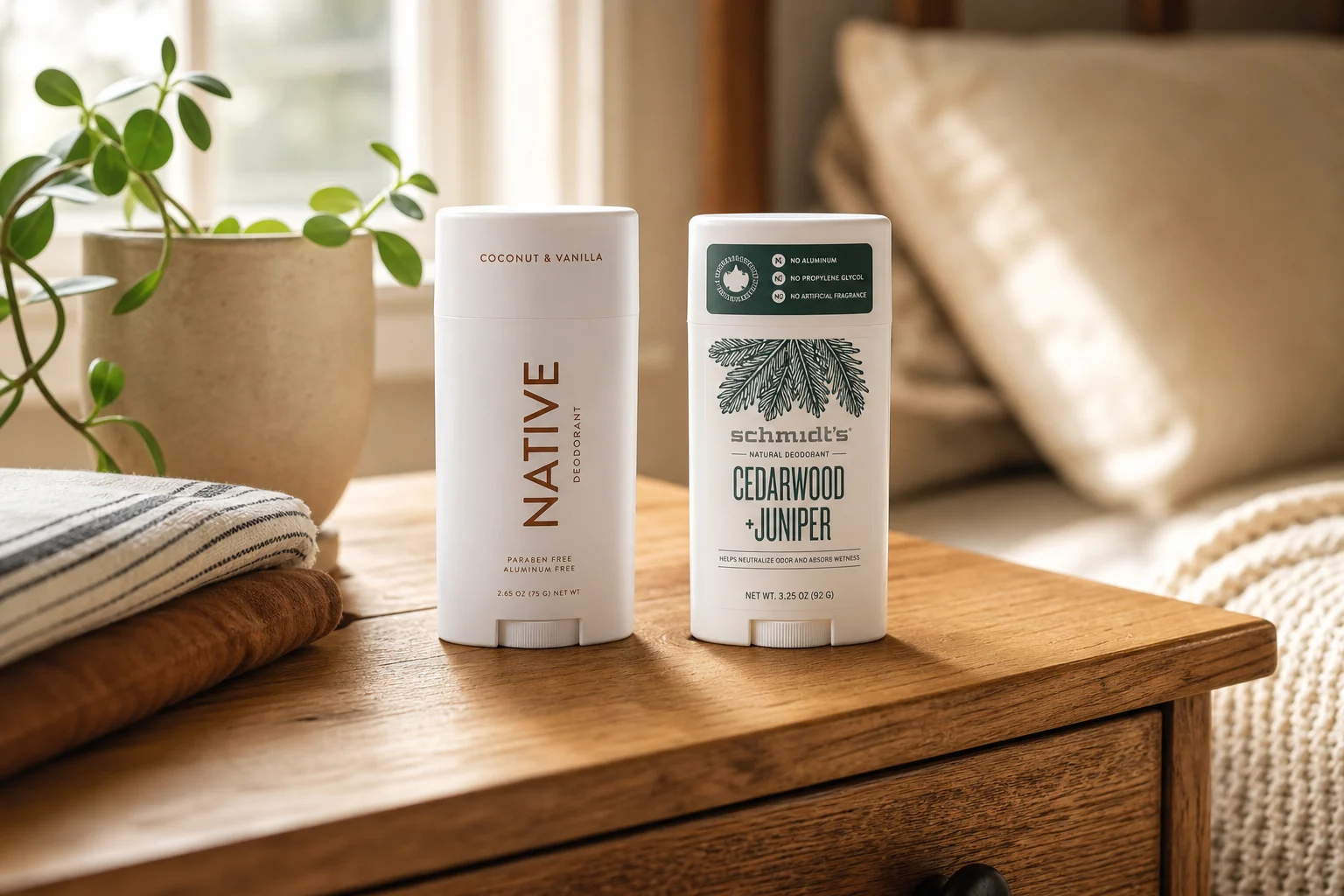
This was the first one that got me through a whole workday. Coconut oil, shea butter, and baking soda, with a short list overall. It is the easiest place to start because it is cheap, it is everywhere, and it works for most people.
The annoying part: the baking soda. If your skin is reactive, this is the pick most likely to give you a rash. Native sells a sensitive version without it, and that is the one to grab if you already know you react.
2. Schmidt’s Sensitive Skin — best if baking soda burns you
Best for: skin that already reacted Contains baking soda: no
Magnesium and shea butter do the work here instead of baking soda. So if you tried a natural stick, got red and itchy, and gave up, start here. Try it before you decide the whole category is not for you.
The annoying part: it is a softer formula, so it wears off sooner on a hot day than the baking soda sticks do. That is the trade.
3. Attitude Super Leaves — best short ingredient list
Best for: label readers Contains baking soda: no
Baking soda free, vegan, and built on plant-based odor fighters. Also, the line is rated across several scents in EWG’s Skin Deep database. That is where I go first when I want a second opinion on an ingredient list.
The annoying part: it is not EWG Verified. Skin Deep gives a hazard score to almost any product, while EWG VERIFIED is a separate paid certification, and those are not the same thing. The formula reads well, but it has a rating, not a certification.
4. Kosas Chemistry AHA — best for skin that hates sticks
Best for: rashes and dark spots Format: serum, not a stick
This one is a roll-on serum built on alpha hydroxy acid, which is a mild acid that lifts dead skin cells. Aloe and hyaluronic acid soften it. Because it is a clear liquid, it does not leave the white smear that stick formulas do.
The annoying part: it is the priciest per ounce here, and it feels wet for a minute after you put it on. You have to wait before you get dressed.
5. Ursa Major Hoppin’ Fresh — best no-stain stick
Best for: dark shirts Contains baking soda: no
Kaolin clay, which is a fine mineral that soaks up damp without plugging pores, plus plant-based odor fighters and no hidden fragrance blend. So it goes on nearly clear, and I have not had it mark a shirt.
The annoying part: the mint is strong for the first minute, and it costs about twice what the drugstore picks do.
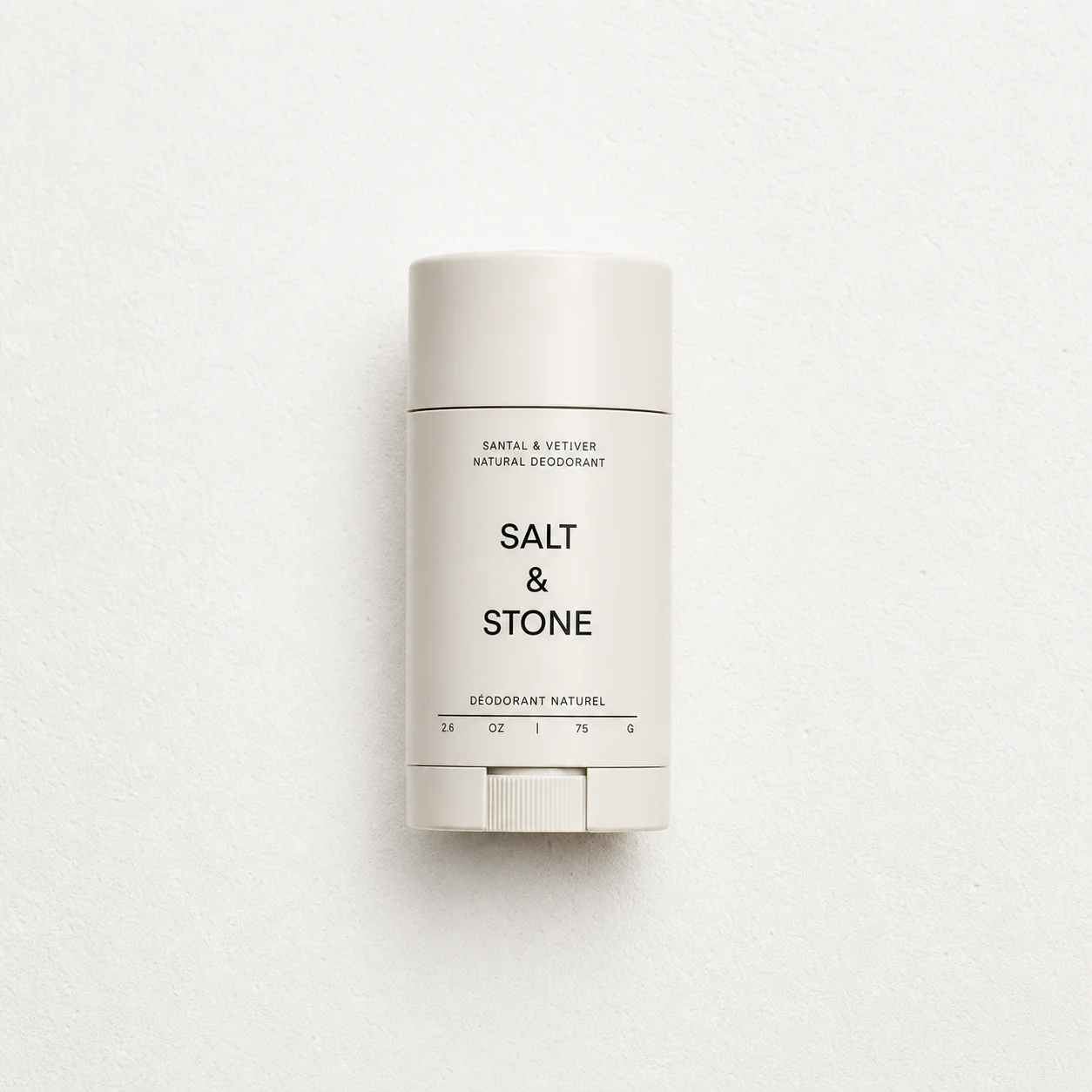
6. Salt & Stone — best splurge
Best for: long days Brand claim: 48-hour protection
Probiotics, shea butter, and coconut oil, with scents that feel like something off a hotel shelf rather than a pharmacy one. So it is the one I reach for before a long travel day.
The annoying part: the price. The 48-hour claim is the brand’s own number, not a tested one, so treat it as a ceiling rather than a promise.
Where the aluminum worry actually stands
I want to be careful here, because this is the claim eco blogs get wrong most often.
The National Cancer Institute is blunt about it. In its fact sheet on antiperspirants, the agency says no study to date has confirmed a substantial adverse effect of aluminum tied to breast cancer risk. It adds that no scientific evidence links these products to breast cancer. On parabens it says the same kind of thing. They have been found in breast tumors, but there is no evidence they cause the tumors.
Europe looked at aluminum too. You may read that the EU restricted it over hormone worries. It did not. The EU’s science committee concluded in 2020 that aluminum is safe in antiperspirants up to 6.25% in non-spray and 10.6% in spray form. Also, the question it was weighing was total aluminum in the body from all sources. Diet is the biggest one. Not hormones.
So why go aluminum free
Because you would rather sweat than block it, because a short ingredient list suits you, or because the scents are better. Those are good reasons. Fear of a proven health harm is not one, and a blog that tells you otherwise is selling you something.
When a natural stick is not the right call
I would rather you keep this up for years than quit in a month, so here is where I think the switch is wrong.
- You sweat enough that it affects your work or your clothes. A deodorant does not reduce sweat. An antiperspirant does. If dampness is the problem, the natural stick is not a solution.
- You have a rash that is not settling. Redness that lasts past a week or two, or that spreads, is worth a doctor’s look rather than a fourth new stick.
- You just shaved. Give it a few hours either way. Fresh nicks plus any active formula is a bad mix.
- You have one big day coming. Do not start the switch the week of a wedding. Start it on a quiet stretch.
All six side by side
| Stick | Best for | Baking soda | Pick it if |
|---|---|---|---|
| Native | First switch | Yes | You want the cheap, proven starting point |
| Schmidt’s Sensitive | Reactive skin | No | A natural stick gave you a rash before |
| Attitude Super Leaves | Label readers | No | You want a short, rated ingredient list |
| Kosas Chemistry AHA | Dark spots | No | Every stick has irritated you |
| Ursa Major | Dark shirts | No | You are tired of white marks |
| Salt & Stone | Long days | No | You want it to feel like a treat |
Start with one stick and set a reminder
So pick the one that matches your skin, not the one with the best photos.
Then put a note in your phone for fourteen days out. That single step is the whole trick. Day four is when you will want to quit. But day fourteen is when you will actually know. Wash with soap and water in between. Nothing fancy.
If two weeks pass and it still is not working, the formula is wrong for you, not the idea. Move down the list.
Once this one sticks, the same slow, one-product approach works for the rest of your bathroom shelf. My eco friendly hair wash guide and my mineral sunscreen picks for the whole family are good next steps.
Frequently asked questions
Does eco friendly deodorant actually work all day?
It works differently. A deodorant fights the bacteria that cause odor but does not stop sweat, so you will still feel damp. Most clean formulas hold odor for a normal workday once your skin settles. On a hot or active day, a midday reapply is normal rather than a sign of failure.
Why do I smell worse in the first week?
Your armpit bacteria rebound once you stop blocking them. A Penn State study found they rose sharply within five days. It also found that people who quit had a different bacterial mix than lifelong non-users. So give it two weeks. Wash with plain soap and water; skip vinegar or clay pastes.
Is the aluminum in antiperspirant harmful?
The evidence does not support the alarm. The National Cancer Institute says no study has confirmed a substantial adverse effect of aluminum tied to breast cancer risk. Europe’s science committee concluded in 2020 that aluminum is safe in antiperspirants at current use levels. Going without is a fine preference, not an urgent fix.
Why does baking soda deodorant cause a rash?
Healthy skin sits on the acid side, averaging below pH 5 according to research in the International Journal of Cosmetic Science. Baking soda is strongly alkaline, so daily use pushes skin the wrong way. Some people never react. If you do, switch to a magnesium, zinc, or acid-based formula instead.
Should I do a clay or vinegar armpit detox?
No. There is no evidence it shortens the transition, and apple cider vinegar left on skin has caused chemical burns in published dermatology case reports. Plain soap and water is enough. If your underarms are already irritated, leave them alone and let them heal before starting a new product.
How do I pick the right formula for me?
Start with whether baking soda bothers you. If it does, go to Schmidt’s Sensitive, Ursa Major, or Kosas. If it does not, Native is the cheapest way in. For long travel days, Salt and Stone lasts longest. Then give whichever you pick two full weeks before you judge it.
This is general information, not medical advice. If you have a rash that spreads, blisters, or lasts more than a couple of weeks, see a doctor or a dermatologist.
Sources (checked September 29, 2026)
- Urban et al., The effect of habitual and experimental antiperspirant and deodorant product use on the armpit microbiome, PeerJ, 2016 — the eight-day timeline, the rise in bacteria by day five, and the Staphylococcaceae and Corynebacterium finding.
- National Cancer Institute, Antiperspirants/Deodorants and Breast Cancer — no confirmed adverse effects of aluminum, no evidence linking these products to breast cancer, and the parabens finding.
- European Commission Scientific Committee on Consumer Safety, The safety of aluminium in cosmetic products, Submission II, 2020 — the 6.25% and 10.6% safe levels and the systemic-exposure basis.
- Bunick and Lott, Chemical burn from topical apple cider vinegar, Journal of the American Academy of Dermatology — the burn risk behind skipping the vinegar detox.
- Lambers et al., Natural skin surface pH is on average below 5, International Journal of Cosmetic Science, 2006 — the skin pH figure behind the baking soda section.
Which one are you on?
If you have tried one of these, send me a note about how week two went. That stretch is the part I most want to hear about, and it is the part that helps the next reader.