This post contains affiliate links. If you purchase through our links, we may earn a small commission at no extra cost to you.
10 Sustainable Living Habits for a Better Planet
You didn’t mean to fill three trash bags in one week. You didn’t plan to buy yet another plastic bottle of dish soap or toss a handful of single-use bags after a 10-minute grocery run. But here you are, looking at an overflowing recycling bin, and something in you says: this has to change.
That feeling has a name — climate anxiety — and it’s more common than you think. The good news is that sustainable living habits don’t require you to overhaul your entire life overnight. Small, consistent shifts in how you shop, cook, clean, and consume can genuinely reduce your carbon footprint and, compounded across millions of households, shift the trajectory of our planet. This guide is your realistic, judgment-free starting point.
Why We Need to Change for a Better Planet Right Now
The numbers are hard to ignore. Global temperatures have risen over 1.1°C above pre-industrial levels, extreme weather events are intensifying, and the equivalent of a garbage truck’s worth of plastic enters the ocean every single minute.
But here’s what’s true: household consumption accounts for roughly 60–70% of global greenhouse gas emissions when you factor in food, energy, transportation, and products. Individual and family choices matter enormously, especially when they drive demand away from wasteful industries and toward sustainable alternatives.
The goal isn’t perfection. It’s progress. Every piece of single-use plastic you replace, every habit you shift, sends a market signal that conscious consumerism is the new standard.
Easy Sustainable Living Habits You Can Start Today
The most effective eco-friendly lifestyle changes are the ones you’ll actually keep. These require zero special skills and very little extra money.
1. Switch to Reusable Everything
The average American uses 365 plastic bags per year — one per day. Swapping to reusable tote bags, produce bags, and silicone food storage bags is one of the fastest plastic-free swaps you can make.
→ Shop Reusable Silicone Food Storage Bags
2. Carry a Reusable Water Bottle
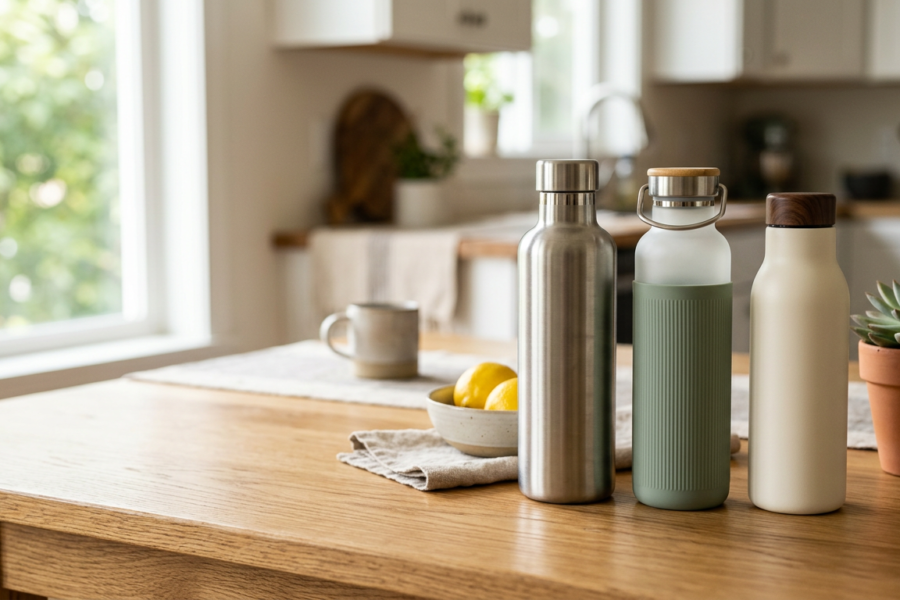
Single-use plastic bottles are one of the top sources of ocean plastic pollution. A quality stainless steel insulated bottle keeps drinks cold for 24 hours and hot for 12 — making it genuinely more convenient than disposable bottles.
→ Shop Stainless Steel Insulated Water Bottles
3. Start Composting Kitchen Scraps
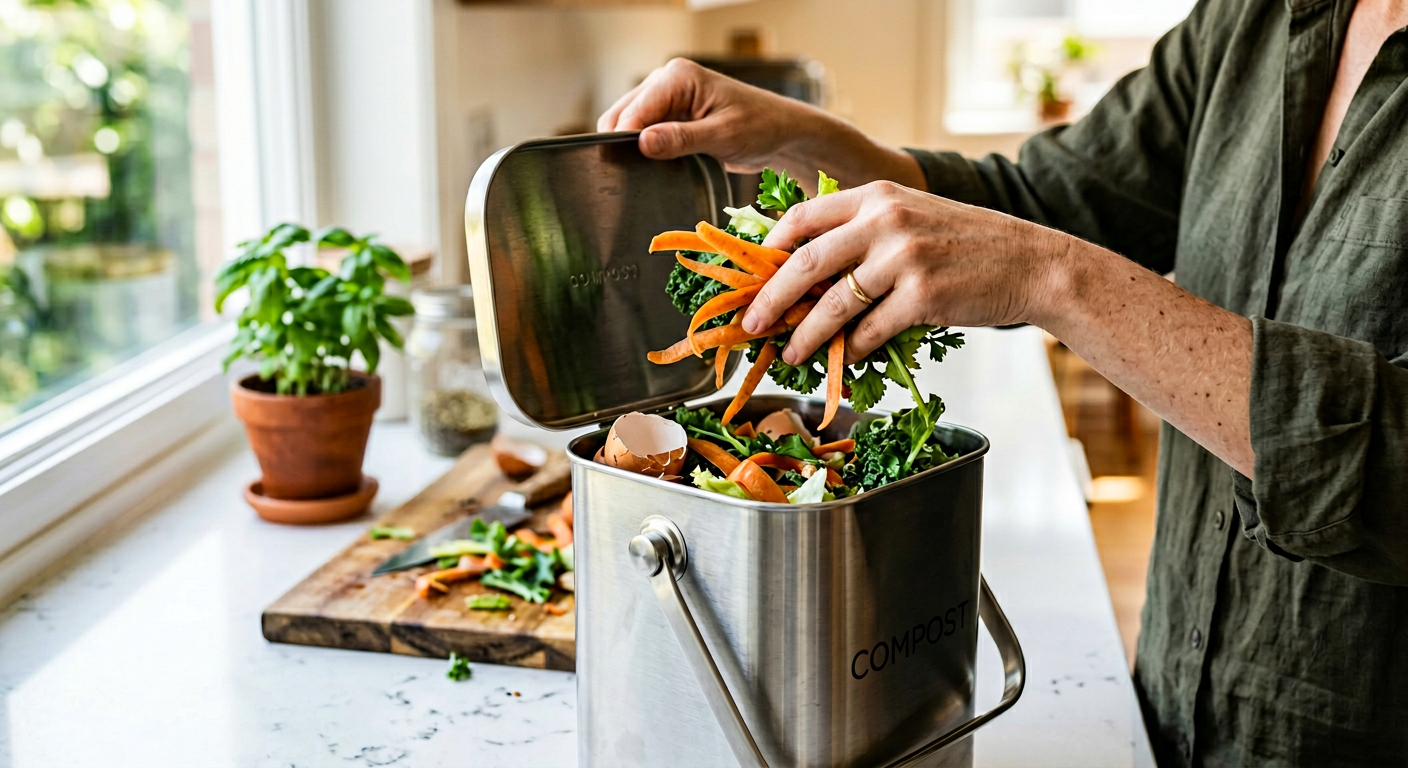
About 30–40% of the U.S. food supply goes to waste, and most ends up in landfills where it produces methane — a greenhouse gas far more potent than CO₂. A countertop compost bin makes it simple to divert vegetable peels, coffee grounds, and eggshells into something your garden can use.
→ Shop Countertop Kitchen Compost Bins
4. Choose Concentrated or Solid Cleaning Products
Standard cleaning products are 70–90% water. Switching to laundry detergent sheets, concentrated pod refills, or bar soap drastically reduces plastic packaging waste and your carbon footprint from shipping.
→ Shop Eco-Friendly Laundry Detergent Sheets
5. Swap Cling Wrap for Beeswax Wraps
Conventional plastic wrap is almost entirely non-recyclable. Beeswax wraps are washable, reusable for up to a year, and fully compostable at end of life. They work beautifully for covering bowls, wrapping sandwiches, and storing cut produce.
Top Eco-Friendly Product Swaps for a Zero Waste Home
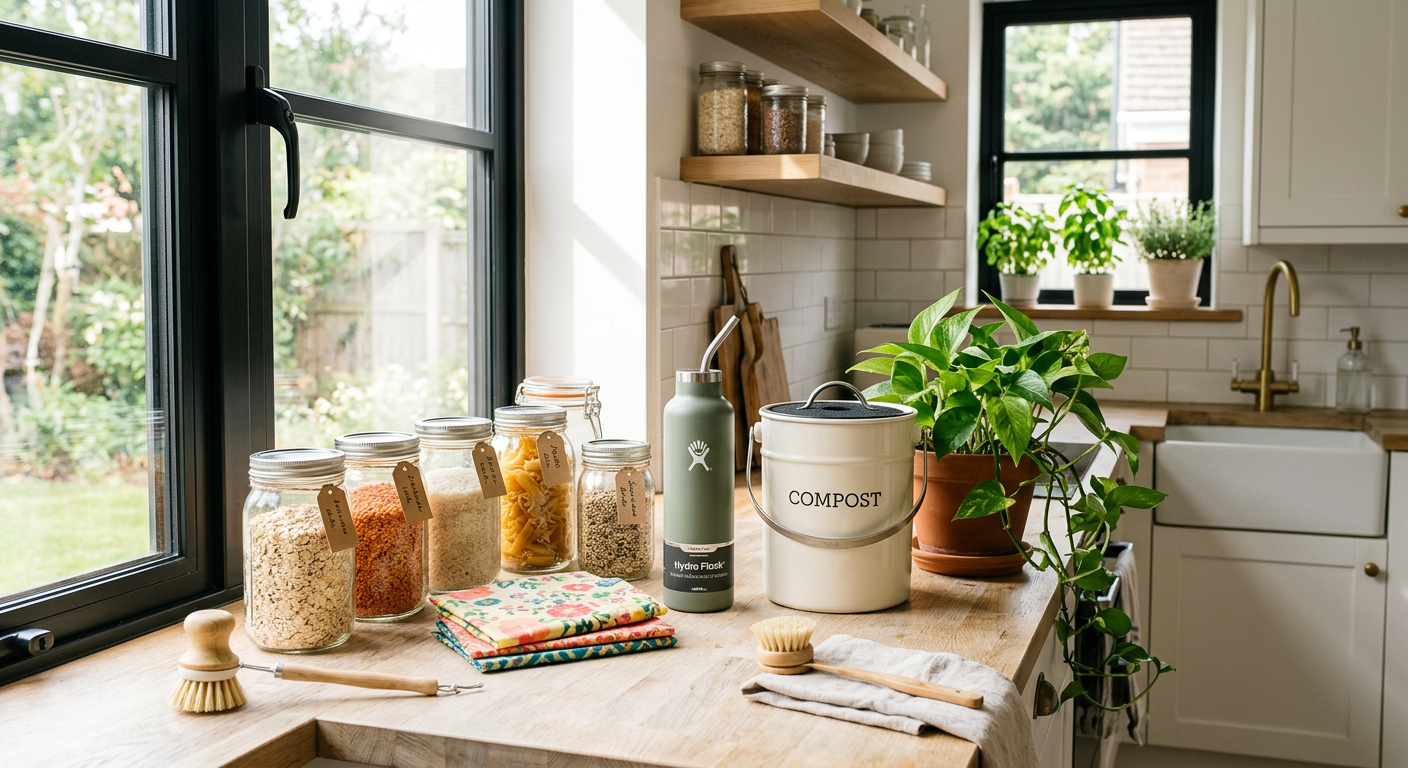
Making your home more sustainable doesn’t mean buying everything at once. Replace things as they run out — this is the most cost-effective approach to zero waste living.
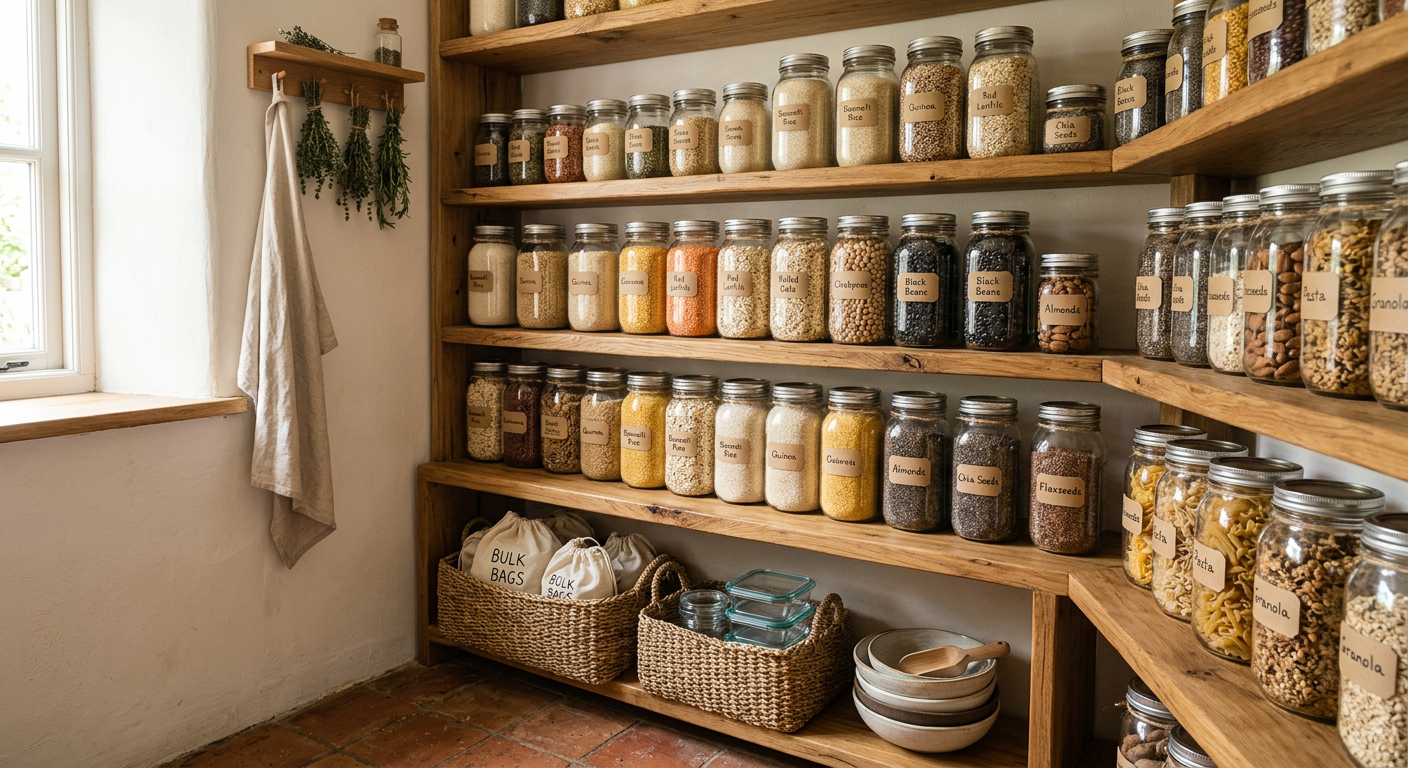
The Kitchen
- Replace plastic wrap → beeswax wraps
- Replace zip-lock bags → silicone storage bags
- Replace paper towels → washable cotton unpaper towels
- Replace disposable sponges → compostable cellulose sponges
Check out our full guide on how to start a zero waste kitchen for room-by-room tips and specific product picks.
The Bathroom
- Replace plastic toothbrushes → compostable bamboo toothbrushes — 4 billion plastic toothbrushes go to landfill every year globally
- Replace liquid shampoo in plastic bottles → shampoo bars
- Replace disposable cotton rounds → reusable cotton pads
The Laundry Room
- Replace chemical dryer sheets → reusable wool dryer balls — cut drying time by up to 25%, saving energy and money
- Wash clothes in cold water — 90% of a washing machine’s energy goes to heating water
The Wardrobe
Fast fashion is the second-largest polluter in the world. Swapping even 20% of new purchases for secondhand or ethically made clothing makes a significant difference. Read our guide to ethical and sustainable clothing brands for vetted options at every price point.
How to Reduce Your Daily Carbon Footprint
Beyond swapping products, sustainable living habits extend into daily routines that reshape your relationship with energy, food, and transportation.
Eat Less Meat — Even Just One Day a Week
Animal agriculture accounts for approximately 14.5% of global greenhouse gas emissions according to the UN Food and Agriculture Organization. Reducing meat consumption by one or two days per week — sometimes called “flexitarianism” — creates a measurable reduction in your carbon footprint. One “Meatless Monday” per person, sustained for a year, saves roughly the equivalent of driving 348 miles in carbon emissions.
Drive Less, Group More
Carpooling, consolidating errands into one trip, and keeping tires properly inflated are cost-saving climate change solutions. Walking or cycling for short trips under 2 miles is one of the highest-impact individual changes available.
Unplug Idle Electronics
“Vampire power” — electricity drawn by devices in standby mode — accounts for roughly 10% of residential electricity use. Smart power strips cut power to idle devices automatically and typically pay for themselves within a few months.
Sustainable Living Habits Room by Room
The Kitchen
- Plan meals before shopping to cut food waste
- Buy in bulk where possible using your own containers
- Compost consistently — even just coffee grounds and fruit peels to start
The Bathroom
- Take shorter showers — cutting 2 minutes saves up to 10 gallons per shower
- Fix dripping taps — a tap dripping once per second wastes 3,000 gallons per year
- Choose products with minimal or recyclable packaging
The Home Office
- Switch to a green energy supplier or install solar if feasible
- Print less; when you must, print double-sided on recycled paper
- Buy refurbished electronics instead of new when upgrading devices
Environmental Impact: Single-Use vs. Reusable Sustainable Home Products
| Item | Single-Use Version | Reusable Alternative | Est. Annual Waste Saved |
|---|---|---|---|
| Water bottle | ~156 plastic bottles/year | 1 stainless steel bottle | 156 bottles |
| Shopping bags | ~365 plastic bags/year | 5–10 reusable totes | 365 bags |
| Food storage | ~500 zip-lock bags/year | 8 silicone bags | 500 bags |
| Toothbrush | 4 plastic brushes/year | 4 bamboo brushes | 4 plastic handles |
| Coffee cup | ~365 disposable cups/year | 1 reusable travel mug | 365 cups + lids |
| Dryer sheets | ~300 sheets/year | 6 wool dryer balls | 300 single-use sheets |
Our Top 7 Eco-Friendly Sustainable Home Products
Here are the products we genuinely recommend for anyone starting their sustainable living journey:
The best long-term replacement for single-use plastic bags. Airtight, versatile, and durable enough to last years.
A natural alternative to cling wrap. Molds to bowls with the warmth of your hands and composts at end of life.
Biodegradable handles with the same clean as a conventional brush. Available in family packs.
Keeps drinks cold 24 hours, hot 12. Eliminates the need for disposable bottles entirely.
No plastic jug, no mess, zero-waste packaging. Dissolves perfectly in cold water.
Compact, airtight, and stylish enough to sit on the counter. Diverts food waste from landfill effortlessly.
Replace chemical-laden dryer sheets, cut drying time by up to 25%, and last 1,000+ loads.
Frequently Asked Questions About Sustainable Living Habits
Human consumption patterns are the primary driver of resource depletion, pollution, and climate change. Shifting household habits reduces demand for wasteful, carbon-intensive products and creates lasting environmental change at scale.
Start with one swap — replace the single-use item you throw away most often. For most people, that’s plastic bags, water bottles, or coffee cups. Master one habit before adding the next.
Upfront, some reusable products cost more than disposable counterparts. Long-term, they nearly always save money. A $25 silicone bag set replaces hundreds of dollars in zip-lock bags over a few years.
Yes — especially through the ripple effect. Individual choices influence purchasing trends, encourage companies to invest in sustainable options, and inspire people around you. According to the UN ActNow campaign, collective individual action is one of the most powerful levers available to slow warming.