Sustainable Living Habits: 10 Ways to Help the Planet
This post has affiliate links. As an Amazon Associate I earn from qualifying purchases, at no extra cost to you. How I pick products.
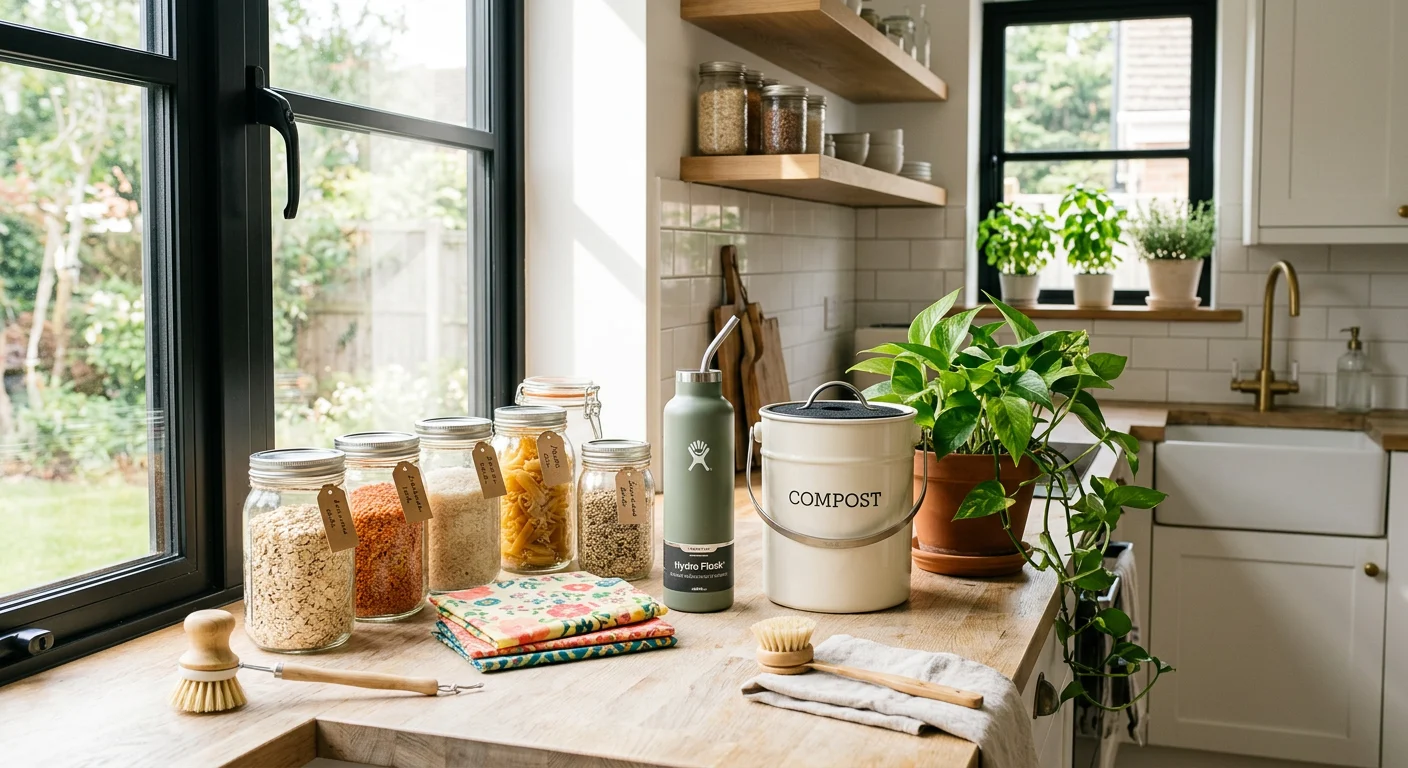
These 10 sustainable living habits cut waste and carbon for little or no money, and most of them cost nothing at all.
Key takeaways
- What households buy and use drives more than 60% of global greenhouse gas emissions, per a 2016 study in the Journal of Industrial Ecology.
- The USDA says 30 to 40% of the U.S. food supply goes to waste, so planning meals is a real climate habit.
- Heating water uses about 90% of a washer’s energy, says ENERGY STAR, so cold washes skip most of that.
- Livestock supply chains make about 12% of human-caused emissions, per the FAO, and cattle make up most of that.
- Most of these habits cost nothing, and only two are easier with gear.
At first, a new bamboo toothbrush feels like progress. But the stuff that really shapes your footprint is quieter: what you eat, how you wash, and how often you start the car.
So that’s the idea behind these sustainable living habits. In fact, a 2016 study in the Journal of Industrial Ecology found that what households buy and use drives more than 60% of global greenhouse gas emissions. So daily routines matter more than any one product.
First come food habits, then energy and water, then getting around. Finally, there’s one habit that makes every reusable swap pay off.
Why sustainable living habits beat a cart full of green products
Of course, green products are easy to buy. However, most of your impact comes from the food, power, and fuel you use every single day.
The same study also found that food, housing, and getting around are the biggest parts of a household’s footprint. It also found that richer countries have far higher impacts per person. So if you live in the U.S., your routines carry real weight.
So this list leads with habits, not things. Still, if you want the product side, the room-by-room zero waste swaps guide and the zero waste kitchen guide cover it in depth.
Food habits: the three that cut the most waste
Food is where a small change shows up fast, since you shop and cook every week.
1. Shop your fridge before you shop the store
The USDA estimates that 30 to 40% of the U.S. food supply goes to waste. That figure covers stores and homes, so your kitchen is part of it.
So before you write a list, look in the fridge. Then plan two or three meals around what’s already there. Also, put the oldest food at the front so you see it first.
2. Compost the scraps you can’t eat
Food makes up about 24% of the trash sent to U.S. landfills, the EPA reports. When it rots, it makes methane, a strong heat-trapping gas. In fact, the EPA estimates that 58% of the methane leaking from U.S. trash landfills comes from food.
Composting, however, keeps peels, coffee grounds, and eggshells out of that stream. Some towns collect food scraps at the curb, so check your city’s trash page first. Also, if you garden, the finished compost can go straight into your beds, as the organic garden guide explains.
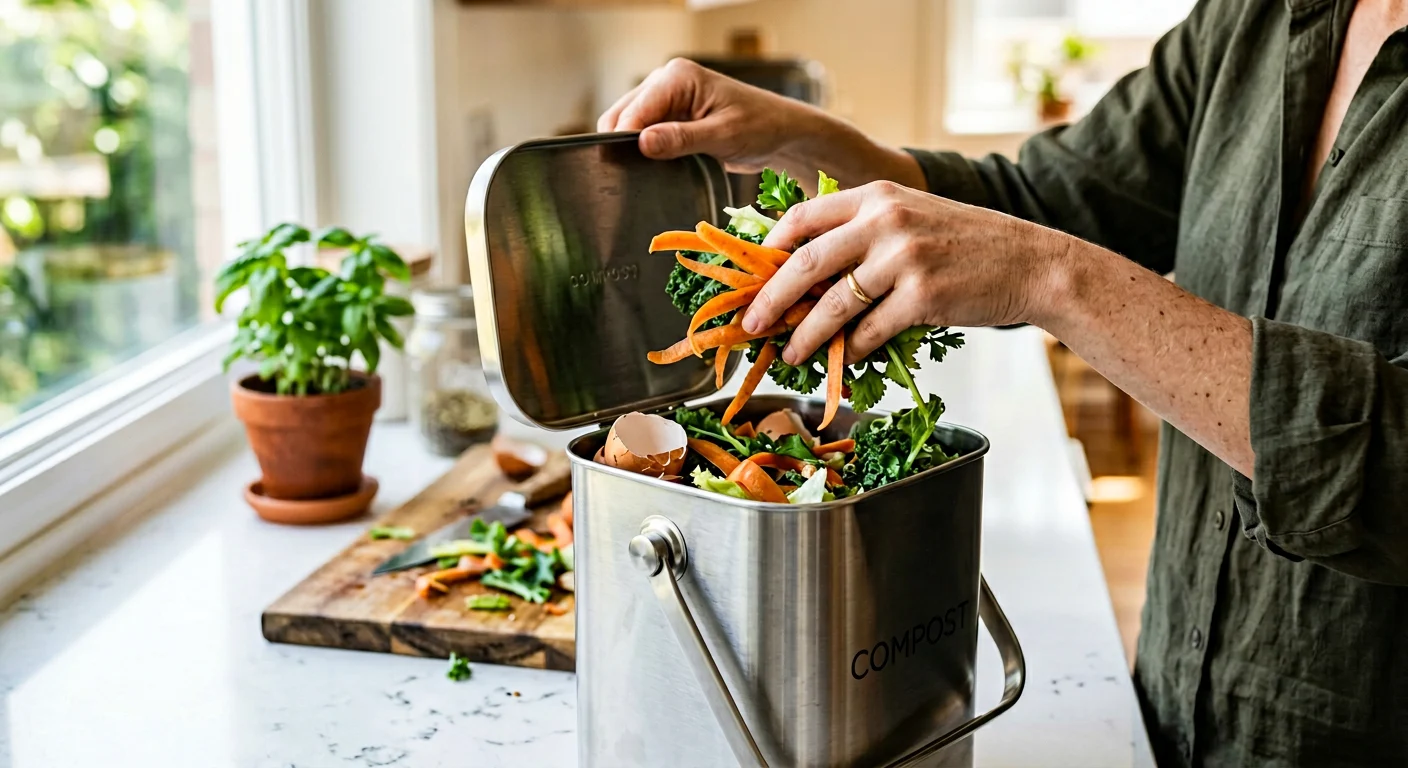
Countertop compost bin · Durable good, so no eco mark applies · Who it’s for: anyone who composts and cooks most nights
A lidded pail on the counter saves you a trip outside when you peel a carrot. Still, I make no claims for this one beyond what the listing states.
The annoying part: any bowl with a lid does the same job for free, and a pail still needs a rinse when you empty it.
3. Eat less beef, not no meat
The UN’s Food and Agriculture Organization says livestock supply chains made about 6.2 billion tonnes of emissions, counted as carbon dioxide equivalent, in 2015. That’s about 12% of all human-caused greenhouse gases, so it’s no small slice. Cattle, for both beef and milk, also made up about 62% of that total.
So you don’t have to go vegan to make a dent. Instead, swap beef for beans, chicken, or eggs a few nights a week. Still, the FAO points out that the gain depends on what you eat instead.
Worth knowing
You’ll often see 14.5% quoted for livestock emissions. However, that number comes from an FAO report from 2013. In contrast, the FAO’s 2023 report uses 2015 data, and it lands at about 12%.
Energy and water habits you can start tonight
None of these four habits need new gear, so you can start tonight. Better yet, each one also trims a bill.
4. Wash clothes in cold water
Heating water uses about 90% of the energy it takes to run a washer, says ENERGY STAR. In fact, going from hot to warm can cut that energy in half, while cold cuts it even more.
So set the dial to cold as your default. Then save hot water for greasy work clothes or sick-day bedding. Also, if you want a detergent that does well in cold water, see the eco-friendly laundry detergent guide.
5. Line-dry when you can, and skip the dryer balls
A clothesline or a folding rack uses zero power, so it beats any dryer trick. Even if you only rack-dry towels and jeans, it adds up.
Dryer balls, however, are a different story. When the Australian consumer group CHOICE tested four brands, one made of wool, none had much effect on drying time. In fact, some made loads take a bit longer and cost a bit more.
The cheapest habits on this list cost nothing: a colder wash, a drying rack, and a quick look in the fridge before you shop.
6. Cut the standby power drain
Many devices draw power even when they look off. In fact, researchers at Lawrence Berkeley National Laboratory put this standby power at 5 to 10% of home electricity use in most rich countries.
So plug the TV, game console, and speakers into one power strip, and flip it off at night. Also, unplug chargers you’re not using.
7. Fix the drip
A faucet that drips once a second can waste more than 3,000 gallons a year, according to the EPA’s WaterSense program. The EPA also says the average home’s leaks can waste over 9,300 gallons a year.
If the leak is on the hot side, you’re paying to heat that wasted water too.
Getting-around habits that save gas money too
A typical U.S. car puts out about 4.6 metric tons of carbon dioxide a year, the EPA estimates. Still, you don’t need a new car to shrink that number.
8. Bundle your errands into one loop
A cold engine burns more fuel than a warm one. Because of this, FuelEconomy.gov says several short trips from a cold start can use twice as much fuel as one longer trip of the same distance.
So plan one loop instead of four quick runs. For short hops, walking or biking also skips the fuel entirely.
9. Check your tire pressure monthly
Keeping tires at the right pressure improves gas mileage by 0.6% on average, and up to 3% in some cases, says FuelEconomy.gov. That’s small per tank, but it’s free.
Also, the right number is on a sticker in the driver’s door jamb or in your owner’s manual, not on the tire itself. Check it once a month when the tires are cold.
The one habit that makes every reusable swap work
10. Carry your reusables, and replace things only as they run out
After all, a reusable bag left at home does nothing. Likewise, a bottle that lives in a cabinet saves zero plastic. So the habit of bringing them is what counts.
Keep a bag by the door and a bottle by your keys, so they leave with you. Then, when something you own wears out, replace it with a lasting version. You’ll also find picks by room in the zero waste home swaps guide.
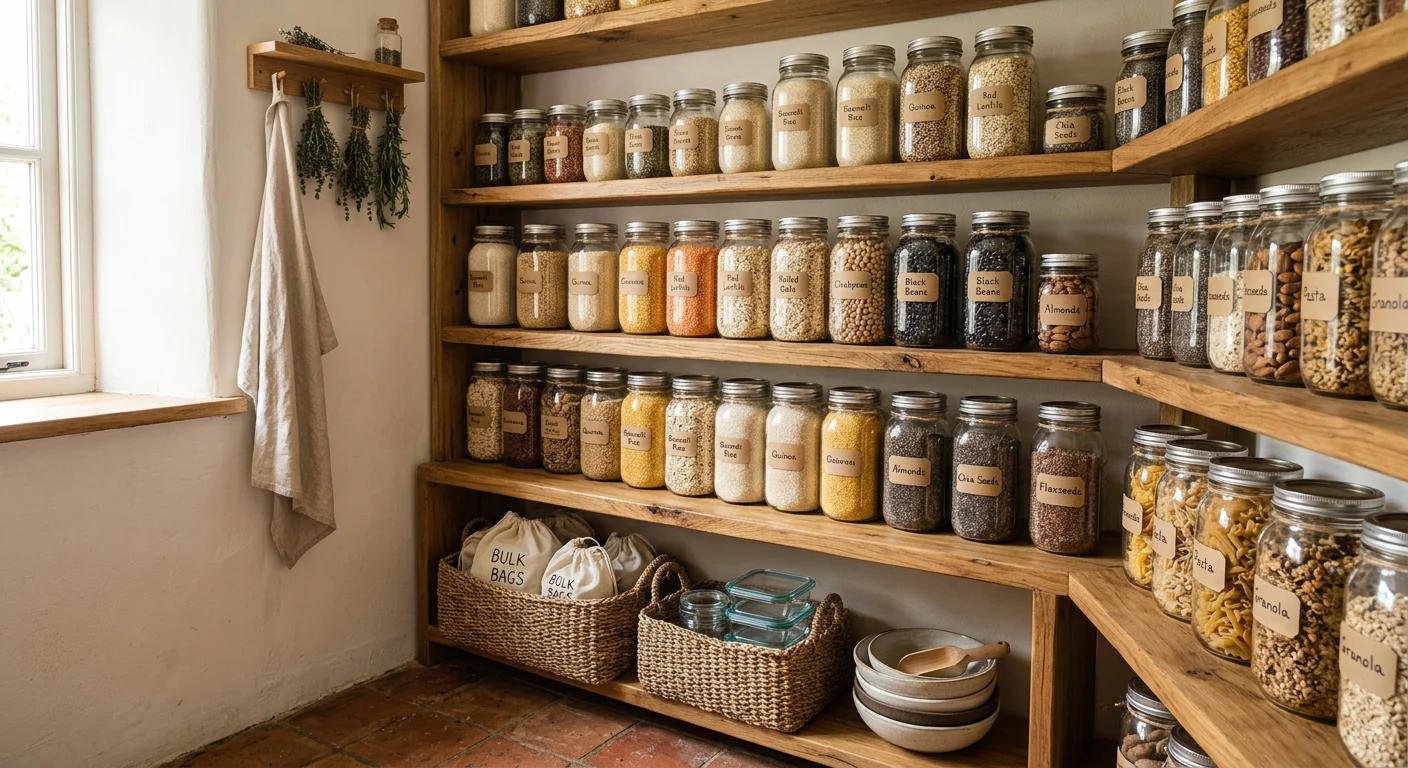
The replace-as-it-runs-out rule
Don’t toss the plastic wrap or sponges you already own until they’re used up. Then buy the lasting version. You’d buy a refill anyway, so the switch costs you nothing extra.
Stainless steel insulated water bottle · Durable good, so no eco mark applies · Who it’s for: anyone who buys bottled drinks on the go
It’s made of stainless steel, so it stands in for single-use bottles as long as you carry it. The seller also lists how long it keeps drinks cold or hot, so treat those hours as the brand’s claim. For more detailed bottle picks, see the non-toxic water bottle guide.
The annoying part: insulated bottles are heavier than plastic ones, and some are hand-wash only, so check the listing first.
All 10 habits at a glance
| Habit | Cost to start | What it cuts |
|---|---|---|
| 1. Shop your fridge first | Free | Food waste |
| 2. Compost scraps | Free to low | Landfill methane |
| 3. Eat less beef | Free | Farm emissions |
| 4. Wash in cold water | Free | Water-heating energy |
| 5. Line-dry | Free to low | Dryer energy |
| 6. Cut standby power | Low | Wasted electricity |
| 7. Fix the drip | Low | Wasted water |
| 8. Bundle errands | Free | Fuel and car emissions |
| 9. Check tire pressure | Free | Fuel |
| 10. Carry reusables | Low | Single-use plastic |
Where these habits stop helping
Personal habits have limits. For example, your utility decides how your power is made, and your city decides how trash is handled. Still, your habits are the part you control.
Also, some tips won’t fit your life. For instance, if you rarely drive, the car habits won’t move much. And if you rent, you may not be able to fix a faucet or add a clothesline, so ask your landlord first.
Finally, recycling is not on this list on purpose. The EPA ranks cutting waste at the source above recycling, so these habits come first. So if you want to get it right, the guide to recycling the right way covers the rules.
Start with one habit this week
Don’t try all 10 at once. Instead, pick the one that fits your week best. For most people, that’s the cold wash, because it takes one turn of a dial.
Then give it a few weeks before you add the next one. In the end, that’s how these habits stick.
Frequently asked questions
What are the most important sustainable living habits?
The biggest ones touch food, energy, and driving, since a 2016 study ranked those as the biggest parts of a home’s footprint. So start by planning meals to cut food waste, washing clothes in cold water, and bundling errands into one trip. Each one costs nothing and also saves money, so they tend to stick.
Can one person really make a difference for the planet?
One household is small, but households add up. A 2016 study in the Journal of Industrial Ecology found that what households buy and use drives more than 60% of global greenhouse gas emissions. So your choices about food, power, and travel are part of the problem and part of the fix.
Is living sustainably more expensive?
Most of these habits save money, since cold washes, line-drying, fixing drips, bundling errands, and checking tire pressure all lower a bill. The only costs are small, such as a power strip or a compost bin. Even so, a lidded bowl and a light switch work for free.
Does washing clothes in cold water really save energy?
Yes, because ENERGY STAR says heating water uses about 90% of the energy it takes to run a clothes washer. Switching from hot to warm can cut that energy in half, while cold cuts it even more. So save hot water for dirty or greasy loads.
Do wool dryer balls save energy?
Independent testing says not really. When the Australian consumer group CHOICE tested four brands of dryer balls, including one made of wool, none had much effect on drying time, and some made loads take slightly longer. Instead, if you want to use less dryer energy, a drying rack or clothesline is the sure bet.
How do I compost if I don’t have a yard?
Some cities collect food scraps at the curb, so check your city’s trash page first. If yours does, then keep a lidded bin on the counter and empty it into the city cart. If not, ask a community garden near you.
Sources (checked September 29, 2026)
- Ivanova and colleagues, 2016, Environmental Impact Assessment of Household Consumption in the Journal of Industrial Ecology, for household consumption at more than 60% of global emissions, food, shelter, and mobility as the top categories, and higher impacts in richer countries.
- USDA Food Waste FAQs, for 30 to 40% of the U.S. food supply going to waste.
- EPA Quantifying Methane Emissions from Landfilled Food Waste, for food at about 24% of landfilled trash and 58% of landfill methane.
- FAO, 2023, New FAO report maps pathways towards lower livestock emissions, for 6.2 billion tonnes and about 12% of human-caused emissions using 2015 data, cattle at 62%, and diet change depending on what replaces it.
- ENERGY STAR Clothes Washers, for about 90% of washer energy going to heat water, with warm halving it and cold saving more.
- CHOICE, 2024 and updated 2025, dryer ball test, for four brands tested, including a wool one, with no real drop in drying time.
- Lawrence Berkeley National Laboratory Standby Power FAQ, for standby power at 5 to 10% of home electricity in most developed countries.
- UN News, 2013, coverage of the FAO report Tackling Climate Change Through Livestock, for the older 14.5% estimate.
- EPA Waste Management Hierarchy, for source reduction ranking above recycling.
- The EPA’s WaterSense program, Fix a Leak Week, for a once-a-second drip wasting 3,000+ gallons a year and average home leaks wasting 9,300+ gallons.
- Vehicle data from the EPA, Greenhouse Gas Emissions from a Typical Passenger Vehicle, for about 4.6 metric tons of CO2 a year.
- FuelEconomy.gov Planning and Combining Trips, for short cold-start trips using up to twice the fuel of one longer trip.
- FuelEconomy.gov Keeping Your Vehicle in Shape, for proper tire pressure improving mileage 0.6% on average and up to 3%, and where to find the right pressure.
Keep reading
Which habit are you starting with?
Tell me through the contact page which habit you’re trying first, so other readers can learn from it too.