The Recycling Mistakes Most People Never Realize They’re Making
This post has affiliate links. As an Amazon Associate I earn from qualifying purchases, at no extra cost to you. How I pick products.
Most recycling mistakes come from trying too hard, not from laziness. Here are the ones that actually cause problems, plus the pizza box and bottle cap rules most people have backwards.
Key Takeaways
- Greasy pizza boxes are often fine. The paper industry says normal grease and cheese are not an issue for recycling. Only a box soaked through goes in the trash.
- Caps: follow your town. The plastic recyclers group says leave them on, but some cities, Pittsburgh included, still say take them off.
- Bags, batteries, and electronics stay out of the curbside bin. The EPA counted 245 battery fires at waste sites in eight years.
- Empty, rinse, and dry beats spotless. Wet, messy items can spoil the paper next to them.
- When you are unsure, leave it out. Hopeful guessing does more harm than skipping it.
Most recycling mistakes are made by people who care. In fact, they rinse and sort, and then still toss in the one thing that jams a machine or spoils a load.
The fix is not more effort. Instead, it is knowing which few habits matter, and which popular tips are out of date.
So everything below comes from the people who actually process this stuff: the EPA, the paper and plastic recyclers, and city programs.
The pizza box rule most people get wrong
For years, the common advice was to tear the box in half and throw the greasy bottom away. But the paper industry says that step is usually not needed.
For context, the American Forest & Paper Association speaks for the mills that turn old boxes into new ones. Its guidance says the grease and cheese typically found on a pizza box are not an issue for the recycling process. Also, a separate 2020 study by the box maker WestRock found no real technical reason to keep used pizza boxes out of recycling.
So the whole box can go in. First, take out any leftover slices and crusts. Then pull out the liner, the little plastic table, and any dipping cups.
The one exception
A box that is completely soaked with grease should go in the trash. But soaked is different from greasy. If the whole bottom has gone dark and limp, that one is done.
Even the paper group says to check your local rules first, because not every town takes pizza boxes yet. Still, if yours does, the box goes in whole.
The recycling mistakes that actually cause problems
These are the ones city programs warn about most, and none of them are close calls, either. So they are worth fixing first.
1. Plastic bags in the curbside bin
Bags and other stretchy plastic wrap around the spinning parts inside a sorting plant. Portland’s city program says workers then have to stop the machines and cut them out by hand. Because of this, bags are one of the worst things you can put in your bin, even though they feel recyclable.
Instead, take them to a store drop-off. The EPA notes that many grocery and department stores accept bags and film. Or skip the problem and bring your own bags.
2. Putting food-covered containers in
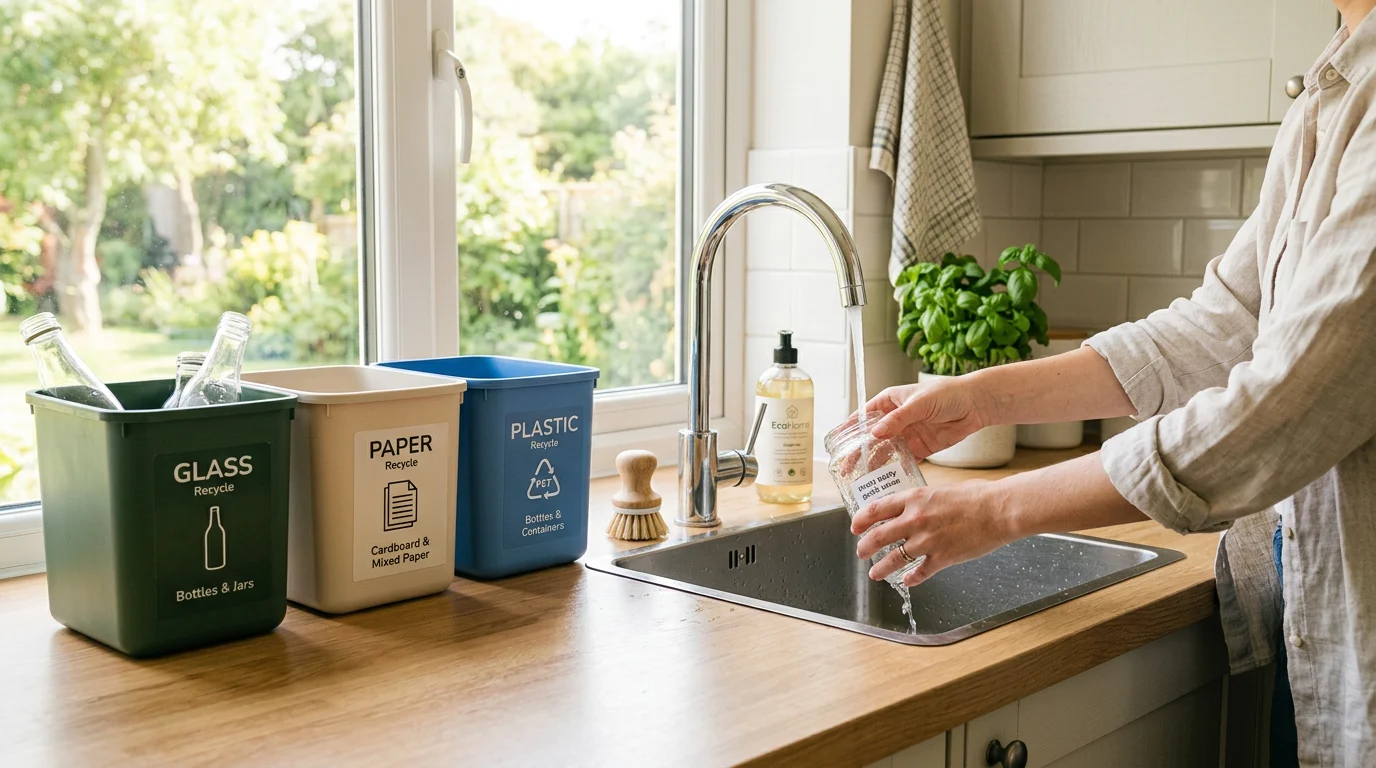
Food and liquid left in a container can spill onto paper. As a result, Portland warns, whole loads can end up thrown away. But nothing has to be spotless, so empty it, give it a quick rinse, and let it dry.
In fact, dry matters as much as clean. Pittsburgh’s 2026 guide sums it up: recycling must be loose, clean, dry, and empty.
3. Guessing about bottle caps
This one surprises people, because the advice changed. The Association of Plastic Recyclers now says to empty the bottle and put the cap back on. Its reason is simple: most caps are smaller than three inches, and items that small are not recyclable on their own.
Also, the EPA’s own list of common recyclables says plastic bottles with caps. However, not every sorting plant has caught up.
Worth knowing
Pittsburgh’s 2026 recycling guide still says to remove lids and caps from plastic and glass. So if your town gives a clear rule, follow it. After all, the national advice is only the default for when your town is silent.
4. Loose shredded paper
Shreds are too small for the sorting gear. For example, a Wisconsin county program explains that they fall through the screens and end up in the broken glass line. Because of this, some programs do not take them in the bin at all.
So this is one to look up rather than guess. Whatever your town says, never bag shreds in plastic.
5. Broken glass
Whole bottles and jars are on the EPA’s list of common recyclables, but broken glass is a different story. Portland says the pieces get stuck in paper and cardboard and can ruin them. So keep it out of the mixed bin, and check what your town says to do with it.
6. Wish-cycling
This is the big one, and it is also the mistake made by people who care the most.
Wish-cycling means tossing something in because it seems like it should be recyclable.
But the EPA is direct about the cost: items that cannot be recycled can contaminate a whole load and cause all of it to be thrown out. So its rule is simple. Do not put an item in the bin unless you know it is accepted.
The goal is not to recycle more things. It is to recycle the right things, correctly.
Batteries and electronics, and why this one is serious
Batteries in the trash or recycling bin are a real fire risk, and the numbers show it. An EPA report found 245 fires caused or likely caused by lithium batteries at 64 waste facilities in 28 states between 2013 and 2020.
The trend is the part that stands out, though. There were 2 such fires in 2013 and 65 in 2020.
Here is why it happens. First, waste sites use machines that crush and shake everything, and a damaged battery can catch fire and light the paper and plastic around it.
What to do instead
Keep a small box out of the way for dead batteries, old cables, and anything with a chip in it. The EPA says to tape the battery ends or bag each one on its own to prevent fires. Then take the box to a drop-off site or a household hazardous waste day when it fills.
To find a drop-off, the EPA points people to Earth911 and Call2Recycle, along with certified e-waste recyclers and stores that take them back.
See battery storage and drop-off boxes
Old medications
These never go in recycling, and most should not be flushed either. Instead, the FDA says a take-back site or a mail-back envelope is the best option for most medicines.
There is one narrow exception, however. The FDA keeps a short flush list of drugs that can kill with one dose if the wrong person takes them, mainly strong opioids. Even then, it says to flush those only when no take-back option is handy.
What goes in the bin
Rules vary by town, so treat this as the common case. Then check yours once.
| Item | Curbside | Notes |
|---|---|---|
| Cardboard | Yes | Flatten it, and keep it dry. |
| Pizza boxes | Often | Take out food, liners, and dip cups. Trash it if soaked through. |
| Glass bottles and jars | Usually | Whole only. Empty and rinse. |
| Plastic bottles, jugs, jars | Yes | Empty them. Caps on or off per your town. |
| Plastic bags and film | No | Store drop-off only. They jam the machines. |
| Clamshell containers | Varies | Check your town’s list. |
| Metal cans | Yes | Empty and rinse. |
| Paper, mail, magazines | Yes | Keep it dry. |
| Shredded paper | Varies | Often not. Look it up. |
| Foam packaging | Often no | It crumbles and ends up as trash. |
| Batteries | No | Fire risk. Drop-off or hazardous waste only. |
| Electronics | No | Take-back or an e-waste event. |
The rule that covers everything else
When in doubt, leave it out. After all, a recyclable item in the trash is a small loss. However, a bad item in the bin can cost the whole load.
What the number on the plastic actually means
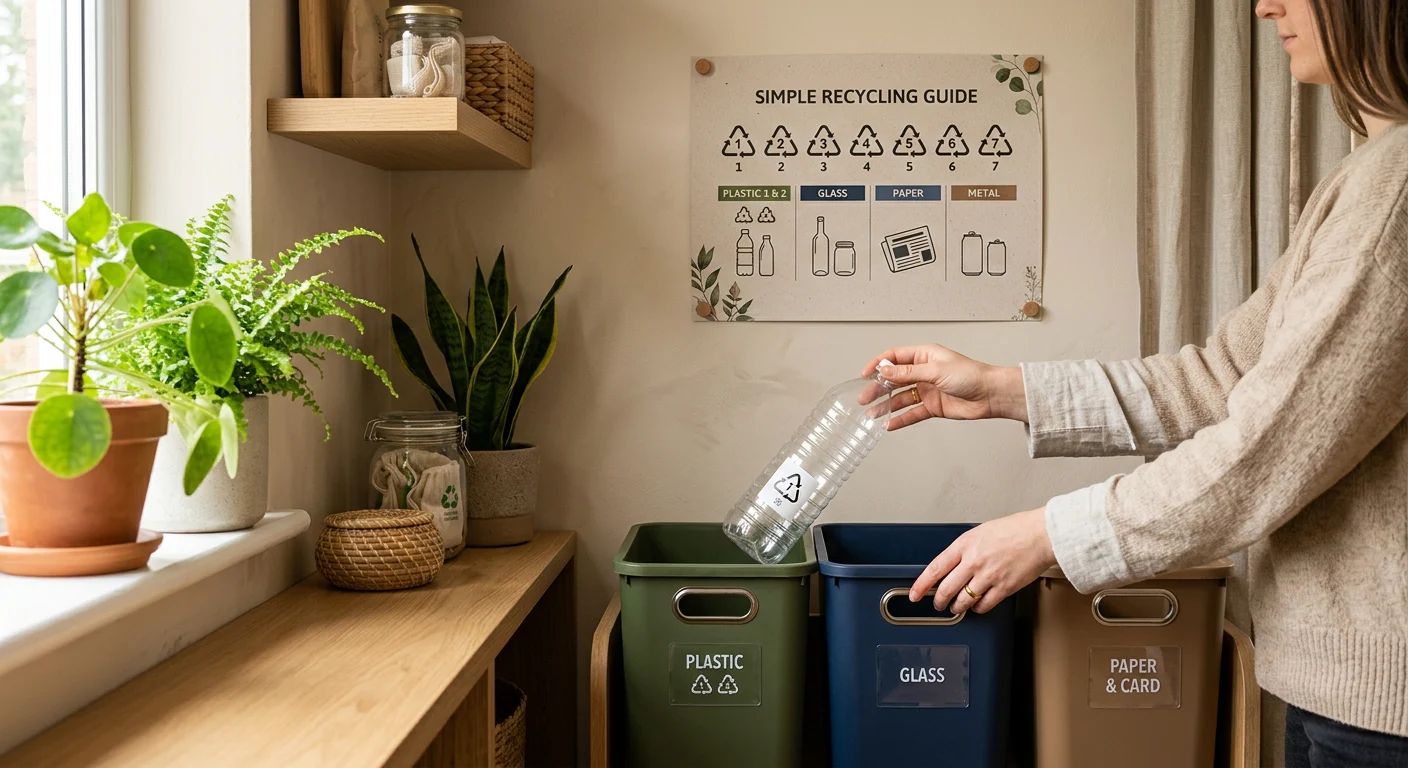
The number inside the triangle is the resin code. But the standard behind it says plainly that these are not recycle codes. Instead, the number only names the type of plastic.
- #1 PET is used for drink bottles and many jars, so it is widely wanted.
- #2 HDPE is used for milk and water jugs.
- #4 LDPE is used for bags and film. That means store drop-off, not the curb.
- #5 PP depends on your program, so check first.
- #6 PS includes foam. Portland’s program, for one, says foam never goes in the bin.
- #3 and #7 are worth checking before you toss them.
In fact, some towns skip the numbers and go by shape. Pittsburgh’s guide, for example, simply lists plastic bottles, jugs, jars, and tubs. So bottles and jugs are a safe bet, while bags, film, and foam are not.
A home setup that makes this automatic
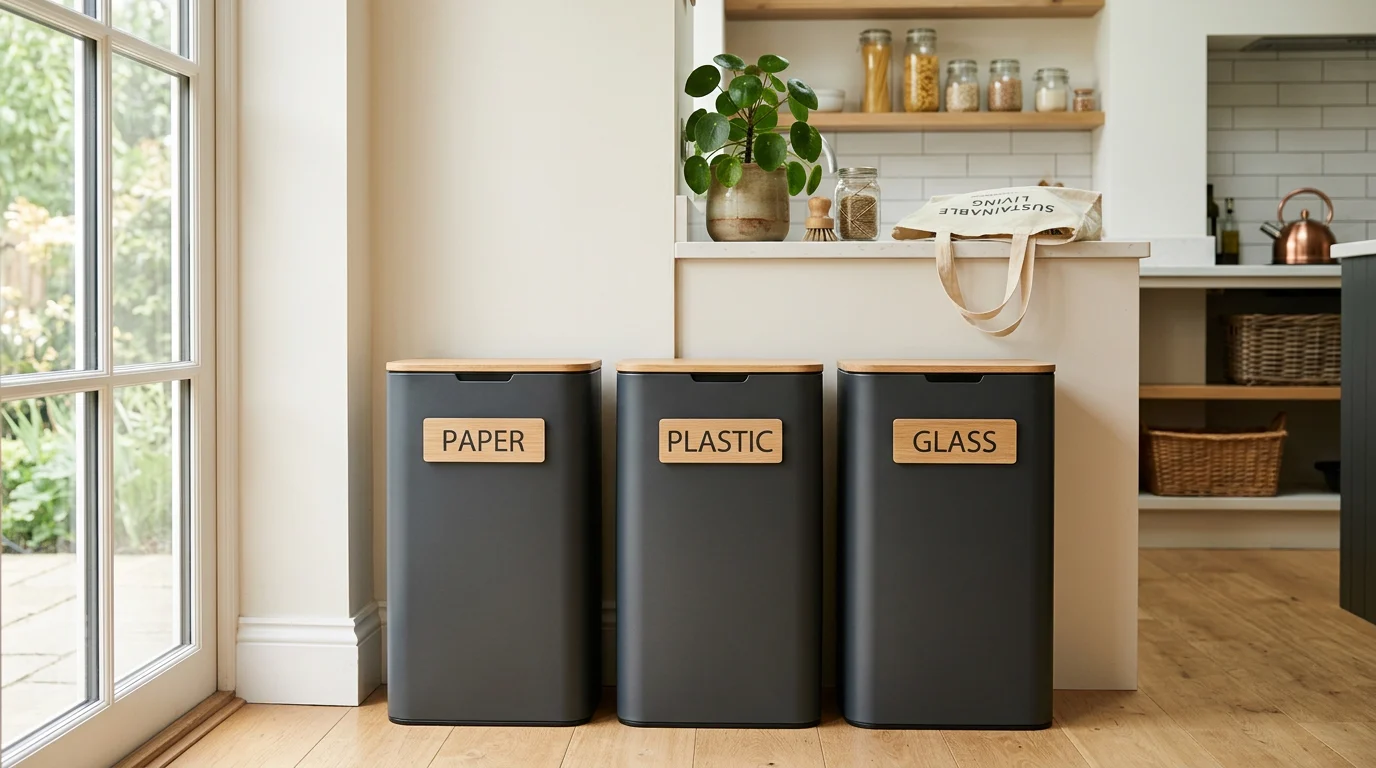
In the end, the best system is the one that takes no thought. So the goal is to make the right bin the closest bin.
Step 1: One bin, two sides
When trash and recycling sit side by side, the choice is instant. Also, label both sides so nobody in the house has to guess.
See dual-compartment kitchen bins
Step 2: A countertop compost bin
Food is the biggest single material in U.S. landfills, about 24 percent in the EPA’s latest national data from 2018. So pulling scraps out shrinks your trash fast, and it also keeps food off the paper in the recycling.
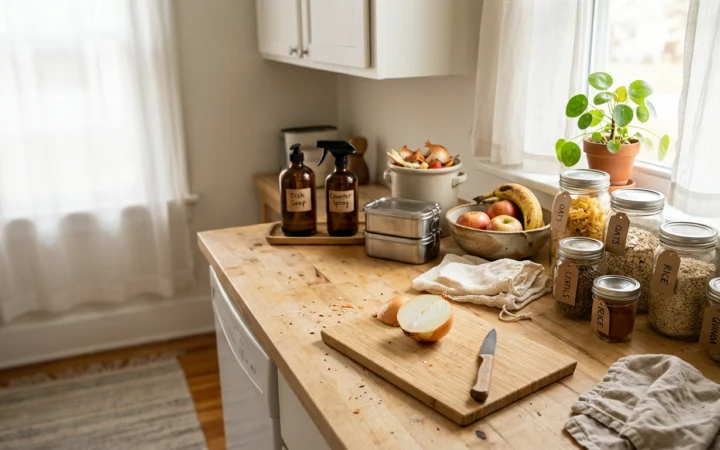
If you want to go further, I wrote a whole guide on starting a zero-waste kitchen.
Step 3: Label it
Labels do the explaining, so you do not have to. They also work on kids, guests, and the partner who means well and guesses wrong.
See recycling labels and sorting stickers
Step 4: A box for the tricky stuff
Batteries, bags, old cables, dead phones, and expired pills all go in one box. Then make one trip when it fills. As a result, this single habit removes most of the hard choices.
Step 5: Look up your rules once
Spend five minutes on your town’s recycling page and take a screenshot. After that, you can stop second-guessing, because the answer is on your phone.
For things your curbside program will not take, the EPA points people to Earth911’s drop-off search.
Where recycling is not the answer
Still, I would rather be straight with you than sell recycling as a fix it is not.
- Most plastic never gets recycled. The EPA puts the U.S. plastic recycling rate at just 8.7 percent in 2018. Even PET bottles and jars came in at only 29.1 percent.
- Buying less beats sorting better. The bag you never take home needs no system at all. For easy places to start, see these zero-waste home swaps, room by room, or a reusable water bottle that replaces plastic ones.
- A perfect bin does not fix a weak program. Your sorting cannot fix what your town does with the load. If you have doubts, call and ask them.
- Do not buy new bins to feel organized. After all, two boxes you already own work the same as a matched set.
Ten rules that cover almost everything
- Empty and rinse containers, then let them dry.
- Keep plastic bags out of the bin, always.
- Flatten your cardboard so it takes less room.
- Keep paper dry, since wet paper can spoil a load.
- Put the pizza box in whole if your town takes it, unless it is soaked.
- Do what your town says about caps. If it says nothing, leave them on.
- Look up shredded paper before you bin it.
- Never put batteries or electronics at the curb.
- When in doubt, leave it out.
- Recheck your town’s rules now and then, because they change.
Start with the pizza box
So pick one habit from this list tonight. If you have been tearing pizza boxes in half, check your town’s rule, and then put the whole thing in if it is allowed.
Next, set up the box for batteries and bags this weekend. Together, those two changes cover most of what goes wrong in a normal kitchen.
This is general information, not professional advice. Follow your local program’s rules and the label on any medicine.
Frequently asked questions
Can you recycle a greasy pizza box?
Often, yes. The American Forest and Paper Association says the normal grease and cheese on a pizza box are not an issue for recycling. Take out crusts, liners, and dip cups, and trash a fully soaked box, but check your town first.
Should bottle caps be on or off?
Follow your local program first, because your town’s rule always wins. If it says nothing, the Association of Plastic Recyclers asks you to put the cap back on, since most caps are too small to recycle alone. However, some cities, Pittsburgh included, still say to take caps off.
Is wish-cycling really that harmful?
Yes, because the EPA says items that cannot be recycled can contaminate a whole load and cause all of it to be thrown out. So its advice is to skip anything unless you know your program accepts it. After all, leaving out one doubtful item costs far less than spoiling a whole load.
Why can’t batteries go in the recycling bin?
They can start fires, and an EPA report counted 245 fires caused or likely caused by lithium batteries at 64 waste facilities from 2013 to 2020. That is because machines crush and shake the waste, which can damage a battery. Instead, tape the ends and take it to a drop-off site.
Can I recycle shredded paper?
It depends on your town, so look it up instead of guessing. Shreds are too small for the sorting gear, so they fall through screens and can end up in the broken glass line. As a result, some programs keep shreds out of the bin entirely, and you should never bag them in plastic.
How do I find my local recycling rules?
First, search your city or county name plus the word recycling, since most towns post a list of accepted items. For things curbside will not take, the EPA also points people to Earth911, which finds drop-off sites. Then take a screenshot, so you can check the rules in seconds later.
Sources (checked September 29, 2026)
- American Forest & Paper Association, Can I Recycle a Greasy Pizza Box? (August 2026) — grease and cheese at typical levels are not an issue; remove food, liners, supports and dip cups; trash a fully soaked box; check local rules.
- WestRock, Incorporation of Post-Consumer Pizza Boxes in the Recovered Fiber Stream: Impacts of Grease and Cheese on Finished Product Quality (2020) — no significant technical reason to keep post-consumer pizza boxes out of the recycle stream.
- U.S. EPA, Frequent Questions on Recycling — non-recyclable items can contaminate a whole load; the common accepted-items list, including plastic bottles with caps and glass bottles and jars; store drop-off for bags and film; the Earth911 pointer.
- U.S. EPA, An Analysis of Lithium-ion Battery Fires in Waste Management and Recycling — 245 fires at 64 facilities in 28 states, 2013 to 2020; 2 in 2013 and 65 in 2020; crushing and jostling damages batteries.
- U.S. EPA, Used Lithium-Ion Batteries — keep them out of trash and recycling bins; tape terminals or bag them; Earth911 and Call2Recycle drop-off search.
- Association of Plastic Recyclers, Caps On FAQ — empty and replace cap; items under three inches in all dimensions are not recyclable.
- City of Pittsburgh, 2026 Refuse and Recycling Guide — bottles, jugs, jars, and tubs accepted; remove lids and caps from plastic and glass; loose, clean, dry, and empty; flatten cardboard.
- City of Portland, What Not to Recycle and Why Tanglers Should Never Go in Your Recycling Bin — bags jam equipment and are cut out by hand; food and liquids spoil paper; broken glass ruins paper; foam and batteries.
- Tri-County Recycling (Wisconsin), Shredded Paper Problems — shreds fall through screens into the broken glass line.
- U.S. FDA, Drug Disposal: FDA’s Flush List for Certain Medicines — take-back first; the narrow flush list.
- U.S. EPA, National Overview: Facts and Figures and Plastics: Material-Specific Data — food at about 24 percent of material landfilled in 2018; a plastics recycling rate of 8.7 percent and a PET bottle and jar rate of 29.1 percent in 2018.
- ANSI, Resin Identification Codes as Specified by ASTM D7611 — what codes 1 to 7 mean; resin codes are not recycle codes.
What does your town do?
Local rules are all over the place, especially on pizza boxes, caps, and shredded paper. Tell me through the contact page what yours says.