How to Start a Zero Waste Kitchen (Without Losing Your Mind)
This post has affiliate links. As an Amazon Associate I earn from qualifying purchases, at no extra cost to you. How I pick products.
Five of these twelve swaps cost nothing. And the one that cuts the most waste is not a product at all, so start there and let the shopping wait.
Key Takeaways
- Food is the big number, not packaging. The USDA puts food waste at 30 to 40 percent of the U.S. food supply.
- That waste has a price tag. The EPA says a family of four spends almost $3,000 a year on food nobody eats.
- Five of the twelve swaps below are free. Old shirts, saved jars and a freezer bag cover them.
- A vinegar spray cleans. It does not disinfect. Under federal rules, that word belongs to registered products only.
- Swap things as they run out. Because tossing a working container to buy a greener one just makes more trash today.
Open your kitchen trash and look at the top layer. Cling wrap. A zip-lock bag. Two paper towels. A plastic produce bag. And under all of it, the carrot ends and the half a yogurt nobody finished.
One week, one kitchen. Then multiply by fifty-two.
A zero waste kitchen is not a cabinet full of bamboo. It is a handful of small trades, made one drawer at a time, until the better version is just what you reach for. So here are twelve of them, sorted by what they cost you, plus the habit that beats all twelve.
Why the kitchen is the room worth fixing first
Most of what your kitchen throws away was avoidable, and the biggest piece of it is food.
The USDA estimates food waste at 30 to 40 percent of the food supply. The EPA puts it another way: one third of all food in the United States goes uneaten, and the average family of four spends almost $3,000 a year on food that never gets eaten.
Then there is where it lands. In 2019, the EPA estimates about 96 percent of households’ wasted food went to landfills, incinerators, or down the drain. And buried food gives off methane, which the EPA calls more than 28 times as potent as carbon dioxide at trapping heat.
So the kitchen is worth fixing first for a simple reason. Nearly every swap in it replaces something you were going to buy anyway with a version that lasts longer. Meanwhile the money moves in the same direction as the trash.
Most green advice asks you to spend more to feel better. Kitchen waste is the rare case where the cheap answer and the clean answer are the same answer.
Five zero waste kitchen swaps that cost nothing
Start here. These need no order, no shipping box, and no waiting. And if you only ever do these five, your trash still shrinks.
Swap 1: Cut up an old t-shirt instead of buying paper towels
Cut a worn cotton shirt into squares about the size of your hand and a half. They handle spills, counters, and drying produce just as well as a paper sheet.
Then keep them somewhere obvious. A small basket on the counter works, because a cloth you cannot see is a cloth you will not grab. Toss them in the wash with your kitchen towels.
Swap 2: Save glass jars instead of buying pantry storage
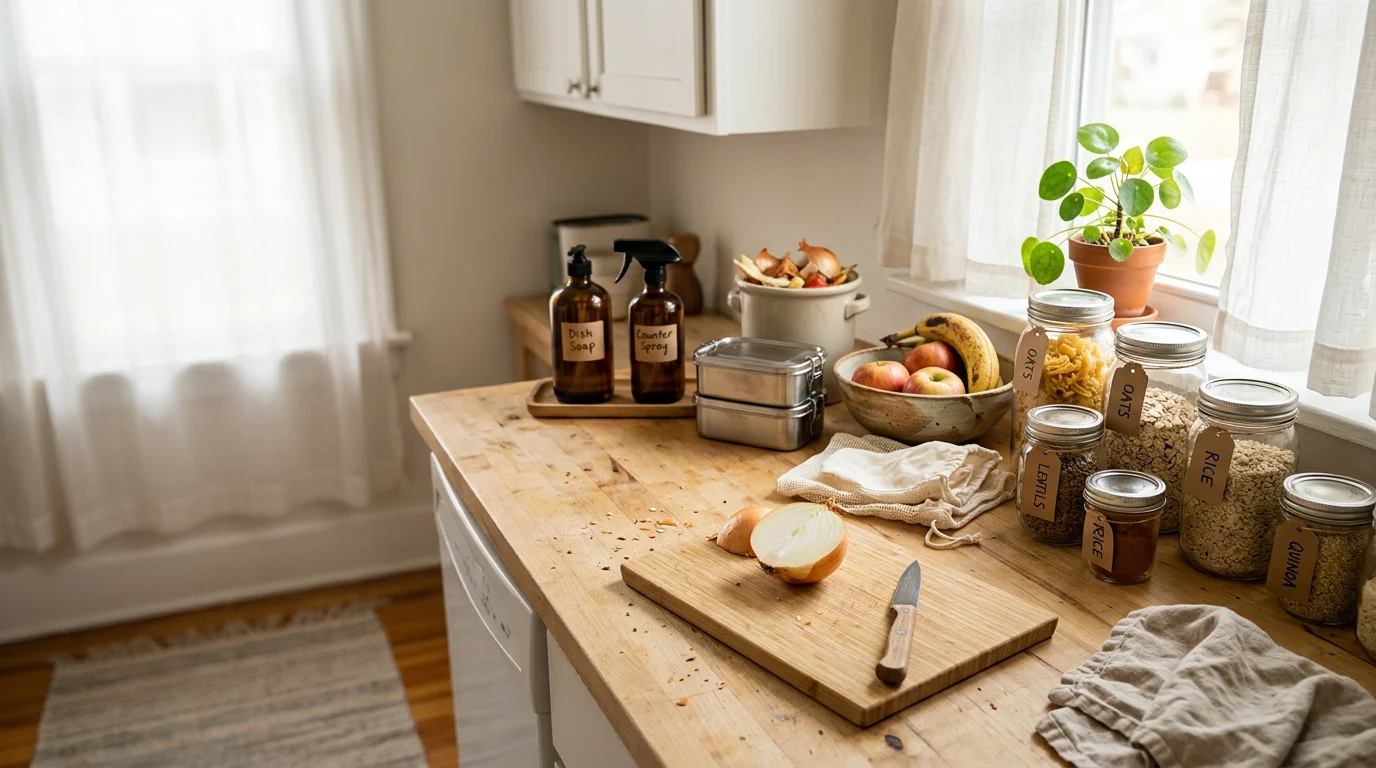
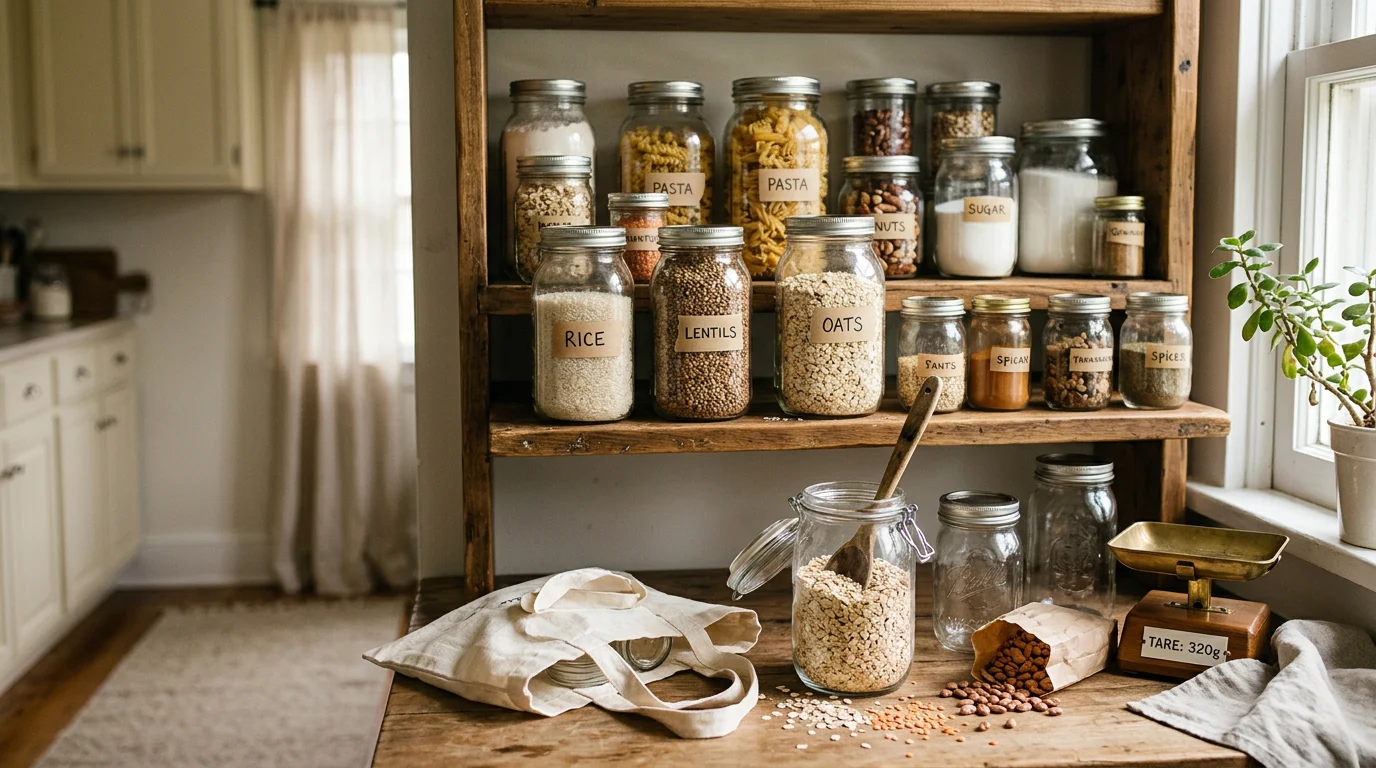
Pasta sauce jars, pickle jars and jam jars hold rice, beans, nuts and flour just as well as anything sold for the job. They seal, they stack, and you can see what is inside.
Wide mouths are easier to scoop from, so keep those and recycle the narrow ones. To get a label off, soak the jar in hot water first, then rub the glue with a little oil.
Swap 3: Keep a freezer bag for vegetable scraps
Onion skins, carrot ends, celery tops and herb stems all go in one bag in the freezer. Once it is full, cover the scraps with water and simmer them for an hour. That is stock, and it cost you nothing.
Skip anything bitter, though. Broccoli, cabbage and Brussels sprout trimmings will take over the pot.
Swap 4: Use cloth napkins you already own
Paper napkins feel too small to matter, but they leave the house every single day. Six to eight cloth ones cover a family, and they wash with the kitchen linens.
You probably do not need to buy any. Check the back of the linen drawer first, and after that a thrift store, where full sets turn up for a couple of dollars.
Swap 5: Mix your own counter spray
Equal parts white vinegar and water in a reused spray bottle handles most counter and appliance grime for pennies. For baked-on grease, make a paste of baking soda and a squirt of liquid castile soap instead.
Two limits are worth knowing before you mix it, and the second one surprises people.
A vinegar spray cleans. It does not disinfect.
This is not a technicality. Under federal pesticide law, a product that claims to sanitize, disinfect or kill germs has to be registered with the EPA and tested to back the claim. Homemade vinegar spray is not registered and was never tested that way. So use it for everyday cleaning, and keep a registered disinfectant for raw chicken juice, a stomach bug in the house, or a cutting board that met raw meat. Cleaning and disinfecting are two different jobs, and only one of them is a vinegar job.
Two places not to spray it
Vinegar is an acid, so it etches marble, granite and other natural stone. Use plain soap and water there instead. And go easy on essential oils if you have pets. The ASPCA warns that concentrated oils are a real danger to dogs and cats, and that tea tree oil can cause trouble with only seven or eight drops. Birds are more sensitive still. Your spray works fine with no oil in it at all.
Four swaps for wrapping and storing food
This is the drawer where single-use plastic piles up fastest. So it is also where a paid swap earns its money back soonest.
Swap 6: Beeswax wraps instead of cling film
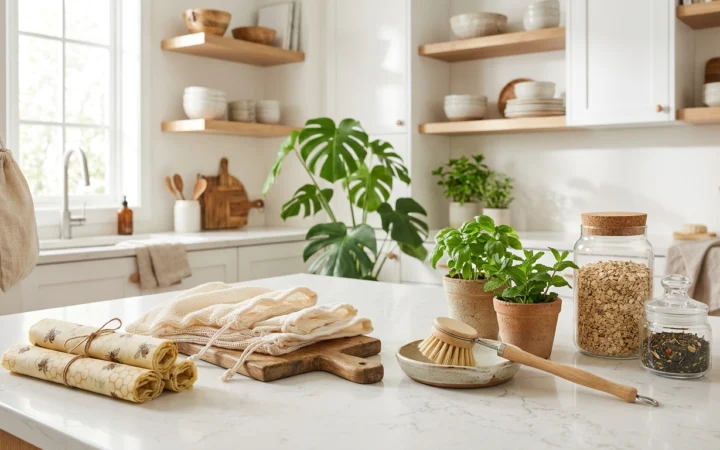
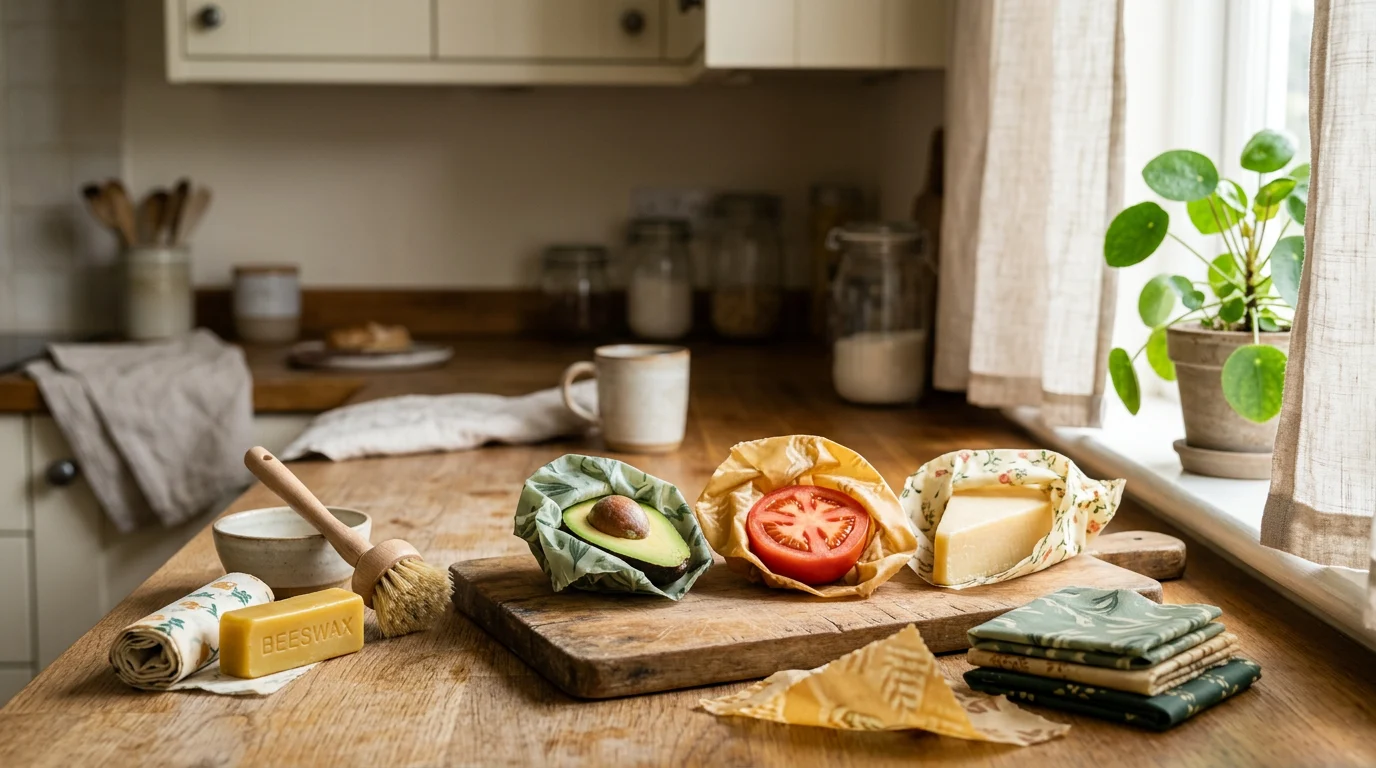
Beeswax wraps are cotton soaked in beeswax, tree resin and jojoba oil. Warm them in your hands and they mold over a bowl, a cut lemon, or a block of cheese, then hold their shape as they cool.
They wash in cool water and air dry, and a set lasts around a year with normal use. But skip them for raw meat, and keep them out of the microwave. For everything else they beat plastic film, because you can actually reuse them.
Swap 7: Silicone bags instead of zip-locks
Reusable silicone bags are airtight, freezer safe and dishwasher safe, and a set lasts years rather than one lunch.
Look for a double-seal closure if you plan to carry soup or marinades, since a single seal leaks eventually. Also buy fewer than you think. Most households use the same three bags over and over.
Shop reusable silicone storage bags
Swap 8: Glass or steel containers instead of plastic tubs
Plastic tubs stain, warp and hold onto the smell of last week’s curry. Glass does none of that, and it goes in the oven and the microwave. Stainless steel is nearly indestructible, which makes it the better pick for lunch bags and car trips.
Still, do not bin the plastic you own. Use it until it cracks, and then replace it with glass one piece at a time.
Shop glass and stainless steel containers
Swap 9: Mesh produce bags instead of the roll at the store
Thin cotton or recycled mesh bags replace the plastic ones on the produce roll, and they work at bulk bins too. They wash in the machine and last for years.
The trick is not owning them. It is having them with you. So put them back in your grocery tote the moment they come out of the laundry, because a mesh bag in a kitchen drawer has never saved a single plastic one.
Shop reusable mesh produce bags
Three swaps for cleaning and scraps
The sink is the other place disposables stack up, and the compost bin is the single change that moves the most weight out of your trash.
Swap 10: A compostable cloth instead of a plastic sponge
A standard foam sponge is plastic. It sheds bits every time you scrub, it gets smelly within days, and it goes to landfill within weeks.
Cellulose sponges and Swedish dishcloths break down at the end instead. They also sanitize on the top rack of the dishwasher, so they stay usable for months rather than weeks. Sellers often claim one cloth replaces a stack of paper towel rolls, and that is a seller’s number, but the durability holds up in daily use.
Shop compostable sponges and Swedish dishcloths
Swap 11: A soap bar or concentrate instead of a bottle of dish liquid
Most dish liquid is mostly water, which means you are paying to ship water in a plastic bottle and then throw the bottle away. Bars and concentrates cut that out.
One honest note: bars lather less than liquid, and that throws people at first. The grease still comes off. Give it a week before you judge it.
Shop zero waste dish soap bars and concentrates
Swap 12: A countertop compost bin instead of the trash can
This one moves the most weight. Peels, coffee grounds, eggshells and cores stop going to landfill, where they turn into methane, and start going to a garden or a city program instead.
Get a bin with an airtight lid and a charcoal filter, because an open bowl on the counter will end this experiment in about four days. And you do not need a yard. Many cities collect scraps at the curb, and a worm bin under the sink works in an apartment.
The habit that beats all twelve swaps
Every product above deals with packaging. But the food itself is the bigger number, and no purchase fixes it. These four habits do.
Check the fridge before you shop
Five minutes, once a week. Look at what is already in there, then build two or three meals around it before you write the list. Move older items to the front so they get used first.
Most people are surprised by what this turns up. And it cuts the grocery bill in the same motion.
Store produce so it lasts
Most early spoiling is a storage problem, not a food problem. Three fixes cover most of it.
- Herbs: trim the stems and stand them in a glass of water in the fridge, loosely covered with a bag.
- Leafy greens: wrap them in a slightly damp cloth inside a sealed container.
- Berries: leave them dry until you want them. Moisture is what turns a box of raspberries in two days.
That last one runs against a popular tip, so it is worth saying plainly.
Skip the vinegar bath for berries
The rinse-everything-on-Sunday routine is all over the internet, but University of Minnesota Extension advises waiting to wash produce until you are ready to eat it, unless it is visibly dirty, because that is what protects quality and shelf life. It also notes that vinegar and baking soda can change the flavor. When you do wash berries, use a colander under cool running water rather than a soak, and never use soap, detergent or bleach on food.
Freeze it before it turns
Use a two-day rule. If you will not eat it within two days, freeze it. Bread, browning bananas, half a can of coconut milk and the last spoon of tomato paste all freeze fine.
Give one dinner a week to the leftovers
Pick a night and make it the clear-out meal. Frittatas, fried rice, grain bowls and soup will absorb almost any combination. Friday works well, because it clears the fridge before the weekend shop refills it.
What each swap replaces, and what it costs you
Here is the whole list in one place, sorted by whether you have to buy anything.
| Swap | What it replaces | Cost | The catch |
|---|---|---|---|
| Cut-up shirt cloths | Paper towels | Free | You have to wash them |
| Saved glass jars | Bought canisters | Free | Label glue is stubborn |
| Freezer scrap bag | Boxed stock | Free | No brassicas in the bag |
| Cloth napkins | Paper napkins | Free or thrifted | More laundry |
| Vinegar counter spray | Bottled all-purpose | Pennies | Cleans, does not disinfect |
| Beeswax wraps | Cling film | Buy | No raw meat, no microwave |
| Silicone bags | Zip-locks | Buy | Washing takes a minute |
| Glass and steel tubs | Plastic tubs | Buy | Heavier, and glass breaks |
| Mesh produce bags | Store produce bags | Buy | Useless if left at home |
| Compostable cloths | Plastic sponges | Buy | Stiff until they get wet |
| Soap bar or concentrate | Bottled dish liquid | Buy | Lathers less than liquid |
| Countertop compost bin | Scraps in the trash | Buy | Needs a filter, or it smells |
Where I would not push this
- Do not throw out working plastic. Binning a good container to buy a greener one adds trash today for a saving years out.
- Keep a real disinfectant in the house. Raw chicken, a stomach bug and a sick family member are not vinegar jobs.
- Compostable does not mean it breaks down anywhere. Many products need a commercial facility, so check what your city actually takes.
- Twelve swaps at once will not stick. Three months of one swap beats one week of twelve, every time.
If you only change one thing
Do the fridge check before you shop. It is free, it takes five minutes, and it works on the biggest number in the room.
After that, pick the one product swap that matches your worst drawer. If cling film runs out weekly, start with wraps. If it is zip-locks, start there instead. Then leave the rest alone until that one feels automatic.
And if you want the same approach applied to the rest of the house, my guide to sustainable living habits picks up where this one stops.
Frequently asked questions
How do I start a zero waste kitchen on a budget?
Start with the five free swaps. Cut an old t-shirt into cleaning cloths, save glass jars for pantry storage, keep a freezer bag for vegetable scraps, use cloth napkins you already own, and mix a vinegar and water counter spray. After that, replace single-use products with reusable ones only as they run out, since you were buying them anyway. The biggest saving is not a product at all. It is checking the fridge before you shop.
What is the easiest first swap for a plastic free kitchen?
A countertop compost bin moves the most weight out of your trash, and there is almost nothing to learn. You put peels and coffee grounds in a lidded bin instead of the trash can. If you would rather start with a product swap, reusable silicone bags are the most seamless, because they work exactly like the zip-locks they replace but last for years. Pick one, get used to it, then add the next.
Does a vinegar spray disinfect my counters?
No. Under federal pesticide law, any product claiming to sanitize, disinfect or kill germs must be registered with the EPA and tested to support that claim. A homemade vinegar spray is neither. It is fine for everyday cleaning, but keep a registered disinfectant for raw meat juice, cutting boards and illness in the house. Also skip vinegar on marble, granite and other natural stone, because the acid etches the surface.
Should I wash berries in vinegar before storing them?
Better not to. University of Minnesota Extension advises waiting to wash produce until you are ready to eat it, unless it is visibly dirty, because washing early shortens shelf life. The same guidance notes that vinegar and baking soda can affect flavor. When you are ready to eat them, rinse berries in a colander under cool running water rather than soaking them, and never use soap, detergent or bleach on food.
Do beeswax wraps work as well as cling film?
For most jobs, yes. They seal over bowls and mold around cut fruit, cheese and bread, and they breathe a little, which suits some produce better than airtight plastic. There are two real limits. They cannot be used with raw meat, and they cannot go in the microwave. Wash them in cool water, air dry them, and expect roughly a year from a set before the wax needs refreshing.
What is the single biggest source of waste in most kitchens?
Food, not packaging. The USDA estimates food waste at 30 to 40 percent of the U.S. food supply, and the EPA says one third of all food in the country goes uneaten, at a cost of almost $3,000 a year for the average family of four. In 2019 the EPA estimates about 96 percent of households’ wasted food went to landfills, incinerators or the drain. Composting helps, but spoiling less food in the first place helps more.
Are essential oils safe to add to a homemade cleaner?
They are optional, and they carry a risk if you have animals. The ASPCA warns that concentrated essential oils are dangerous to dogs and cats, and that tea tree oil in particular can cause problems with only seven or eight drops. Birds are more sensitive again. A vinegar and water spray works perfectly well with no oil in it, so the safest version is the plain one.
Never mix cleaning products. Vinegar and bleach together give off chlorine gas, and so do bleach and ammonia. If a pet swallows or walks through essential oil, call the ASPCA Animal Poison Control Center at 888-426-4435.
Sources (checked September 29, 2026)
- U.S. Department of Agriculture, Food Loss and Waste — food waste estimated at 30 to 40 percent of the U.S. food supply.
- U.S. EPA, Reducing Wasted Food at Home — one third of all U.S. food goes uneaten, roughly 96 percent of households’ wasted food went to landfills, combustion or the sewer in 2019, and a family of four spends almost $3,000 a year on uneaten food.
- U.S. EPA, Importance of Methane — methane is more than 28 times as potent as carbon dioxide at trapping heat in the atmosphere.
- U.S. EPA, Determining If a Cleaning Product Is a Pesticide Under FIFRA — claims to sanitize, disinfect or sterilize make a product a pesticide requiring EPA registration.
- University of Minnesota Extension, Washing Fresh Fruits and Vegetables — wait to wash produce until use, vinegar and baking soda can affect flavor, and never use soap, detergent or bleach on produce.
- ASPCA, The Essentials of Essential Oils Around Pets — concentrated oils are a danger to pets, and tea tree oil may cause problems at only seven or eight drops.
Which swap actually stuck in your kitchen?
Everyone has one that lasted and one that ended up in a drawer. Mine that stuck was the freezer scrap bag. Tell me yours through the contact page, especially the one that did not work, because that is the part nobody writes down.