Non-Toxic Sunscreen for the Whole Family: 4 Mineral Picks
This post has affiliate links. As an Amazon Associate I earn from qualifying purchases, at no extra cost to you. How I pick products.
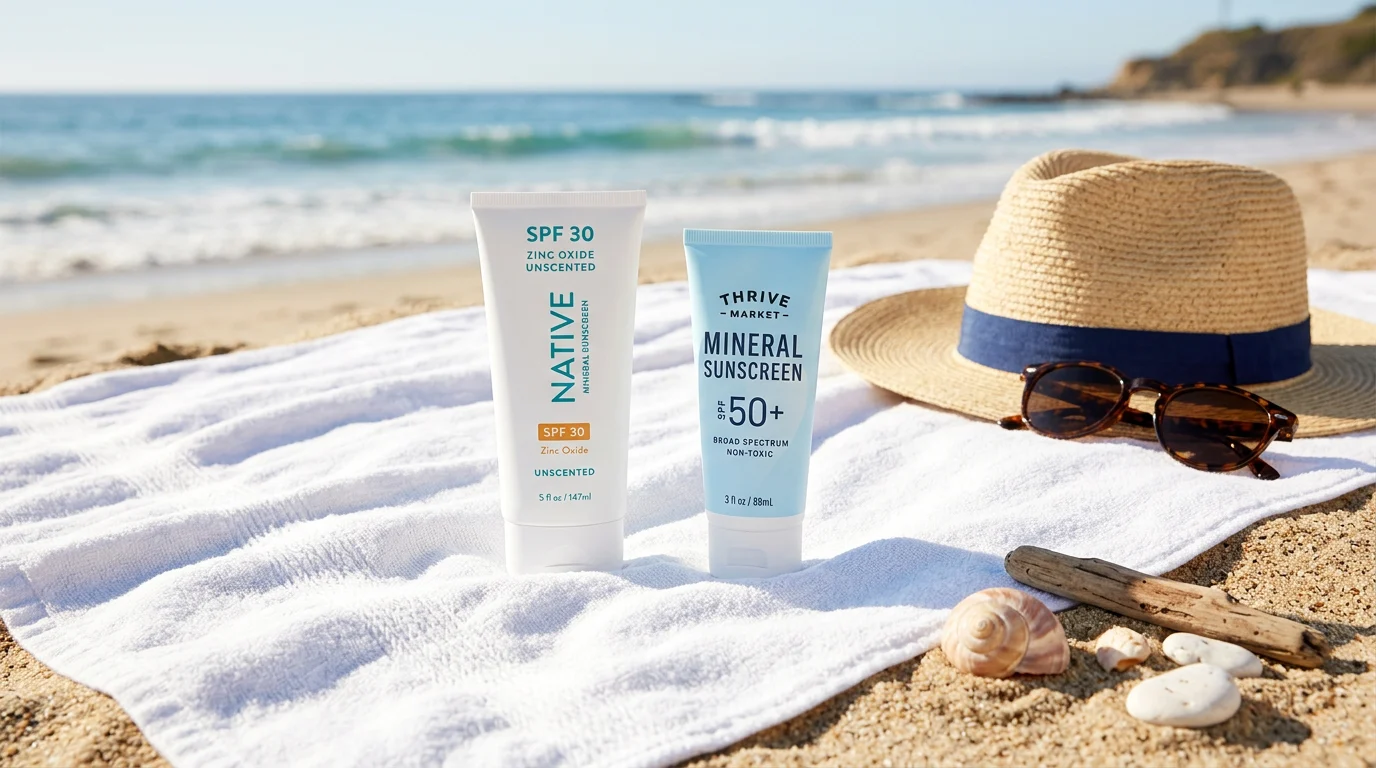
Choosing a non-toxic sunscreen starts with what the FDA actually says. Here’s which filters I skip, and the four mineral picks I’d buy for the whole family.
Key Takeaways
- Of the long-used sunscreen filters, the FDA has proposed only zinc oxide and titanium dioxide as safe and effective. Twelve others, including oxybenzone, still need more data as of September 2026.
- In June 2026, the FDA added bemotrizinol, the first new active ingredient on its sunscreen list since the late 1990s.
- In a 2020 study, six common chemical filters showed up in blood after one application. Still, the researchers said that’s no reason to stop using sunscreen.
- Use about 1 ounce for your body and reapply every 2 hours. Most people use far too little.
- For babies under 6 months, shade and clothing come first, not sunscreen.
For years, I grabbed the same drugstore bottle without reading the label. Then I finally turned it over, and oxybenzone was right there in the active ingredients.
So I went digging into what the FDA actually says. The answer surprised me, and it changed how my family does sunscreen.
By the end of this guide, you’ll know which filters I skip and why. You’ll also know which non-toxic sunscreen fits each person in your home, from babies to adults.
What the FDA actually says about non-toxic sunscreen ingredients
Here’s the part that surprised me most. In 2021, the FDA proposed that only two of the long-used sunscreen ingredients had enough data to call safe and effective: zinc oxide and titanium dioxide.
However, twelve other ingredients landed in a “needs more data” group. For example, that list includes oxybenzone, octinoxate, homosalate, octisalate, octocrylene, and avobenzone. As of September 2026, the FDA’s own sunscreen page still lists them that way.
Meanwhile, the rules are finally moving. In June 2026, the FDA added bemotrizinol as a safe and effective ingredient for adults and kids 6 months and older. Then, in September 2026, it finalized the removal of two older ingredients, PABA and trolamine salicylate, saying their risks outweigh their benefits.
The blood study that got everyone’s attention
In a 2020 study published in JAMA, researchers tested six chemical filters. After a single application, all six showed up in the blood above the FDA’s safety-testing threshold.
However, the researchers were clear that this doesn’t mean people should stop using sunscreen. In other words, “absorbed” means “needs more study,” not “proven harmful.”
“Needs more data” isn’t the same as dangerous. But it isn’t the same as safe, either.
The filters I skip, and why
None of these is proven harmful to people. Still, each one has an open question, so I skip them for my family.
- Oxybenzone: it had the highest blood levels in the 2020 study. Also, Hawaii has banned the sale of sunscreens with it since 2021 to protect coral reefs, and the EU caps how much a product can contain.
- Octinoxate: it’s also on the “needs more data” list. In addition, Hawaii’s 2021 reef law bans it along with oxybenzone.
- Homosalate: since 2025, the EU has only allowed it in face products, at up to 7.34%. In the U.S., it’s still on the “needs more data” list.
- Octocrylene: a 2021 study found it breaks down into benzophenone inside the bottle as the product ages. California lists benzophenone as a cancer-causing chemical under Proposition 65.
Worth knowing
You may read that Key West banned oxybenzone too. However, Florida passed a law in 2020 that blocks cities from banning any sunscreen, so that ban didn’t survive.
Storage tip
The FDA says not to leave sunscreen containers in direct sun. It also says to treat a bottle with no expiration date as expired three years after you buy it. So keep sunscreen in a shaded bag, not on the dashboard.
Why mineral sunscreen is my pick (and one myth to drop)
Mineral sunscreen has a bad reputation it no longer deserves. Honestly, I skipped it for years because of the white cast. The first one I tried made me look like I’d painted my face.
Then I tried a few newer formulas. The difference was hard to believe, because one blended almost fully into my skin.
So why mineral? First, zinc oxide and titanium dioxide are the two long-used filters the FDA has proposed as safe and effective. Also, the American Academy of Dermatology recommends them for sensitive skin and children.
The myth: mineral sunscreen “reflects” the sun
You’ve probably read that mineral sunscreen sits on your skin like a mirror. That’s mostly wrong. A 2025 University of New South Wales study found that mineral and chemical filters both work mainly by absorbing UV light.
The same study found something bigger, too. At least a third of the “mineral-only” products it checked had other UV-absorbing chemicals in them. So read the whole ingredient list, not just the front of the bottle.
White cast fix that works for me
I put mineral sunscreen on slightly damp skin and blend it in small circles. For my face, a tinted formula hides the cast best.
Labels worth knowing on sunscreen
- EWG Verified: the EWG says verified sunscreens avoid its “unacceptable” ingredients and fully disclose what’s inside, including fragrance.
- Whole Foods standards: Whole Foods says its body care standards ban 240+ ingredients. For example, parabens, phthalates, formaldehyde donors, and oxybenzone are all on its list.
- Leaping Bunny: it means no new animal testing. That matters for ethical shoppers, but it isn’t a safety check on the ingredients.
The 4 non-toxic sunscreens I’d buy for my family
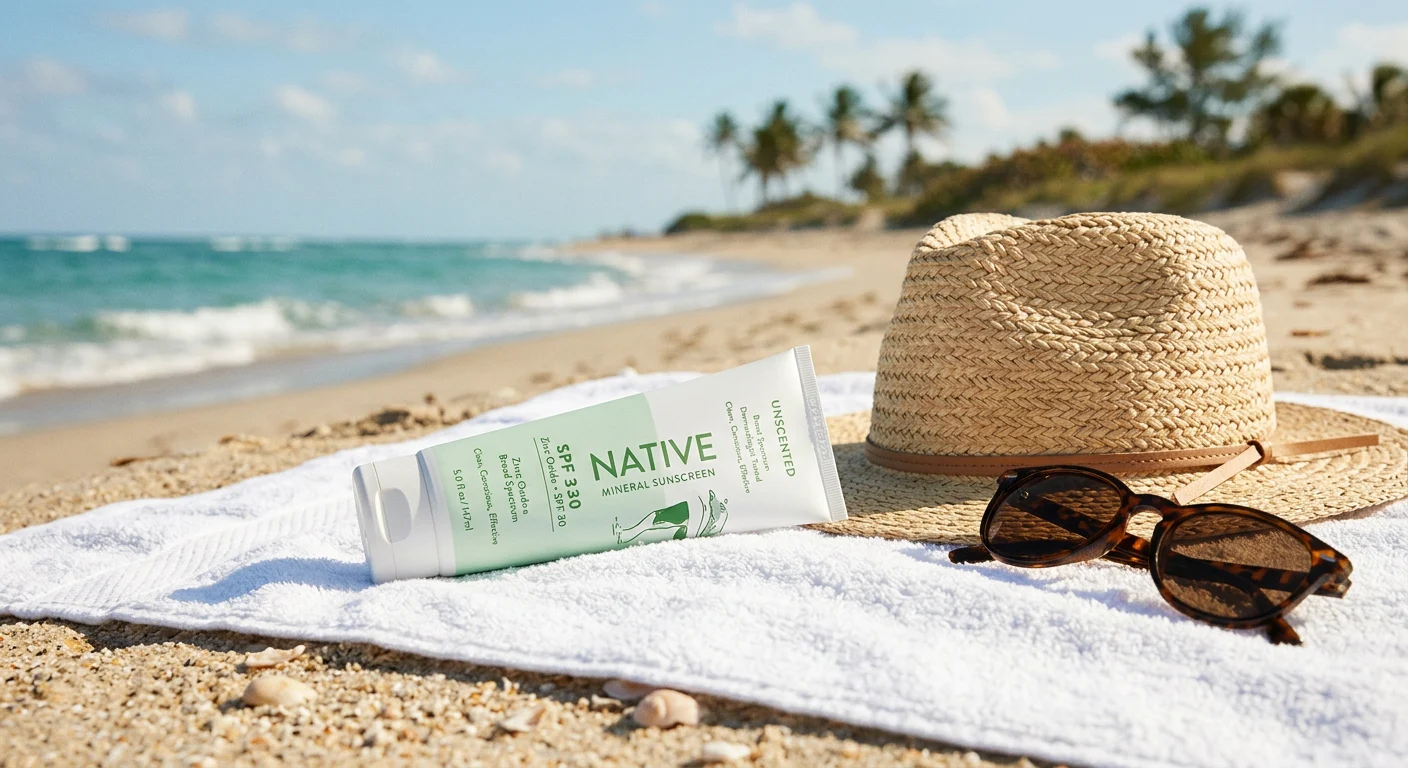
All four picks use zinc oxide as their only active ingredient. Also, I’ve tested most of these across different activities, and several have been my go-to for a full summer.
1. Native Sunscreen Lotion SPF 30: best everyday family pick
Native is the first one I tell people about. According to Native, the lotion uses 17% zinc oxide and skips oxybenzone and octinoxate. It also leaves out the chemical UV booster butyloctyl salicylate, and it comes in an unscented version.
Best for: everyday family use · Outside proof: none I could confirm; the claims above are Native’s own
The trade-off: Native’s page lists the lotion at SPF 30 and doesn’t mention water resistance. So for swim days, check the label or grab a water-resistant pick below.
2. Thinkbaby Safe Sunscreen SPF 50+: best for babies 6 months and up
Thinkbaby’s product listing at Whole Foods calls it the first baby mineral sunscreen to pass Whole Foods’ premium body care requirements. It uses 23.4% zinc oxide and is water resistant for up to 80 minutes. The listing also says it has no parabens, phthalates, oxybenzone, or avobenzone.
The FDA says infants are at greater risk than adults of sunscreen side effects, such as a rash. So for a baby’s skin, I’d rather use a short, zinc-only formula.
Best for: babies over 6 months and toddlers · Outside proof: Leaping Bunny, per the brand’s listing
The trade-off: it costs more than drugstore brands. Still, this is the one place I don’t try to save a few dollars.
3. ATTITUDE Mineral Sunscreen SPF 30: best EWG Verified pick
ATTITUDE’s unscented mineral lotion carries the EWG Verified mark, and I confirmed that on EWG’s own site. According to ATTITUDE, it uses 20% non-nano zinc oxide and is vegan. The brand also makes kids’ versions, including a face stick that EWG lists as verified.
Best for: fragrance-free daily wear · Outside proof: EWG Verified
The trade-off: ATTITUDE says this SPF 30 lotion is not water resistant. So for the pool or beach, use a water-resistant pick instead.
4. Thinksport Kids Sunscreen Stick SPF 30+: best for reapplying on the go
First of all, a stick makes reapplying on kids so much easier. There’s no dripping, and you’re not chasing a squirming kid with a lotion bottle.
According to Thinksport, the stick uses 20% non-nano zinc oxide and is water resistant for up to 80 minutes. The brand also says it’s been rated “1” on EWG’s Skin Deep since 2010.
Best for: active kids and quick touch-ups · Outside proof: none I could confirm; it isn’t EWG Verified
The trade-off: EWG’s sunscreen guide, which lists it as Thinkkids Kids Sunscreen Stick, flags a moderate concern about this stick’s UVA and UVB balance. So I’d use it for touch-ups, not as your only sunscreen.
Before you pick an SPF
The AAD says SPF 30 blocks 97% of UVB rays. However, a higher number doesn’t mean you can reapply less often. The Skin Cancer Foundation warns that high-SPF users tend to stay out longer and skip reapplying.
All 4 picks side by side
Of course, different ages and summer plans need different formulas. So use this table to find your match fast.
| Sunscreen | Best for | Zinc oxide | Water resistant | Pick it if |
|---|---|---|---|---|
| Native Lotion SPF 30 | Everyday family use | 17% | Not stated | You want an easy, unscented daily lotion |
| Thinkbaby SPF 50+ | Babies 6 months+ and toddlers | 23.4% | 80 minutes | You’re shopping for a little one |
| ATTITUDE SPF 30 | Fragrance-free daily wear | 20% | No | You want the EWG Verified mark |
| Thinksport Kids Stick | Touch-ups on the go | 20% | 80 minutes | You reapply on busy kids all day |
How much sunscreen to use (most people use too little)
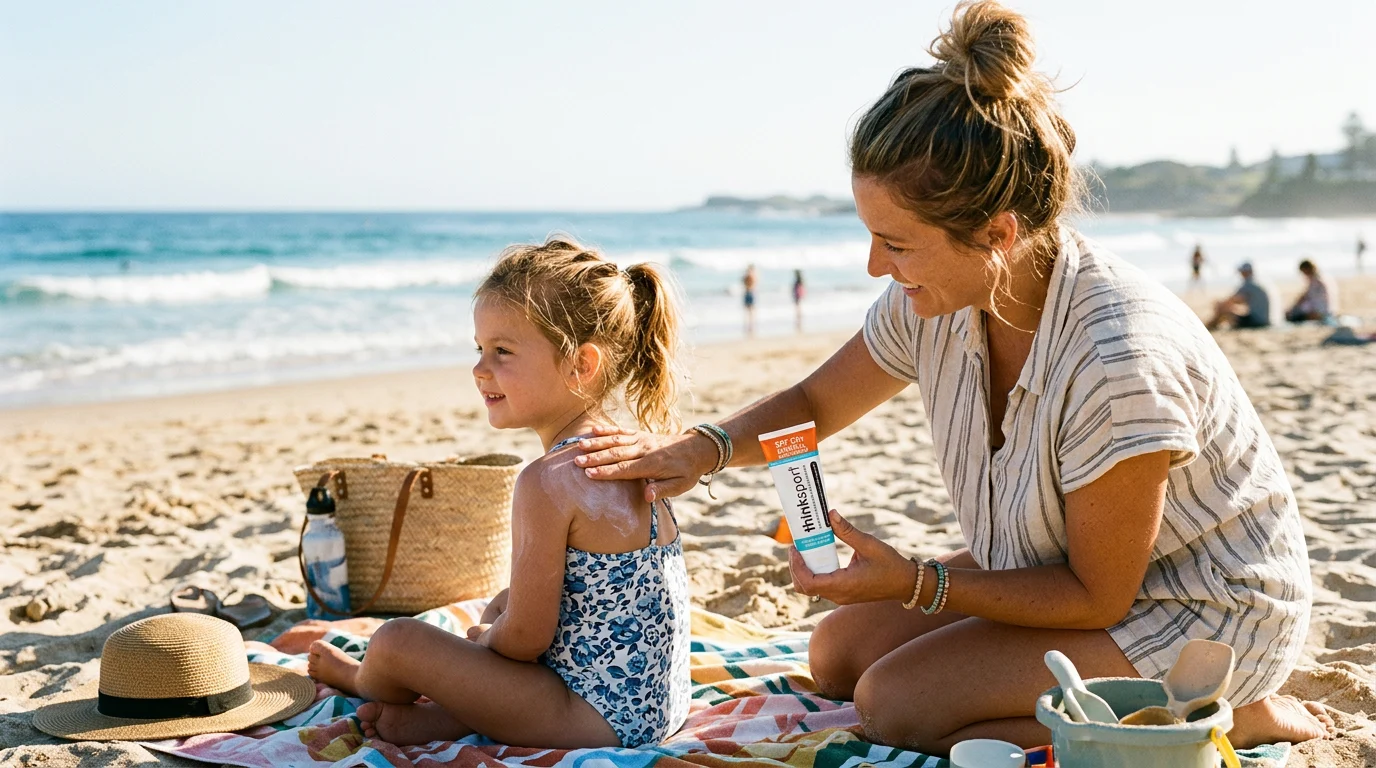
Still, even the best mineral sunscreen only works if you use enough. According to the AAD, many people apply only about 20% to 50% of the amount they need. Here’s the AAD’s how-to:
- Body: about 1 ounce, or enough to fill a shot glass.
- Face: at least 1 teaspoon.
- Timing: put it on about 15 minutes before you go outside.
- Reapplying: do it every 2 hours, and right after swimming or sweating.
Also, “water resistant” doesn’t mean all day. The FDA requires those labels to say whether the sunscreen lasts 40 or 80 minutes in water.
When mineral sunscreen isn’t the whole answer
I’m not going to pretend one bottle solves everything. Here’s where I’d think twice.
- Babies under 6 months: the FDA says sunscreen isn’t recommended for them, so shade and clothing come first. According to the AAP, a small amount on small areas is okay if you can’t find shade. Ask your pediatrician first.
- A chemical sunscreen is all you have: use it anyway. After all, the FDA says “needs more data” doesn’t mean unsafe, and a sunburn is a known harm.
- The label says “mineral only”: check the full ingredient list. That UNSW study found extra UV-absorbing chemicals in at least a third of those products.
- Sunscreen is your only plan: add shade, hats, and sun-protective clothing too. The AAD says sunscreen works best alongside them.
This post is general information, not medical advice. For babies, skin conditions, or reactions, talk with your pediatrician or a dermatologist.
Make one swap before your next beach day
You’re already working to protect your family from the sun. The only question is what goes on their skin at the same time.
So pick the one bottle your family uses most, and swap it for a zinc-only formula from the table above. Then use enough, and reapply every two hours.
Your turn
What sunscreen is in your beach bag right now? Tell me through the contact page, and I’ll tell you what I’d check on its label.
Frequently asked questions about non-toxic sunscreen
What makes a sunscreen non-toxic?
In this guide, it means zinc oxide or titanium dioxide as the only active ingredients, with no fragrance, parabens, or phthalates. Those two minerals are the long-used filters the FDA has proposed as safe and effective. For a quick outside check, look for the EWG Verified mark.
Is mineral sunscreen really safer than chemical sunscreen?
Mineral filters have the strongest regulatory backing right now, because the FDA proposed only zinc oxide and titanium dioxide as safe and effective. Meanwhile, six chemical filters reached the blood in a 2020 study. Still, the FDA says the chemical filters need more data, not that they’re proven harmful.
Is mineral sunscreen safe for babies?
For babies under 6 months, the FDA says sunscreen isn’t recommended, so use shade and clothing instead. For older babies and kids, the AAP suggests zinc oxide or titanium dioxide for sensitive spots like the nose, cheeks, ears, and shoulders. Always check with your pediatrician.
How do I fix the white cast from mineral sunscreen?
What works for me is applying it to slightly damp skin and blending in small circles. For my face, a tinted mineral formula hides the cast best. Also, newer formulas blend far better than older ones, so it’s worth trying a second brand.
How often should I reapply mineral sunscreen?
Reapply every two hours, and right after swimming or sweating. Also, “water resistant” labels must say whether the sunscreen lasts 40 or 80 minutes in water, so it’s not an all-day promise. A higher SPF doesn’t change this rule.
Does mineral sunscreen protect as well as regular sunscreen?
It can, as long as the formula is good and you use enough. In fact, a 2025 study found mineral and chemical filters both work mainly by absorbing UV light. So pick a broad-spectrum SPF 30 or higher, use about a shot glass for your body, and reapply often.
Sources (checked September 24, 2026)
- U.S. FDA, Questions and Answers: FDA’s regulatory actions on OTC sunscreen: zinc oxide and titanium dioxide proposed as safe and effective; 12 ingredients needing more data; PABA and trolamine salicylate removed September 10, 2026.
- U.S. FDA, FDA Expands Sunscreen Options for the First Time in 20 Years: bemotrizinol added June 2026.
- Matta et al., JAMA, 2020: six filters above 0.5 ng/mL after one application; not a reason to avoid sunscreen.
- Hawaii Legislature, SB2571 (Act 104): oxybenzone and octinoxate sales ban from January 1, 2021.
- Florida Phoenix, DeSantis signs bill prohibiting Florida cities from banning sunscreens: Key West ban overridden, 2020.
- European Union, Regulation 2022/1176: oxybenzone (benzophenone-3) limits.
- European Union, Regulation 2022/2195: homosalate limited to face products at 7.34%, from 2025.
- Sorbonne University, Study shows many sunscreens contain a carcinogenic compound: octocrylene breaks down into benzophenone; Proposition 65 listing.
- U.S. FDA, Sunscreen: How to Help Protect Your Skin from the Sun: 40 or 80 minute labels; reapply every 2 hours; storage; expiration; infants.
- U.S. FDA, Should You Put Sunscreen on Infants? Not Usually: shade first; greater risk of side effects like rash.
- American Academy of Pediatrics, Sun Safety: babies under 6 months; zinc oxide or titanium dioxide for sensitive areas.
- American Academy of Dermatology, Sunscreen FAQs: SPF 30 blocks 97%; about 20% to 50% of the amount needed; mineral filters for sensitive skin and children.
- American Academy of Dermatology, How to apply sunscreen: 1 ounce for body; 1 teaspoon for face; 15 minutes before; reapply every 2 hours.
- Skin Cancer Foundation, Does a High SPF Protect My Skin Better?: reapply every 2 hours regardless of SPF.
- UNSW Sydney, Mineral vs chemical sunscreens: both mainly absorb UV; at least a third of “mineral-only” products had other UV absorbers.
- Whole Foods Market, Beauty and body care standards: 240+ banned ingredients.
- Leaping Bunny, FAQ: no new animal testing.
- Native, Sunscreen Lotion: 17% zinc oxide; free-from claims.
- Whole Foods Market, Thinkbaby Baby Sunscreen SPF 50+: 23.4% zinc oxide; 80 minutes; free-from claims; premium standard claim.
- ATTITUDE, Mineral Sunscreen SPF 30: 20% non-nano zinc oxide; vegan; not water resistant.
- EWG, ATTITUDE Sunly Mineral Sunscreen Lotion, Unscented, SPF 30: EWG Verified.
- Thinksport, Kids Sunscreen Stick SPF 30+: 20% non-nano zinc oxide; 80 minutes; EWG Skin Deep claim.
- EWG, Thinkkids Kids Sunscreen Stick, SPF 30: moderate UVA/UVB balance concern.