Non-Toxic Cookware: What “PFOA-Free” and “Ceramic” Hide
This post has affiliate links. As an Amazon Associate I earn from qualifying purchases, at no extra cost to you. How I pick products.
PFOA-free tells you about one chemical dropped in 2015. Ceramic is not ceramic. Here is what non-toxic cookware labels leave out, and which pan to reach for instead.
Key Takeaways
- PFOA-free is a claim about the past. Makers agreed to drop that one chemical by 2015, so the label says nothing about what replaced it.
- Ceramic pans are not ceramic. The coating is sprayed on and baked, and experts call it quasi-ceramic.
- Nonstick coating starts to break down above about 500°F, which a dry pan on high heat passes in minutes.
- The FDA warned about lead in imported metal cookware, and its advice is to throw the listed pans out, not sell or donate them.
- A new stainless pan sheds the most metal into acidic food. But that drops sharply after the first few uses.
Every pan on the non-toxic cookware shelf makes a promise. PFOA-free. Ceramic. Nontoxic. Green. Chemical-free.
But here is the thing nobody prints on the box. There is no legal meaning behind most of those words, and two of them are close to empty.
So this guide does three things. It takes apart the two non-toxic cookware claims you will see most, it walks through what is really known about each pan material, and it ends with which pan to grab for which job. No pan here is a villain, and you do not need to replace your kitchen.
The two cookware claims that tell you the least
PFOA-free is a promise about 2015
So start with PFOA, which was one chemical used to make nonstick coating. Back in 2006 the EPA set up a program with eight big makers, who agreed to cut PFOA by 95 percent by 2010 and to work toward dropping it entirely by 2015. All of them say they met it.
So a pan sold today saying PFOA-free is telling you it does not contain a chemical the industry stopped using a decade ago. Every new nonstick pan can say that. It is true, and it is close to useless.
And what the label does not say is what took its place. The coating is still PTFE, and PTFE sits in the same broad family of chemicals, which the EPA describes as long lasting and breaking down very slowly over time. That is the family people mean when they say forever chemicals.
Ceramic pans are not really ceramic
This one caught me out. The American Ceramic Society, who would know, calls these coatings quasi-ceramic rather than ceramic.
Here is why. A mix of silica, metal oxides and binders gets sprayed onto a metal pan, then baked at 400 to 800°F. But real ceramic is fired far hotter than that. So what you have is a thin sprayed layer, not a ceramic body.
And it wears. The same group notes that an overheated ceramic pan can break down much like a PTFE one, sometimes within months of buying it, while a well-treated one can last up to ten years. So that gap is almost entirely about heat and care, which is good news, because both are yours to control.
What ceramic does get right
None of this makes ceramic a bad buy. It genuinely contains no PTFE, so the overheating problem below does not apply to it in the same way, and for eggs and fish it works well while the coating is fresh. Just buy it knowing it is a wear item rather than a lifetime pan, and do not pay lifetime-pan money for it.
What actually happens when a nonstick pan gets too hot
So this is the real risk with nonstick, and it is about temperature rather than the pan sitting in your cupboard.
According to Poison Control, the coating starts to break down above about 500°F. Breathing the fumes can bring on what people call Teflon flu: chills, fever, tiredness, headache, body aches, and sometimes chest tightness. It usually shows up within hours and clears in a day or two.
For most people that is unpleasant rather than dangerous. But there is one group for whom it is far worse.
So how do you hit 500°F by accident? Easily. An empty pan left on a hot burner climbs past it in a few minutes. Searing steak, dry-toasting spices and preheating a skillet while you chop will all do it. But the rule is simple. Never heat a nonstick pan empty, and keep it off high heat. Then use steel or iron for anything that needs a hard sear.
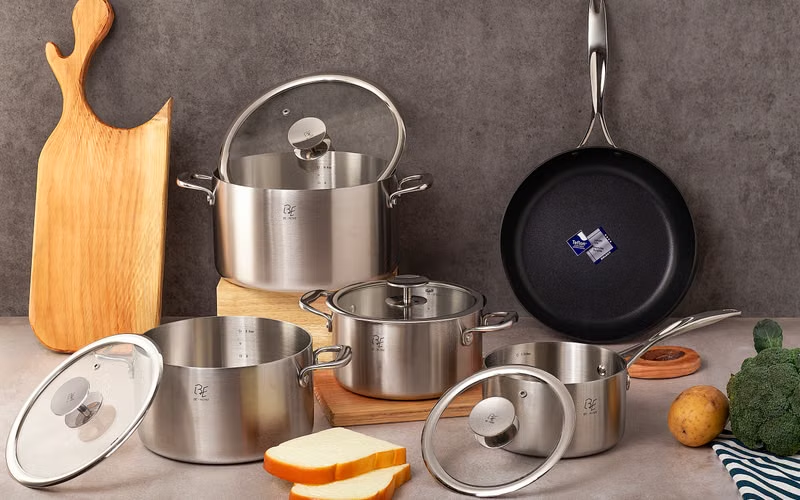
The lead warning most people missed
Meanwhile, while shoppers argue about coatings, the FDA has been putting out a warning about a different problem in a different aisle.
It covers imported metal cookware that can leach lead, including pots and pans made of aluminum, brass and aluminum alloys, with named brands and products added over time. The FDA is blunt about the risk, saying there is no known safe level of lead exposure, and that young children and people who are pregnant or breastfeeding are most at risk.
And its advice is stronger than usual. Check your home against the list, then throw the cookware away. Do not donate it, and do not have it refurbished.
Who should actually check
This is not a warning about the pans at your local big-box store. It centers on imported aluminum and brass cookware, including pieces bought abroad, brought back in luggage, or picked up at import shops and markets. Traditional glazed clay pots are worth a second look as well, because leaded glaze is a separate and long-standing concern. If a pot came from one of those routes and you cannot identify the maker, the FDA list is worth five minutes of your time.
The five non-toxic cookware materials, honestly
Cast iron
Cheap, close to indestructible, and it gets better with use. It also adds iron to your food, which is real rather than marketing. A review of iron cookware studies found pea paste cooked in an iron pot held about 3.3 times the iron of the same dish cooked in clay. And acidic foods and longer cooking push that number higher still.
For most people that extra iron is a small bonus. But if you have iron overload or hemochromatosis, raise it with your doctor. Worth knowing though, because the internet gets this wrong: the official diet guidance for hemochromatosis focuses on supplements and raw shellfish, and never names cookware.
So the trade-offs are weight, a seasoning layer you have to keep up, and a dislike of long simmers in tomato or wine.
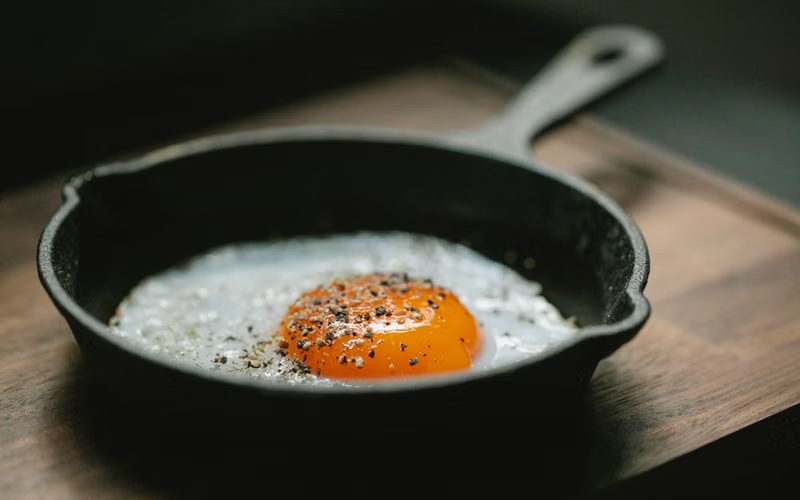
Carbon steel
Think of it as cast iron that went to the gym. Same seasoning idea and the same heat tolerance, but lighter and quicker to respond. And it is what most restaurant kitchens reach for.
Still, it takes a few weeks to build a slick surface, so it is not the pan to start with if you want results tonight. But after that it handles eggs nearly as well as nonstick does.
Stainless steel
This is the workhorse, and the one with the most interesting research behind it.
A study in the Journal of Agricultural and Food Chemistry simmered tomato sauce in stainless pans and measured what came out. A brand new pan gave up about 483 micrograms of nickel per serving, which is roughly half the daily amount the researchers treated as safe. But the number fell fast with use. By the tenth cook, a serving held about 88 micrograms of nickel and 86 of chromium.
So the honest read is this. New pan plus acidic food plus long simmer is the worst case, and then it settles down quickly. For most people it is a non-issue. But if you have a nickel allergy it matters more, and the researchers suggested that people sensitive to metals lower their exposure.
A free fix for a new stainless pan
Break it in on things that are not acidic. Water, stock, rice, seared meat, sauteed vegetables. Save the tomato sauce and the long wine-braise for after the first several cooks, when the leaching has dropped off. That costs nothing and removes most of the gap between a new pan and a settled one.
Enameled cast iron
This is cast iron with a glass coating baked on. So you get the heat retention without the seasoning routine, and the glass surface handles tomato and wine happily, which bare iron does not.
But it is heavy and expensive, and the enamel chips if you knock it or shock it with cold water while hot. So once it chips badly, retire it from food use.
Nonstick, both kinds
PTFE and ceramic both do one job better than anything else, which is eggs and delicate fish with almost no fat. And that job is worth having a pan for.
But treat both as consumables. Low to medium heat only, no metal tools, no dishwasher, and no empty preheating. Then replace the pan when the coating starts to go, rather than cooking on a flaking surface.
Which pan for which job
You do not need all five of these. In fact most non-toxic cookware setups run well on three.
| Job | Reach for | Why |
|---|---|---|
| Eggs, pancakes, fish | Nonstick or ceramic | Nothing else releases as cleanly |
| Searing steak or chops | Cast iron or carbon steel | Handles the heat nonstick cannot |
| Pan sauces and browning | Stainless | You want the stuck bits, and it deglazes |
| Tomato sauce, long braises | Enameled cast iron or stainless | Acid strips bare iron seasoning |
| Cornbread, roasting, the oven | Cast iron | Goes from burner to oven with no limit |
| Boiling and blanching | Stainless | No coating to lose, nothing acidic touching it long |
So if you are starting from nothing, buy a stainless skillet, a cast iron skillet and one small nonstick for eggs. That covers almost everything, and only one of the three will ever need replacing.
The four pans worth buying
These are the non-toxic cookware picks that follow from everything above. Three of them have no coating at all, so there is nothing on them to wear out or break down.
1. A cast iron skillet the cheapest pan that outlives you
Get a 10 or 12 inch one. It sears better than anything coated, goes straight into the oven, and costs less than almost any pan on the shelf. Most come pre-seasoned now, so you can cook on it the day it arrives. The annoying part is the weight, and that it does not love long tomato simmers.
2. A tri-ply stainless skillet for pan sauces and browning
Tri-ply means a layer of aluminum sandwiched in steel, which spreads heat evenly instead of scorching one spot. This is the pan for anything you want to deglaze. Break it in on non-acidic food for the first several cooks, as covered above. The annoying part is that food sticks until you learn to preheat it properly.
3. A carbon steel pan if you want nonstick without a coating
This is the one most people have never tried. It seasons like cast iron but weighs much less and heats faster, and once the surface builds up it handles eggs nearly as well as a coated pan. The annoying part is the wait, because it takes a few weeks of regular use before it gets there.
4. An enameled cast iron Dutch oven for acid and long cooking
The glass coating means tomato, wine and vinegar are no problem, which is exactly where bare iron falls down. It holds heat for braises and bread, and there is no seasoning to maintain. The annoying part is the price and the weight, and that the enamel chips if you knock it or hit it with cold water while hot.
And if you want one coated pan for eggs, buy a small ceramic one rather than a large expensive set. You will replace it in a couple of years either way, so there is no sense paying lifetime prices for it.
Shop small ceramic nonstick pans
How to make any pan last longer
- Preheat with something in it. Oil, butter or water will do. Because an empty pan on a hot burner is how coatings die and how fumes start.
- Medium is hot enough. Home burners run hotter than people think, and high heat buys you very little on anything but a sear.
- Let it cool before it meets water. Because cold water on a hot pan warps metal and chips enamel.
- Skip the dishwasher on coated and iron pans. Detergent strips seasoning and dulls coatings faster than anything you do on the stove.
- Retire a flaking pan. Once a coating lifts, it is going into your food, and no amount of careful cooking will fix that.
Where I would not push this
- Do not bin a working nonstick pan. Used at sane heat and in decent shape, it is fine. So throwing it out today to buy a greener pan just makes trash now.
- Stainless is not a hazard. The nickel numbers are worth knowing, but they are a reason to break a pan in gently, not a reason to avoid the material.
- No pan makes food healthy. This is a materials question and a heat question. What you cook matters more than what you cook it in.
- Expensive does not mean safer. A twenty dollar cast iron skillet outlives most of the premium nonstick on the market.
If you only change one thing
Stop preheating pans empty, and then turn the burner down. That one habit removes the fume risk entirely, doubles the life of every coated pan you own, and costs nothing at all.
After that, if you are buying anyway, put the money into one cast iron or carbon steel skillet. Because it is the cheapest pan on the shelf, and the only one you will still be using in thirty years.
Frequently asked questions
Is non-toxic cookware a real category or just marketing?
Partly marketing. Nontoxic, green and chemical-free have no legal meaning on cookware, so any brand can print them. What is real is the material underneath. Bare cast iron, carbon steel, stainless steel and enameled cast iron have no coating that can break down, which is why they sidestep the question entirely. Coated pans are not dangerous in normal use, but they are wear items, and how hot you run them matters far more than the wording on the box.
What does PFOA-free actually mean on a pan?
Less than it sounds. PFOA was one chemical used in making nonstick coatings. Under an EPA program starting in 2006, eight major manufacturers agreed to cut it by 95 percent by 2010 and work toward eliminating it by 2015, and all say they did. So every new nonstick pan can claim PFOA-free truthfully. The claim tells you nothing about the coating itself, which is still PTFE, or about what replaced PFOA in the manufacturing process.
Is ceramic cookware actually ceramic?
Not in the way the name suggests. The American Ceramic Society describes these coatings as quasi-ceramic, because they are made by spraying a mix of silica, metal oxides and binders onto a metal pan and baking it at 400 to 800 degrees, far below the temperature real ceramics are fired at. The coating contains no PTFE, which is a genuine advantage. But it wears, and an overheated ceramic pan can degrade within months, while a carefully used one can last years.
At what temperature does nonstick coating become a problem?
Above about 500 degrees Fahrenheit, according to Poison Control. That is hotter than most cooking, but an empty pan left on a hot burner reaches it in minutes, and searing or dry-toasting can too. Breathing the fumes can cause temporary flu-like symptoms that usually clear within a day or two. Birds are a serious exception, because the first sign of exposure in a bird can be sudden death, so households with birds should avoid PTFE pans and air fryers entirely.
Does stainless steel cookware leach nickel into food?
Some, and mostly when the pan is new. A study in the Journal of Agricultural and Food Chemistry simmered tomato sauce in stainless pans and found a new pan released about 483 micrograms of nickel per serving, roughly half the daily amount treated as safe. That fell sharply with use, and by the tenth cook a serving held about 88 micrograms. Break a new pan in on non-acidic foods and the issue largely disappears. People with a nickel allergy should take it more seriously.
Is cast iron safe if I have high iron levels?
Cast iron does add iron to food, and this is well documented. A systematic review found food cooked in iron pots carried meaningfully more iron, with acidic dishes and longer cooking times adding the most. For most people that is a benefit. If you have hemochromatosis or iron overload, talk to your doctor about it. Worth noting that official dietary guidance for hemochromatosis focuses on iron and vitamin C supplements and raw shellfish, and does not mention cookware.
Should I worry about lead in my pots and pans?
For most cookware bought from mainstream US retailers, no. But the FDA has issued a warning about specific imported metal cookware, including aluminum, brass and aluminum alloy pots and pans, that can leach lead into food. It says there is no known safe level of lead exposure and advises throwing the listed products away rather than donating or refurbishing them. The risk concentrates in imported cookware, pieces brought back from travel, and traditional lead-glazed pottery.
This is general information, not medical advice. If you keep birds, treat PTFE cookware and air fryers as a hazard rather than a caution. If you have a nickel allergy, iron overload, or a known lead exposure concern, talk to your doctor about your own situation.
Sources (checked September 29, 2026)
- U.S. EPA, 2010/2015 PFOA Stewardship Program — eight companies committed to a 95 percent reduction by 2010 and elimination by 2015, and all state they met the goals.
- National Capital Poison Center, Protect Yourself from Teflon Flu — coating breaks down above about 500°F, symptoms and duration, and the warning that sudden death can be the first sign in birds.
- The American Ceramic Society, Ceramic-coated cookware: investigating the accuracy of this nontoxic cookware trend — sol-gel process, 400 to 800°F firing, quasi-ceramic description, and degradation within months if overheated.
- U.S. FDA, Warning About Imported Cookware That May Leach Lead — named products, the statement that there is no known safe level of lead exposure, and the advice to discard rather than donate or refurbish.
- Kamerud, Hobbie and Anderson, Stainless Steel Leaches Nickel and Chromium into Foods During Cooking, Journal of Agricultural and Food Chemistry — new-pan and tenth-cook nickel and chromium figures for tomato sauce.
- Effect of cooking food in iron-containing cookware on iron content of food and blood hemoglobin: a systematic review — iron transfer from iron cookware, and the effect of acidity and cooking time.
- NIDDK, Eating, Diet, and Nutrition for Hemochromatosis — dietary guidance centers on supplements and raw shellfish, with no mention of cookware.
- U.S. EPA, PFAS Explained — widely used, long lasting chemicals whose components break down very slowly over time.
What is still in your cupboard?
Most kitchens have one pan nobody will throw out and one nobody will admit to using. Tell me through the contact page which pan you actually reach for on a weeknight, and whether you have ever set off the smoke alarm with a nonstick one. I have.