Best Eco Friendly Diapers: Non-Toxic Picks for Every Budget (2026)
This post has affiliate links. As an Amazon Associate I earn from qualifying purchases, at no extra cost to you. How I pick products.
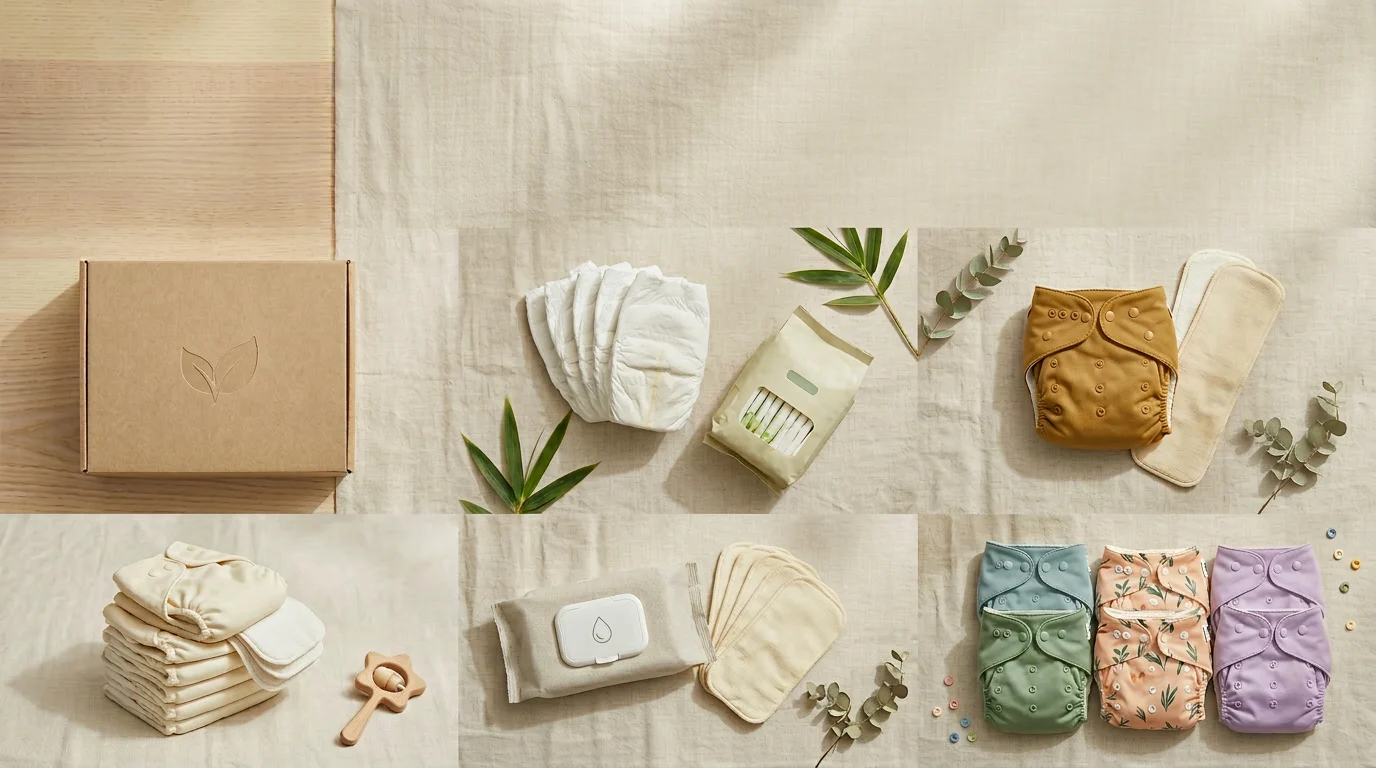
There is no ingredient list on a box of diapers, and no agency makes one appear. Here is what is actually inside them, and which eco friendly diapers hold the certifications they claim.
Key Takeaways
- Nobody makes a brand list what is in a diaper. The CPSC limits no chemical in one other than lead.
- Coterie is EWG Verified. That is the strongest mark in this category, and only a handful of diapers carry it.
- Dioxin is not the reason to switch. The EPA found infants take in over 400,000 times more from food than from diapers.
- Bamboo viscose is not a natural fiber. The FTC is explicit about this, whatever the packaging says.
- Every disposable uses the same absorbent gel. Your real choices are liner, bleaching and fragrance.
Turn a box of diapers over and look for the ingredients. There is no list. Not on the front, not on the back, not on the brand’s website in most cases.
That is legal, and it is the honest reason to care about what you buy. So this guide covers what is actually in the three layers, which marks mean something, and what the research says about the scares you have probably read.
Some of those scares do not hold up. I will show you the numbers rather than repeat them.
What the research says about dioxin
You will read that chlorine bleaching leaves dioxin traces, and that nobody has looked at what builds up across 2,500 changes a year.
Somebody has looked.
The EPA ran a study on dioxins from tampons and diapers. It tested four brands of each. Three findings matter.
- The most toxic dioxin, the one people mean when they say the word, was not detected in any sample.
- For a nursing baby, the dioxin that came from food was more than 400,000 times what came from diapers.
- And their conclusion: dioxins from tampons and diapers are not a meaningful part of what people in the U.S. take in.
One more detail worth sitting with. The study found little gap between all-cotton products and pulp-based ones. So a fiber swap does not move that number either.
What this does not mean
It does not mean bleaching is fine, or that regular diapers match certified ones. Chlorine-free processing is still the cleaner method. And scent and lotion coatings are still real triggers for real babies. But dioxin is the wrong reason to switch, because the numbers do not carry the weight the claim needs.
Who actually regulates a diaper
You will also see a diaper scare quote an FDA position. There is no FDA position, because the FDA has nothing to do with diapers.
They are not overseen by the FDA, because they are not cosmetics or medical devices. The FTC does not cover their labels either, which makes diapers one of the few kinds of clothing left out of those rules. EWG lays this out plainly.
Instead, it is the Consumer Product Safety Commission. And per EWG, the CPSC does not ask for an ingredient label, and it limits no chemical in a diaper other than lead.
So the honest headline is not that a hidden toxin is in the box. It is that nobody makes the company tell you what is in the box. That is why certifications exist in this category, and it is a good enough reason on its own.
The problem with diapers is not a chemical nobody talks about. It is that no agency requires anyone to tell you anything.
What is actually in a disposable diaper
There are three layers, but only two are worth paying more for.
The absorbent core, which is the same everywhere
Every disposable, eco or not, uses the same gel. It comes from petroleum, and no brand has swapped it for a plant version that holds as much at the same thickness.
So if a brand hints its core is plant-based without saying what is in it, that is marketing. The wood pulp around the gel can be cleaner. But the gel is the gel.
The outer cover
Regular covers use a plastic film. Eco ones use a plant-based version made from sugarcane or corn. Both carry a lower carbon cost. But neither breaks down in a landfill, which matters further down.
The inner liner, which is the one that touches your baby
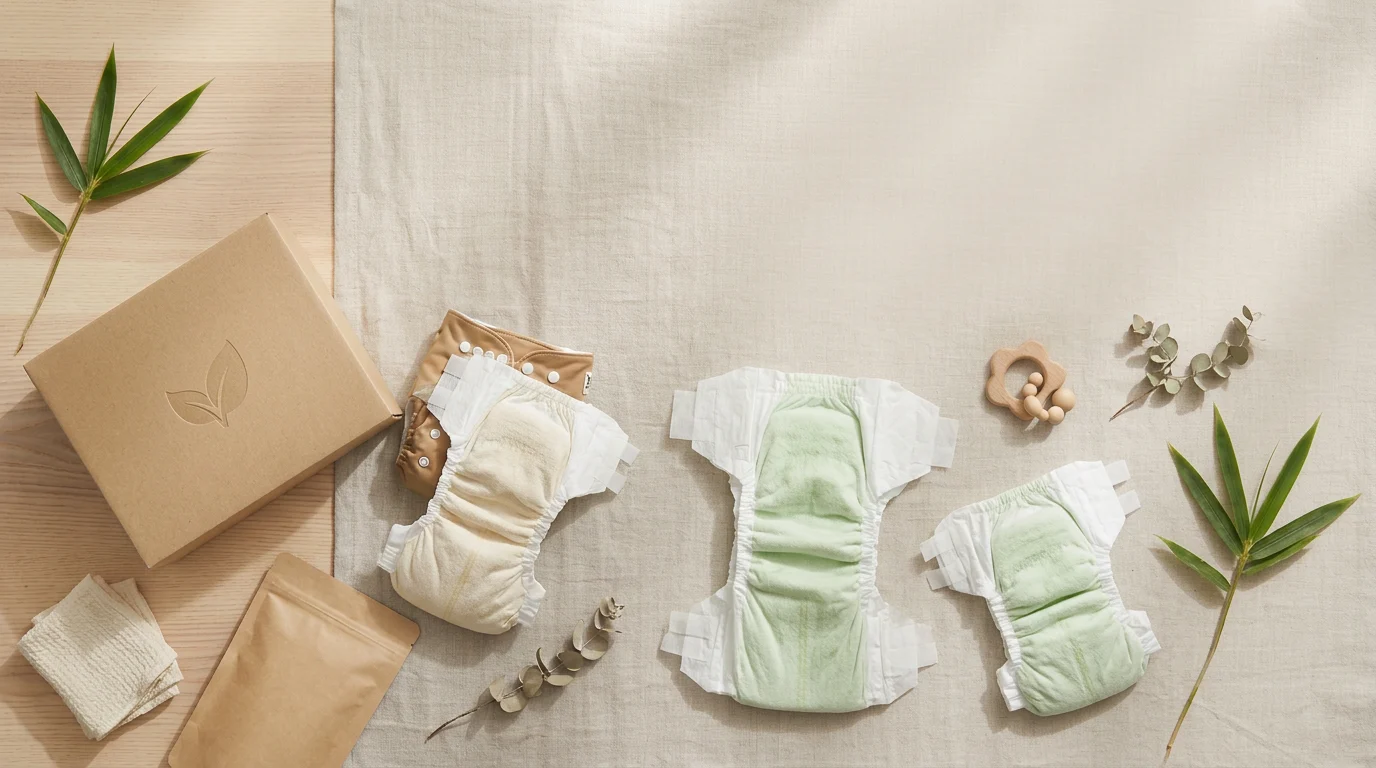
This is where the money is worth spending. Regular liners are polypropylene, the same plastic used in wipes. Eco liners use cotton, pulp bleached without chlorine, or bamboo viscose.
Bamboo is not what the box implies
Bamboo gets sold as a natural fiber. It is not. The FTC is direct: unless a product uses mechanically processed bamboo fiber, it cannot be called bamboo, and should be labeled rayon or rayon made from bamboo. There is, in their words, no trace of the original plant left in finished rayon. It is made by dissolving plant cellulose in strong chemicals. Bamboo viscose liners are genuinely soft and many babies do well on them. They are just not the unprocessed plant the packaging implies.
The three marks worth looking for
Plant-based, natural, gentle and dermatologist tested are unregulated. These three are not.
EWG Verified for Baby Diapers the one that applies here
EWG built a diaper program because the CPSC asks for no disclosure. It screens for known problem chemicals, and it makes the brand say what is in the product. So for diapers, this is the strongest mark in common use.
OEKO-TEX Standard 100 a materials test
Tests parts for azo dyes, heavy metals, formaldehyde and pesticide traces. A solid floor for liner safety. But the certificates run yearly, so a brand’s claim can be a few years old.
MADE SAFE rigorous, but check it applies
Screens finished products against a banned list of more than 6,500 substances. It is a strong mark, but very few disposable diapers carry it, and brands get credited with it loosely. Check the MADE SAFE catalog rather than a roundup before you count it.
Biodegradable is still the emptiest word on the box
Most biodegradable diapers need industrial composting conditions to break down at the rate the packaging suggests. In a landfill, without oxygen, they behave much like conventional ones. Treat the claim as meaningless unless you have somewhere to actually send them.
Six eco friendly diapers, and the credentials they really hold
Coterie — best certified
Proof: EWG Verified Not MADE SAFE
No scent, no lotion, no chlorine, no latex or PVC, and it holds as much as any regular diaper. So it stays my pick for a baby with eczema or a rash that will not settle.
Coterie says that as of June 2026 The Diaper is EWG Verified in every size from newborn through size 7. So the credential covers the product you actually buy, not just one line in the range.
The annoying part: it is the most expensive diaper here by a clear margin.
Andy Pandy — best value with a real certificate
Proof: OEKO-TEX Standard 100, brand-reported Liner: bamboo viscose
Free of chlorine, scent, latex and PVC, with an OEKO-TEX certificate the brand has published. Soft liner, good in the day, and about two-thirds the price of Coterie.
The annoying part: the published OEKO-TEX certificate dates to 2023, and those renew yearly. So ask for the current one if the mark is why you are buying.
Dyper — the only real composting route
Proof: USDA Certified Biobased Extra: REDYPER pickup
Bamboo viscose liner, no chlorine bleaching, and the one big brand that will collect used diapers to compost them. So if the landfill is what bothers you most, this is the only pick that deals with it.
The annoying part: REDYPER runs in selected cities only, and coverage has shifted. Check your zip code before you buy on the strength of the composting, because without it you have a normal diaper.
The Honest Company — easiest to actually buy
Proof: brand-reported chlorine-free Where: most big retailers
No scent, chlorine-free processing, and on the shelf at Target and Walmart. So for a family moving off regular diapers without a subscription, this is the easy step.
The annoying part: its certification stack is the thinnest here, and overnight performance is average for a heavy wetter.
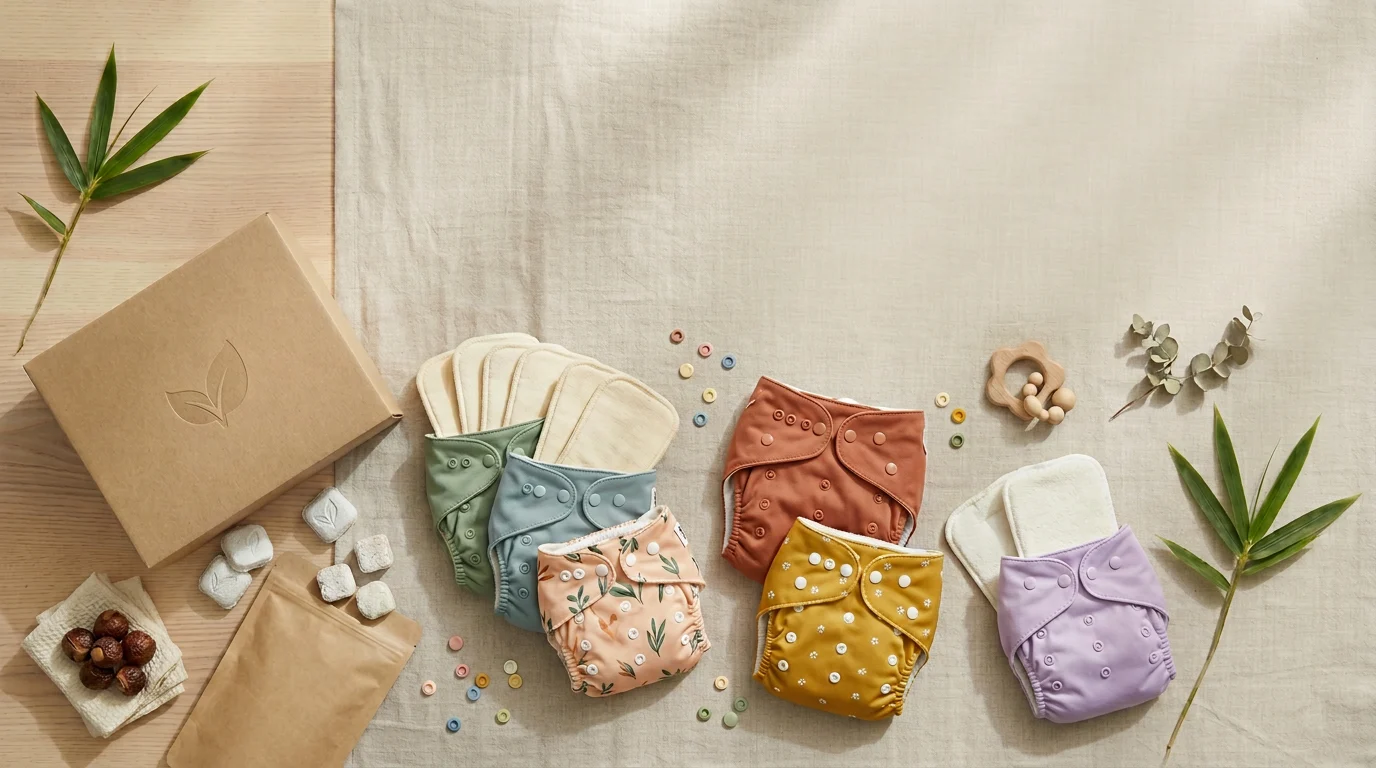
GroVia — the way into cloth without committing
Format: hybrid shell Insert: cloth or disposable
One reusable shell takes a cloth insert at home and a throwaway one for daycare. Snaps rather than hook and loop, so they survive the wash. And the shells run from about 10 lbs to potty training.
The annoying part: a starter set is a few hundred dollars before you know whether cloth suits your life. Buy a small kit first.
Thirsties and bumGenius — full cloth
Format: all-in-one cloth Fabric: organic cotton inner
If you are going all in, these two get named most and hold up longest. No gel, no pulp, no glue against the skin, which is why babies with a stubborn rash often do best here.
The annoying part: cloth needs changing more often than an absorbent disposable, and most daycares will not take it. Check your provider before you buy a full stash.
Cloth against disposable, honestly
You will read that lifecycle studies always show cloth wins. But that is stronger than the evidence supports.
What the research shows is that the answer turns on how you wash and dry. Full loads, warm rather than hot, line dried where you can, and cloth comes out ahead. But daily hot washes on half loads with a tumble dryer, and the gap closes or flips.
So cloth is not greener by default. It is greener if your laundry habits are good. Still, it is better for a baby’s skin either way, because there is no gel, no bleached pulp and no glue against them.
| Your situation | Start with | Why |
|---|---|---|
| Rash that will not settle | Coterie, or cloth | Fewest things touching the skin |
| Want certified, spend less | Andy Pandy | OEKO-TEX at a mid price |
| Landfill is your worry | Dyper, if REDYPER covers you | The only real composting route |
| Just want off conventional | Honest Company | In every store, no subscription |
| Curious about cloth | GroVia hybrid | Cloth at home, disposable at daycare |
| Committed to cloth | Thirsties or bumGenius | Built to last the whole period |
Where I would not push this
- A diaper will not fix a lasting rash. A rash that runs more than a few days, or blisters, or spreads, is worth a doctor rather than a fourth brand.
- Regular diapers are not hurting your baby. So if budget or supply means you use them, that is a fine call. The case for switching is openness and skin comfort, not rescue.
- Do not throw out what you have. Use the box you bought. Switching costs less at the next order than in a panic today.
- Certification is not performance. A certified diaper that leaks at 3am will not get used, and the diaper you actually put on the baby is the one that counts.
If you only change one thing
Go fragrance-free. It is the one change with the clearest link to fewer rashes, you can find it at every price, and it costs almost nothing.
Then look at the liner, and treat the rest of the box as second-order. Buy the smallest pack of whatever you pick, run it two weeks, and judge it on your own baby rather than mine.
Frequently asked questions
Should I worry about dioxin in diapers?
The evidence says no. An EPA exposure assessment found the most toxic dioxin was not detected in any diaper sample tested, and that a nursing infant’s dioxin exposure from diet is more than 400,000 times the exposure from diapers. Its conclusion was that diapers do not significantly contribute to total dioxin exposure. Chlorine-free processing is still cleaner, but dioxin is not the reason to switch.
Who regulates diapers in the United States?
The Consumer Product Safety Commission. The FDA does not, because diapers are not cosmetics or medical devices, and FTC labeling rules do not cover them either. According to EWG, the CPSC does not require ingredient labeling or limit chemicals in diapers other than lead. That disclosure gap, rather than any single ingredient, is the real case for buying a certified diaper.
Which diaper certification actually matters?
For disposables, EWG Verified for Baby Diapers is the strongest mark in common use, because it screens chemicals and requires the brand to disclose what is in the product. OEKO-TEX Standard 100 is a solid materials test for the liner. Dermatologist tested and pediatrician recommended are marketing phrases with no standard behind them.
Is bamboo a natural fiber in diapers?
Not as used in diapers. Bamboo liners are viscose, a fiber made by dissolving plant cellulose in strong chemicals. The FTC says a product cannot be called bamboo unless it uses mechanically processed bamboo fiber, and that no trace of the original plant remains in finished rayon. Bamboo viscose liners are soft and many babies do well on them, but they are processed, not raw plant.
Do eco diapers leak more?
Not at the top of the range. Every disposable, eco or conventional, uses the same superabsorbent gel, so capacity is broadly similar. Coterie and Dyper hold up against conventional brands. Budget eco options are usually fine in the day and weaker overnight for a heavy wetter. If leaks appear at the back waistband, size up before changing brand.
Are biodegradable diapers really biodegradable?
Rarely in practice. Most need industrial composting conditions to break down at the advertised rate. In a landfill, where almost all diapers go, there is little oxygen and they behave much like conventional ones. The claim only means something if you have a service that collects them. Dyper’s REDYPER pickup is the main option, and it runs in selected cities only.
This is general information, not medical advice. If your baby has a rash that spreads, blisters, or lasts more than a few days, talk to your pediatrician rather than trying another brand.
Sources (checked September 29, 2026)
- U.S. EPA, Exposure Assessment to Dioxins from the Use of Tampons and Diapers — the most toxic congener undetected in all samples, dietary exposure over 400,000 times higher for nursing infants, and the conclusion on total exposure.
- Environmental Working Group, EWG VERIFIED Baby Diapers — diapers are not FDA regulated, FTC labeling rules do not cover them, and the CPSC requires no ingredient disclosure and limits no chemical other than lead.
- Coterie, EWG Verified: What It Means for Your Baby’s Diaper — The Diaper EWG Verified in all sizes as of June 2026, with no MADE SAFE claim.
- MADE SAFE, Certified Product Catalog — Coterie does not appear among certified brands or products.
- U.S. FTC, How to Avoid Bamboozling Your Customers — rayon from bamboo cannot be labeled bamboo, and no trace of the original plant remains in finished rayon.
Which one worked for your baby?
Skin is individual, and the diaper that suits one baby will not suit the next. If you have been through a rash and found something that finally settled it, say so through the contact page. That is the detail other parents come here looking for.