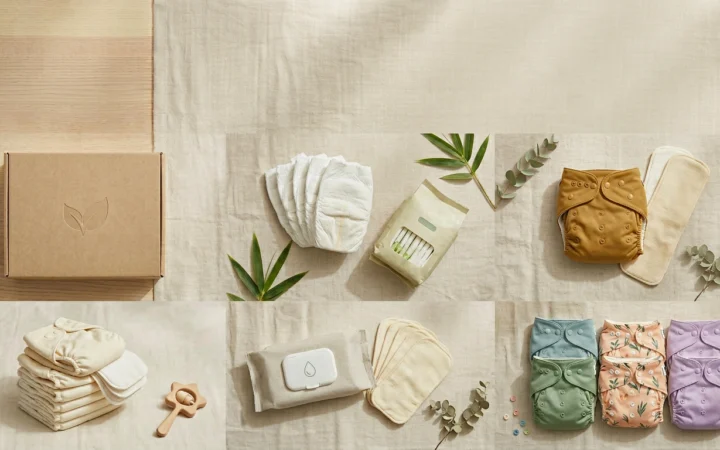
The Best Eco Friendly Baby Products for a Safer Nursery
This post has affiliate links. As an Amazon Associate I earn from qualifying purchases, at no extra cost to you. How I pick products.
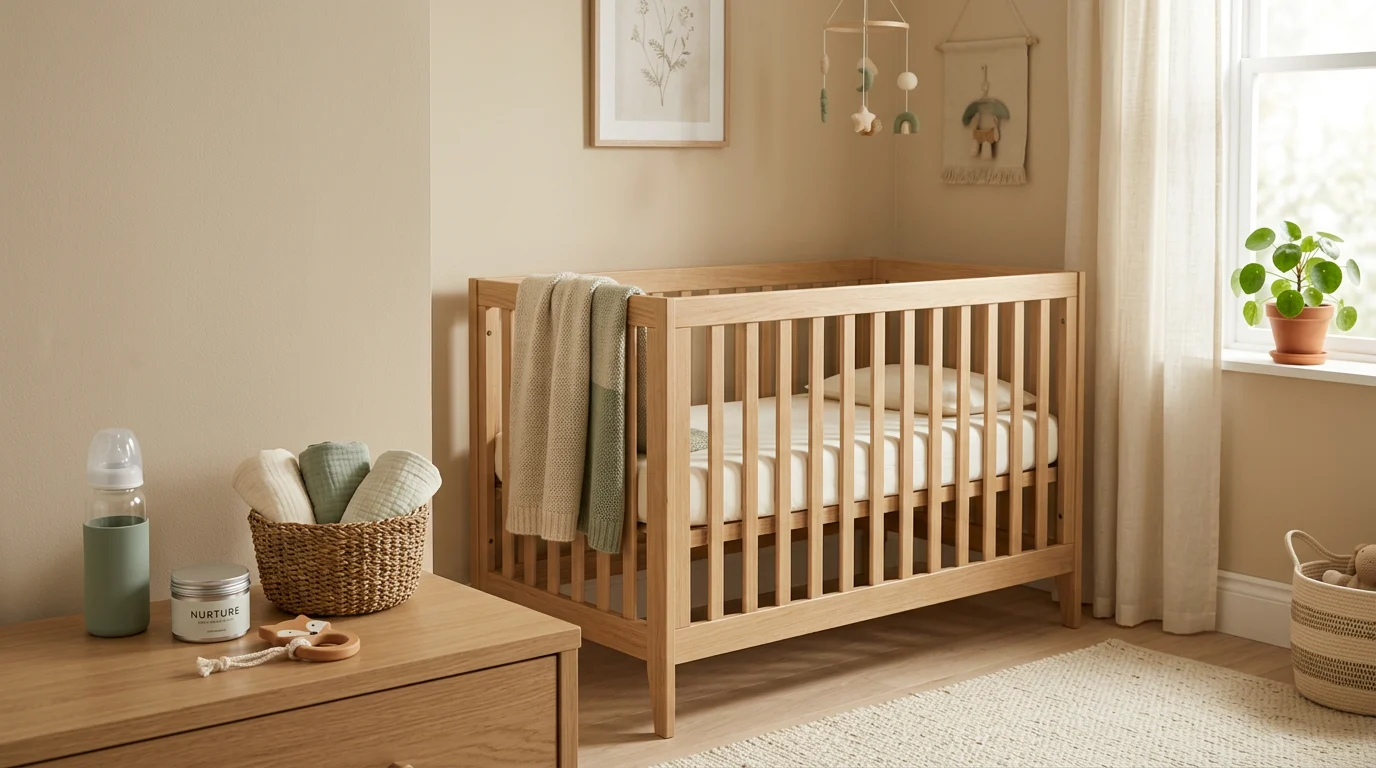
Four marks on a label actually mean something. The rest are words any brand can print. Here is how to tell them apart, and which nursery buys are worth the money.
Key Takeaways
- Natural, gentle, pure and hypoallergenic mean nothing. No agency owns those words, so any brand can print them.
- But four marks do carry weight: EWG Verified and MADE SAFE for skincare, GOTS for fabric, GREENGUARD Gold for furniture.
- Unscented is not fragrance-free. The FDA says unscented products may still contain fragrance to mask a smell.
- The mattress is the first buy, and safe sleep beats chemistry. Firm, flat, tight-fitting, nothing in the crib but a fitted sheet.
- Crib bumpers and inclined sleepers are banned in the U.S. If you were given one, it does not go in the crib.
Pick up a bottle of baby lotion. The front shows a leaf, a sleeping baby, and the words gentle and pure.
Now turn it over. Fragrance. A preservative you cannot say out loud. Maybe a PEG compound.
None of that is illegal, and none of it is hidden. It is just that the front of the bottle and the back of the bottle are written by different people for different reasons. So this guide is about the back of the bottle, plus the four marks that let you skip reading it.
Why a baby’s body handles this differently
Babies are not small adults, and two things drive the difference.
First, their skin is thinner. A study in Pediatric Dermatology measured baby skin against adult skin and found it up to 30 percent thinner, in both the outer layer and the one below it. And a thinner barrier lets more of what you put on it pass through.
Second, the organs that clear chemicals out are still getting up to speed for the first couple of years. Meanwhile a baby spends most of the day pressed against cloth, chewing on things, and breathing at floor level, where dust settles.
So the same product does more in a baby than it does in you. That is the whole case for caring here, and it does not need anyone to call a product poison.
The real reason to buy with care is not that baby products are dangerous. It is that a baby gets a bigger dose of whatever is in them.
How to spot real eco friendly baby products from the label
Natural, gentle, pure and clean are not defined by anyone. No agency owns those words, and no test backs them up. But these next four are different, because somebody checks.
EWG Verified skincare, wipes, sunscreen
The Environmental Working Group runs it. To carry the mark, a brand has to skip everything on EWG’s list of problem ingredients. It also has to list every ingredient on the label, fragrance included. And that second rule is what makes the mark useful, because fragrance is normally allowed to stay one word.
MADE SAFE skincare, mattresses, home goods
MADE SAFE checks every ingredient against a hazard list of more than 15,000 substances. It is harder to earn than most marks, so fewer products carry it. But check their catalog rather than trusting a brand’s own wording, because plenty of brands call themselves safe without holding it.
GOTS cotton clothing, bedding, fabric
This one follows the fiber the whole way, from the farm through dyeing and sewing to the finished garment, and it limits the chemicals used at each step. Plain organic cotton on a tag promises none of that. So look for the GOTS logo itself.
GREENGUARD Gold cribs, mattresses, furniture, paint
UL runs it, and it measures what a product gives off into the air. Gold is the stricter tier, and UL calls it the one meant for nurseries, schools and health care. So on any piece of nursery furniture, this is the mark to look for.
Two more come up often enough to explain. OEKO-TEX Standard 100 tests the finished cloth for harmful stuff, but says nothing about how it was grown or dyed. So it is a decent floor when GOTS is not on offer. GOLS then does for organic latex what GOTS does for cotton, which is why a latex crib mattress should carry both.
CPSC compliant is not a credential
You will see this on baby gear as though it were a prize. It is not. The Consumer Product Safety Commission, or CPSC, sets the legal floor that every kids’ product sold here already has to meet. So a brand flagging it is telling you it obeyed the law. Treat it as a floor, then, and treat a brand that leads with it as one short on real marks.
Fragrance-free and unscented are not the same word
This one is worth learning by heart. The FDA says that products labeled unscented may still hold fragrance, added to cover up the smell of something else. It also lets a whole fragrance blend show up on a label as the single word fragrance, because those recipes count as trade secrets. So fragrance-free is the phrase you want, and unscented is the one that tells you nothing.
Buy the crib mattress first, and get the sleep rules right
A baby sleeps twelve to sixteen hours a day on one surface. No other product gets that much contact time, so this is where the money goes first.
But safe sleep outranks chemistry here, and it is worth saying before anything about materials.
The sleep rules that matter more than the fabric
Here the American Academy of Pediatrics, or AAP, is blunt. A surface counts as firm only if it does not dent when the baby lies on it, and it must fit the crib tightly. Nothing tipped up more than ten degrees is safe for sleep. And the crib gets a fitted sheet and nothing else. No pillows, quilts, blankets, toppers, loose sheets, toys or bumper pads. So an organic mattress under a pile of soft bedding is a worse buy than a plain one under a fitted sheet.
On top of that, two whole product types are banned. The Safe Sleep for Babies Act took effect on November 12, 2022, and it made crib bumpers and tipped-up sleepers banned hazards in the United States. Padded bumpers, vinyl bumper guards and slat covers all count. So if one shows up as a gift or a hand-me-down, it does not go in the crib.
What to look for in the mattress itself
Regular crib mattresses often use plastic foam, a vinyl cover, and flame retardant chemicals, all right at the surface where the baby breathes. The marks that rule those out are GOTS for the cotton or wool cover, GOLS if the core is latex, and GREENGUARD Gold for what the whole thing gives off.
Naturepedic is the clearest case of a brand that holds the full set. Their own page lists GOTS, GOLS, GREENGUARD Gold and MADE SAFE, and in 2024 they became the first mattress brand to earn EWG Verified. Avocado is the other name worth a look at that level.
But one firm rule: buy the mattress new. You cannot check what a used one soaked up or how it was stored, and this is the one nursery item where secondhand is a bad trade.
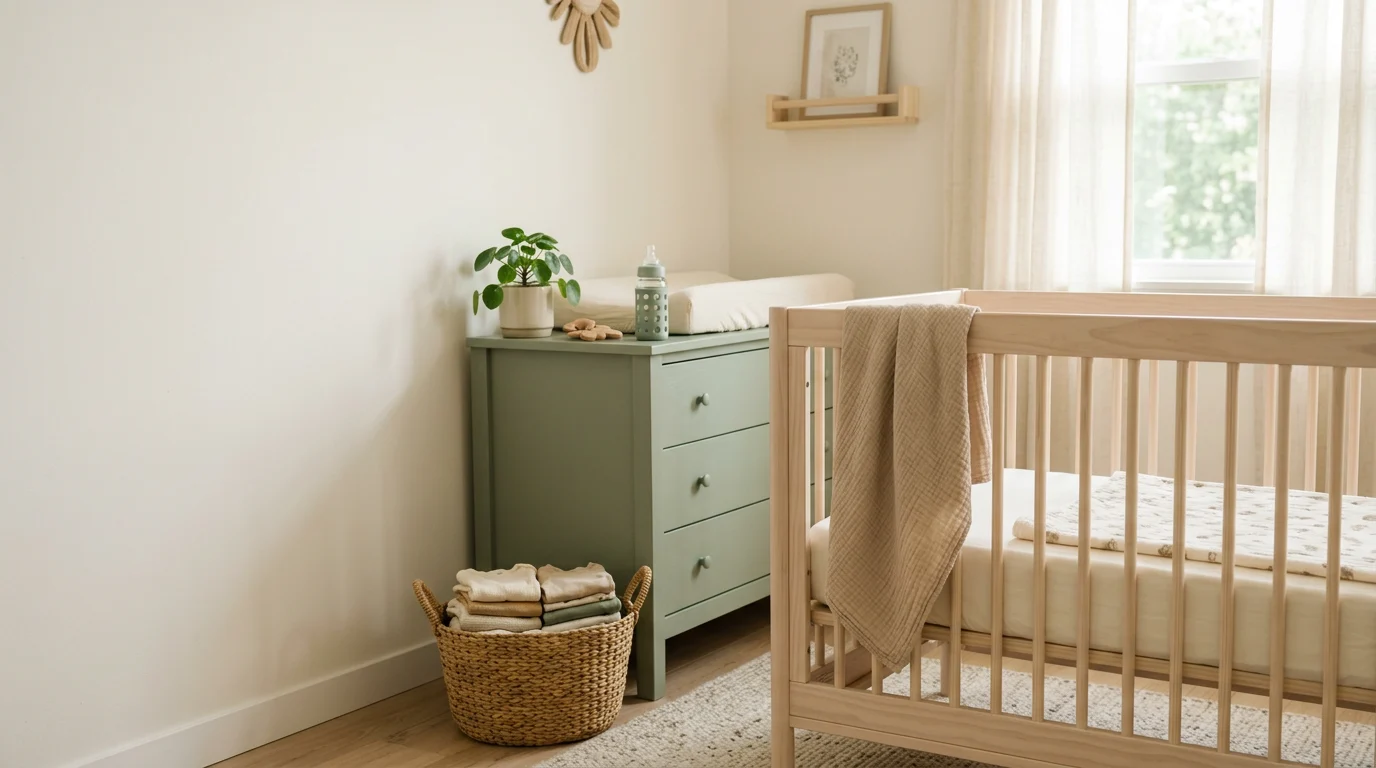
Baby skincare that holds the marks it claims
Skincare goes on several times a day, which makes it the second place to spend. But brand wording gets loose here, so this is what each one really holds.
Pipette EWG Verified, for daily use
Pipette’s fragrance-free baby lotion carries the EWG Verified mark, and much of the baby range does too. It leans on plant squalane, a light moisturizer close to what skin makes on its own. But check the exact product before you assume the whole shelf is covered, since brands add and change recipes.
Babo Botanicals the most marks in one brand
Babo is the rare brand holding several real marks at once. Some products are EWG Verified, some are USDA Organic, some meet NSF/ANSI 305 for organic content, and four show up in the MADE SAFE catalog. It also covers the full range, from wash to lotion to mineral sunscreen, so it is the easiest one-brand answer.
Tubby Todd All Over Ointment what it actually holds
This balm is a favorite for dry and eczema-prone skin, and it is fragrance-free. On paperwork, here is the exact picture: it scores a 1, the lowest hazard rating, in EWG’s Skin Deep database, and it holds Leaping Bunny for cruelty-free. But it is not EWG Verified, and it is not in the MADE SAFE catalog. A Skin Deep 1 is still a good sign. It is just a different thing from a mark, and brands here blur the two all the time.
The thirty-second check that beats any brand list
Search the exact product in EWG’s Skin Deep database before you buy. You get a line-by-line read on the ingredients and a score from 1 to 10 in under a minute, and it is free. But keep two things straight while you use it. A low score is EWG’s own rating of the recipe, while the EWG Verified mark means the brand also opened its books and met the label rules. Both are useful, and they are not the same claim.
Seven things worth avoiding on a baby skincare label
- Fragrance or parfum. The most common trigger in baby skincare, and under FDA rules one word can stand for a whole hidden blend. So check this first, because it is the fastest tell.
- Parabens. Methylparaben, propylparaben and butylparaben keep a product from spoiling. They are common in regular lotion and wash, and they are the ones most often flagged for hormone effects.
- Phthalates. These carry scent and soften plastic. But they are rarely named on a label, which is one more reason to skip anything listing fragrance.
- Formaldehyde releasers. Four to know by sight: DMDM hydantoin, imidazolidinyl urea, diazolidinyl urea and quaternium-15. In a water-based product, they give off formaldehyde slowly over time.
- Chemical sunscreen filters on babies. Oxybenzone and octinoxate soak in. But there is a broader point here, and it comes next.
- Talc. The FDA says talc and asbestos form near each other underground, so where the ore comes from and how it is tested both matter. Cornstarch powder sidesteps the whole question.
- PEG compounds and anything ending in -eth. Sodium laureth sulfate is the common one. These can carry 1,4-dioxane, a byproduct of how they are made, and it never shows up on a label because nobody added it on purpose.
On sunscreen, the age rule comes before the ingredient rule
The FDA says sunscreen is not advised for babies under six months at all. So shade, timing and clothing are the answer at that age, and a doctor is worth asking first. After six months, a mineral sunscreen with non-nano zinc oxide or titanium dioxide is the simple pick, because it sits on the surface instead of soaking in.
Ingredients that are fine, and work
- Squalane from plants, a light moisturizer close to skin’s own oil.
- Shea butter, cocoa butter and coconut oil, plain softeners most babies take well.
- Colloidal oatmeal, the soothing part of most eczema balms, the Tubby Todd one included.
- Non-nano zinc oxide, the mineral sun filter, for babies over six months.
- Phenoxyethanol at low levels. It is the workhorse in clean recipes, and European safety reviewers have held a one percent cap as safe. Every water-based product needs something to stop it spoiling, so this is a fine one to see.
Organic baby clothing, and what GOTS actually covers
Cotton takes a real share of the world’s bug sprays. According to Pesticide Action Network UK, citing trade figures, cotton grows on about 2.4 percent of the world’s farmland, yet it takes roughly 4.7 percent of pesticides and 10 percent of insecticides sold.
You will see a much bigger number, 16 percent of insecticides, quoted all over this topic. But that figure is older, and the current one is lower. The case for organic cotton holds up fine without it.
Why the logo matters more than the word
GOTS covers the farm, the dyes, the finish, the waste water and the way workers are treated. But a tag reading organic cotton with no logo covers none of that, because nobody checked.
Burt’s Bees Baby is the easiest place to start, and their own wording is worth knowing. GOTS applies to the items that carry the GOTS logo, while their non-organic cotton pieces carry OEKO-TEX instead. So check the item, not the brand. Finn + Emma and Colored Organics are the other two names that come up again and again for GOTS basics.
Shop GOTS certified organic baby clothing
Where to spend, and where not to bother
You do not need an all-organic wardrobe. Spend on what sits against skin the longest, which means sleepers, onesies, swaddles and sleep sacks. Then skip it on coats, carriers and anything worn over another layer, because the contact is small and the price jump is not.
Diapers, feeding and toys, in short
Diapers
The EPA puts disposable diapers at 4.1 million tons thrown out in 2018, about 1.4 percent of all city waste that year, with 3.3 million tons buried. So the volume case is real.
On the products, Coterie is EWG Verified, which is the strongest mark here. Dyper runs a pickup service that sends used diapers to a composting plant, and that is the only real end-of-life gain on offer, though it depends on where you live. Honest Company sits in the middle, and you can buy it anywhere.
Cloth runs a few hundred dollars up front against a few thousand in disposables over the same years, so the math favors it. But price your own picks, because brand and stash size move that number a lot. A mixed setup works too. Cloth at home, disposables overnight and for travel. And if most changes happen at home, that alone cuts your disposable count by half or better.
Shop Coterie and Dyper diapers
Shop Honest Company diapers and baby essentials
Feeding
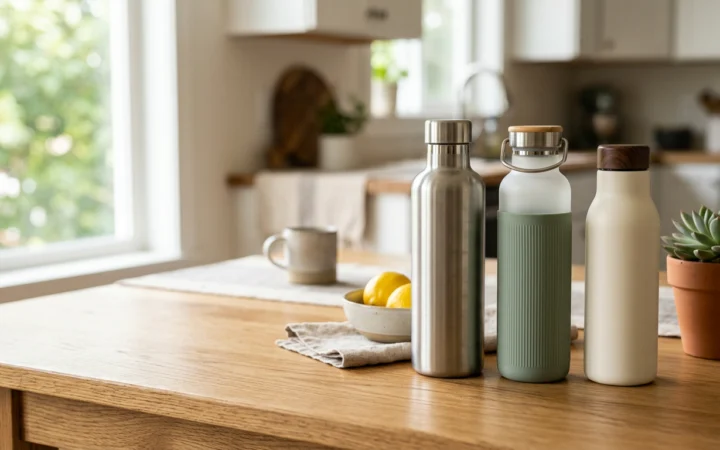
Pura makes steel bottles with silicone nipples, so no plastic touches the milk, and the parts switch from bottle to sippy to straw cup as the baby grows. Beyond that, steel or glass tubs and silicone bags cover most of what you need.
One thing worth knowing about bamboo plates. The suction ones sold as bamboo are usually bamboo powder held together with a resin glue, not solid wood. They are fine in normal use. But do not put them in the dishwasher or the microwave, because heat is what breaks the glue down.
Shop Pura stainless baby bottles
Toys
The best swap here is also a cheap one. Soft plastic bath toys with a squeeze hole grow mold inside, where you cannot see it or reach it. So solid rubber toys with no hole, like Hevea’s, take the problem away.
Natursutten pacifiers are one piece of natural rubber, with no seam for germs to sit in. But natural rubber is latex, so it is the wrong choice if latex allergy runs in your family. Ask your doctor first in that case. For wooden toys, solid wood with a water-based finish lasts through several kids.
The rest of the nursery, in the order worth doing it
- Paint, with time to air out. Zero-VOC lines are sold everywhere now for a small premium. But the part people skip is the waiting. So paint well before the due date, then air the room out for a couple of weeks.
- Furniture, solid wood over pressed board. Particle board and MDF are held together with formaldehyde glues. Solid wood with a water-based finish gives off far less, and GREENGUARD Gold is the shortcut when you buy new.
- Floors, hard surface over carpet. Carpet holds dust at exactly the height a baby lives at. But if you cannot change it, a vacuum with a HEPA filter on a set schedule does most of the work.
- Blinds, and one real hazard. In 1996 the CPSC found that imported vinyl mini blinds made with lead break down in sun and heat, leaving lead dust on the surface. It told homes with young children to take old vinyl mini blinds out. So if the room has old blinds of unknown age, replace them. Cords are a strangling risk too, which makes cordless the safer buy either way.
Secondhand is often the cleaner choice
An old solid wood dresser gave off whatever it was going to give off years ago. A brand new pressed-board piece has not started yet. So for furniture, secondhand solid wood usually beats new, and it costs a fraction as much. Then put the saved money into the mattress, the paint and the bedding, which are the three things worth buying new.
Where I would not push this
- Safe sleep beats every fabric question. A firm, flat, bare crib matters more than what the sheet is woven from. So do not let a nicer mattress talk you into extra bedding.
- Do not replace what you already own. Registry gifts and hand-me-downs are not a hazard you need to fix today. So swap things as they wear out, with the two exceptions above, which are banned sleep products and old vinyl blinds.
- A rash is a doctor question, not a shopping question. If it spreads, blisters or lasts more than a few days, then stop buying products and call your doctor.
- None of this makes regular products dangerous. So if budget or supply means you use them, that is a fine call. The case here is about dose and plain labels, not rescue.
If you only change one thing
Get the crib right. Firm mattress, tight fit, fitted sheet, nothing else in there. That is free, it beats every mark on this page, and it takes one minute to act on.
After that, pick the thing you reach for most often, which for most families is skincare, and make one checked switch. Then leave the rest alone until that feels normal.
Frequently asked questions
Which eco friendly baby products should I buy first?
The crib mattress, then daily skincare. A baby sleeps twelve to sixteen hours a day on the mattress, so it gets more contact time than anything else you own. Look for GOTS on the cover, GOLS if the core is latex, and GREENGUARD Gold for what it gives off. After that, switch skincare to something EWG Verified or MADE SAFE, since it goes on several times a day. Clothing comes third, and there you only need sleepers and onesies in GOTS cotton.
What is the difference between fragrance-free and unscented?
They are not the same. The FDA says products labeled unscented may still hold fragrance, added to mask the smell of something else in the mix. Fragrance-free means none was added at all. The FDA also lets a whole fragrance blend appear as the single word fragrance, because those recipes count as trade secrets, so one word on a label can stand for many hidden ingredients. For a baby, choose fragrance-free.
Which baby skincare certifications actually mean something?
EWG Verified and MADE SAFE are the two that carry real weight. EWG Verified asks a brand to skip everything on EWG’s problem list and to name every ingredient on the label, fragrance included. MADE SAFE checks ingredients against a hazard list of more than 15,000 substances. USDA Organic and NSF/ANSI 305 speak to organic content rather than overall safety. Natural, gentle, pure and hypoallergenic have no set meaning and tell you nothing on their own.
Is an EWG Skin Deep score of 1 the same as EWG Verified?
No, and the gap matters. A Skin Deep score is EWG’s own rating of a recipe based on what is in it, running from 1 for lowest hazard up to 10 for highest. EWG Verified is a mark the brand applies for, and it also asks the brand to name every ingredient and follow EWG’s rules. So a product can score 1 without being Verified. Both are useful signs, but only one has the brand opening its recipe to review.
What is the safest crib mattress setup?
Firm, flat and tight-fitting, with a fitted sheet and nothing else. The American Academy of Pediatrics defines firm as a surface that does not dent when the baby lies on it, and says no sleep surface should tip up more than ten degrees. So keep pillows, quilts, toppers, loose sheets, blankets, toys and bumper pads out of the crib entirely. Crib bumpers and tipped-up sleepers have been banned in the United States since November 12, 2022.
Can I buy a crib mattress secondhand?
This is the one nursery item worth buying new. You cannot check how a used mattress was stored, what it soaked up, or whether it stayed firm and flat, and firmness is a safety rule rather than a comfort choice. Furniture works the other way round. An old solid wood dresser has already finished giving off fumes, so it is often cleaner than a new pressed-board piece, and that is where secondhand saves money at no cost.
Are natural rubber pacifiers and bath toys safe?
For most babies, yes. Natural rubber holds no PVC, BPA or chemical softeners, and one-piece designs have no seam or hole where mold and germs collect. That last point is the real win with bath toys, because soft plastic ones with a squeeze hole grow mold inside where you cannot see it. But one caution: natural rubber is latex. So if latex allergy runs in your family, ask your doctor before using these.
This is general guidance, not medical advice. The safe sleep rules come from the American Academy of Pediatrics, and they apply no matter what a product is made from. If your baby has a rash that spreads, blisters, or lasts more than a few days, talk to your doctor.
Sources (checked September 29, 2026)
- American Academy of Pediatrics, A Parent’s Guide to Safe Sleep — firm surface that does not indent, tight-fitting mattress, no incline over ten degrees, fitted sheet only.
- U.S. CPSC, Safe Sleep for Babies Act Business Guidance — crib bumpers and inclined sleepers are banned hazardous products, effective November 12, 2022.
- U.S. FDA, Fragrances in Cosmetics — unscented products may contain masking fragrance, and fragrance blends may be listed as one word as trade secrets.
- U.S. FDA, Sunscreen: How to Help Protect Your Skin from the Sun — sunscreen is not recommended for infants under six months.
- U.S. FDA, Talc — talc and asbestos occur in close proximity underground, so sourcing and testing of the ore matter.
- U.S. CPSC, CPSC Finds Lead Poisoning Hazard in Imported Vinyl Miniblinds — 1996 finding and the recommendation to remove old vinyl miniblinds from homes with young children.
- U.S. EPA, Nondurable Goods: Product-Specific Data — 4.1 million tons of disposable diapers generated in 2018, 1.4 percent of total municipal solid waste, 3.3 million tons landfilled.
- Pesticide Action Network UK, Cotton — cotton covers 2.4 percent of cultivated land and accounts for about 4.7 percent of pesticides and 10 percent of insecticides.
- UL Solutions, GREENGUARD Certification — Gold is the elevated tier for sensitive groups and the one intended for nurseries, schools and healthcare settings.
- Environmental Working Group, EWG Verified Standards — all ingredients must be disclosed on the label, including fragrance components.
- EWG Skin Deep, Tubby Todd Bath Co All Over Ointment — scores 1, lowest hazard, carries Leaping Bunny, and is not marked EWG Verified.
- Naturepedic, Certifications — GOTS, GOLS, GREENGUARD Gold and MADE SAFE, plus first mattress brand to earn EWG Verified in 2024.
- Burt’s Bees Baby, Sustainability — GOTS applies to items carrying the GOTS logo, with OEKO-TEX Standard 100 applied to non-organic cotton products.
- Stamatas et al., Pediatric Dermatology (2010), Infant Skin Microstructure Assessed In Vivo — infant skin measured up to 30 percent thinner than adult skin across stratum corneum and epidermal thickness.
What did you actually end up keeping?
Every nursery has a few things that got used daily and a few that sat in the closet. If you have been through this already, tell me through the contact page which buys earned their place, and especially which ones you would skip next time. New parents reading this need that more than another list.