The Best Eco Friendly Laundry Detergent That Actually Works
This post has affiliate links. As an Amazon Associate I earn from qualifying purchases, at no extra cost to you. How I pick products.
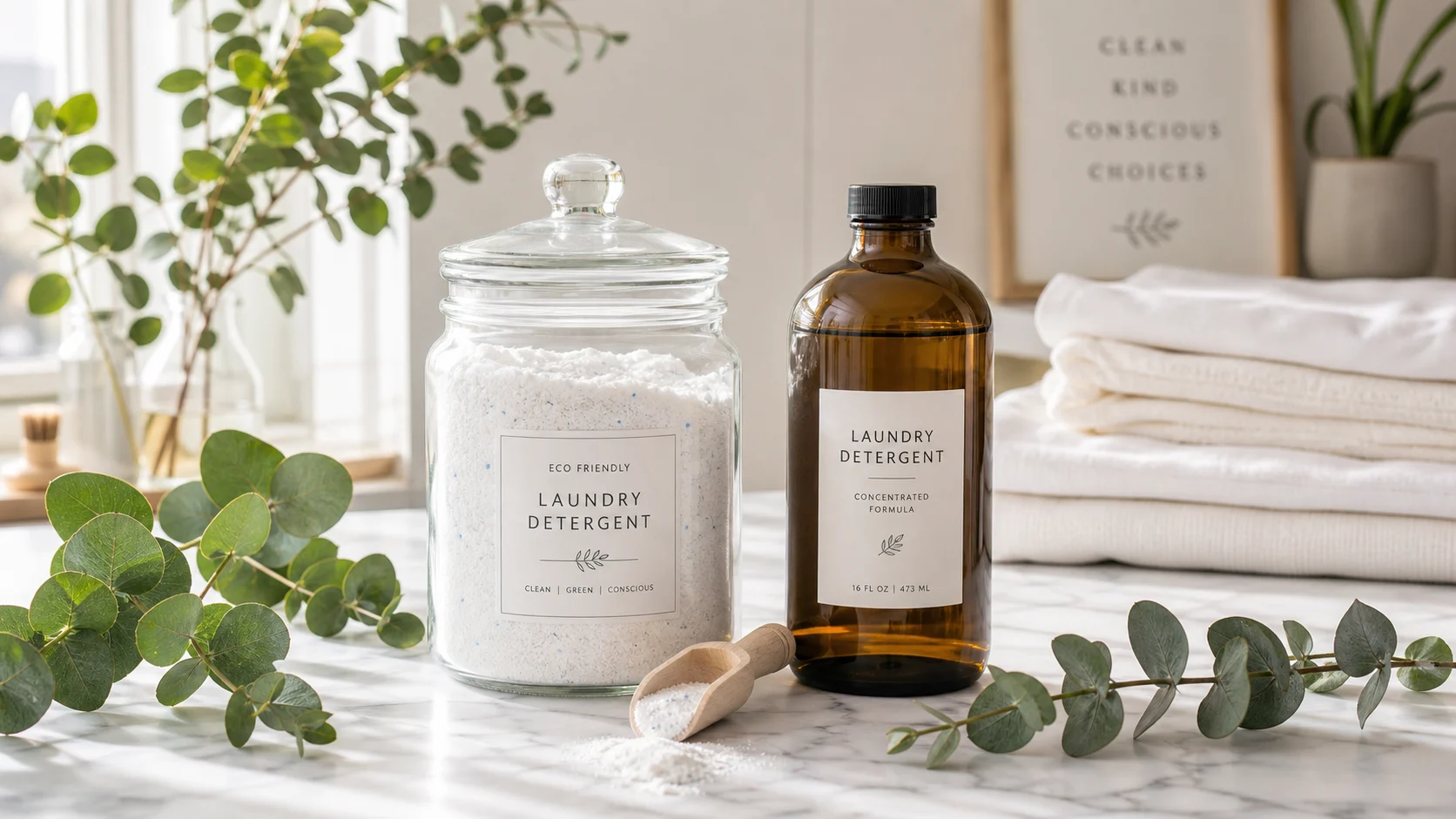
Four eco friendly laundry detergent picks, each checked against the label maker’s own records, plus the free habits that save more energy than any bottle.
Key Takeaways
- EPA Safer Choice is the mark to look for first. The EPA checks every ingredient, and the product has to clean as well as a regular one.
- Seventh Generation Free & Clear and ECOS Free & Clear are both on the EPA’s Safer Choice list, as of September 2026.
- An EWG grade is not the same as the EWG Verified mark. None of these four picks is EWG Verified for laundry.
- Heating water takes about 90% of a washer’s energy, says ENERGY STAR. So going from hot to warm can cut that use in half.
- The average U.S. family washes about 300 loads a year, so small habits add up fast.
Most eco friendly laundry detergent guides point you at two logos and stop there. But a logo on one bottle does not mean the whole brand has it.
So I checked each pick against the groups that hand out the marks, not the brands’ ads. In the end, four made it. Each has a mark you can look up and a full list of what is inside.
In fact, that is the same test I use for every cleaner on this site. You can read the full method for how I pick products if you want the details.
The labels worth looking for
Of course, a green leaf on a bottle can mean anything. These marks, on the other hand, come from outside groups with rules you can read.
EPA Safer Choice
Every ingredient has to pass strict checks for your health and for the planet, the EPA says. The product also has to clean about as well as a regular one, and meet rules on pH and packaging. So for laundry, this is the mark to look for first.
EWG: a grade and a mark are two things
EWG’s Guide to Healthy Cleaning gives products a letter grade from A to F. EWG Verified, however, is a separate, stricter mark, and for it a brand must avoid EWG’s list of problem ingredients and tell EWG everything in the formula, fragrance too. As of September 2026, several brands in EWG’s general laundry list show the Verified mark, including AspenClean, ATTITUDE, Blueland and Dirty Labs.
MADE SAFE and Leaping Bunny
First, MADE SAFE says its certified products avoid or limit over 15,000 substances on its banned list. Leaping Bunny is different, though. It covers animal testing only, so it tells you nothing about what is in the bottle.
Worth knowing
Unscented and fragrance-free are not the same. The American Academy of Dermatology says unscented means a scent is masked so you cannot smell it. Fragrance-free, however, means no fragrance at all.
Four eco friendly laundry detergent picks that pass the check
First, each card below lists the mark I could confirm with the group that issues it. Also, each one gets an honest downside, because every product has one.
Seventh Generation Free & Clear: best first switch
Proof: EPA Safer Choice · Format: liquid, no fragrance
For most people, this is the easy one. The EPA’s own Safer Choice list includes several Free & Clear laundry versions, from the liquid to packs and sheets. Also, the EPA named Seventh Generation a 2024 Safer Choice Partner of the Year.
The brand says it has no dyes, no optical brighteners and no fragrance. It posts the full ingredient list on the product page, too.
The annoying part: the liquid still comes in a big plastic jug. So if packaging is your main reason to switch, try the Free & Clear sheets instead. They are on the same EPA list, and they skip the jug.
ECOS Free & Clear: a second Safer Choice option
Proof: EPA Safer Choice · EWG grade: C
ECOS says it makes 120 Safer Choice products, and its Free & Clear laundry soap is on the EPA’s list. The EPA also named ECOS a 2024 Safer Choice Partner of the Year.
In addition, the formula has no added dyes or fragrance. Plus, ECOS prints the full ingredient list on its site, so you can see all of it.
The annoying part: EWG grades every ECOS laundry product it lists a C. Both facts are true at once. The EPA cleared every ingredient, but EWG’s scoring is harder on some of them, so skip this one if a top EWG grade matters to you.
Molly’s Suds Unscented powder: shortest ingredient list
Proof: Leaping Bunny · EWG grade: A, not Verified · Format: powder
The unscented powder lists just four things: washing soda, baking soda, Epsom salt and sea salt. That is the whole list, and EWG also gives it an A. Also, Leaping Bunny has certified the brand cruelty-free since 2011.
One thing to watch, though. Its site calls its scents “Safer Choice compliant.” That is not the Safer Choice mark, and the brand is not on the EPA’s list.
The annoying part: powder is fussy in cold water. Molly’s Suds says to melt it in hot water first, and to add white vinegar if your water is hard.
Branch Basics Concentrate: one bottle for the whole house
Proof: MADE SAFE (the Concentrate) · Format: concentrate you dilute
The Concentrate is one bottle you mix with water for laundry, sprays and more. Also, MADE SAFE lists it as certified in every size sold now.
Their laundry powder is a different product, though. As of September 2026, Branch Basics says the powder holds neither MADE SAFE nor EWG Verified yet, and it has applied for both. So if the mark is why you are buying, get the Concentrate.
The annoying part: you mix it yourself. That is one more step than pouring from a jug, and it is easy to skip on a busy night.
Which one suits you?
| If you want | Buy | Why |
|---|---|---|
| The easiest switch | Seventh Generation Free & Clear | Safer Choice, no fragrance |
| A second Safer Choice pick | ECOS Free & Clear | Safer Choice, EWG grade C |
| The shortest list | Molly’s Suds Unscented | Four minerals, EWG grade A |
| No liquid jug | Seventh Generation or ECOS sheets | Both on the EPA’s Safer Choice list |
| One bottle for the house | Branch Basics Concentrate | MADE SAFE certified |
| Sensitive skin | Seventh Generation or Molly’s Suds Unscented | No fragrance, no dyes |
How much energy does cold water really save?
ENERGY STAR’s clothes washer guide says heating water takes about 90% of the energy a washer uses. That is the share that goes to heat. In other words, it is not the amount you save by washing cold.
Instead, here is what ENERGY STAR actually says. Switch from hot to warm, and you can cut energy use in half. Then the cold cycle cuts it even more.
Numbers worth having
ENERGY STAR says the average American family washes about 300 loads a year. Also, a certified washer uses about 20% less energy and 30% less water than a regular one, or 14 gallons a load instead of 20. In addition, a certified front loader uses about half the energy and water of a top loader with an agitator.
Three hundred loads a year is why this is worth getting right. After all, few chores in the house repeat that often.
Still, the dryer is the bigger target. ENERGY STAR says a regular dryer likely uses more energy over a year of loads than your fridge uses all year.
Four habits that do more than the detergent
- Wash cold when you can. Since heat is most of a washer’s energy, this is the biggest free win.
- Wait for a full load. ENERGY STAR says a washer uses about the same energy no matter the load size. So a half load costs almost as much as a full one.
- Dose by the line, not by feel. For example, ECOS says one ounce for a high-efficiency load. Otherwise, you are just guessing.
- Skip dryer sheets and hang things up. ENERGY STAR says sheets can leave a film on the lint filter that cuts airflow. Air-drying, on the other hand, saves energy and helps clothes last longer.
What to skip on a label
- “Fragrance” with nothing after it. That one word can hide a whole blend, so it tells you little. In fact, the FDA says even some “unscented” products hold fragrance to mask other smells.
- Dyes. They only change the color of something you rinse away. Also, the American Academy of Dermatology tells parents of kids with eczema to use dye-free, fragrance-free detergent.
- A logo the brand drew itself. A real mark can be looked up on the group’s own site, like the EPA’s Safer Choice list.
- The word “compliant.” “Safer Choice compliant” sounds like the mark, but it is not the mark.
Worth knowing
1,4-dioxane is a byproduct that can end up in soaps and detergents, the EPA says. Since no one adds it on purpose, you won’t see it on a label. Still, New York now caps it at 1 part per million in household cleaners, a rule in force since December 31, 2023.
How to read a detergent label in under a minute
So here are four questions, in order.
- Is the full ingredient list published? If a brand will not print it, nothing else on the label counts.
- Does it say fragrance? If yes, and your skin reacts easily, move on.
- Is there a real mark? Look for EPA Safer Choice, EWG Verified or MADE SAFE. Then check that it covers this exact product, not just the brand.
- What grade does EWG give it? Search the product in EWG’s Guide to Healthy Cleaning. It takes thirty seconds, and it is a different database from Skin Deep, which covers shampoo and makeup.
Sensitive skin and baby clothes
This is where label reading pays off most, because detergent left in fabric sits on skin all day.
The American Academy of Dermatology says to use fragrance-free, dye-free detergent for kids with eczema. So look for the word fragrance-free, not unscented, and Seventh Generation Free & Clear fits. Molly’s Suds says unscented on the label, but its four-mineral ingredient list has no fragrance at all.
Where a new detergent won’t fix everything
- Set-in stains still need help. Treat them before the wash, whatever brand you buy.
- Finish the jug you have. After all, pouring out good detergent to buy cleaner detergent is its own kind of waste.
- The dryer matters more than the soap. So if you want the biggest energy cut, hang things up. In short, that beats every swap on this page.
- A mark covers one product, not a brand. Branch Basics shows why: the Concentrate has MADE SAFE, but the laundry powder does not yet.
Start with one bottle
First, pick the format that matches how you already do laundry, not the one that looks best on paper.
If you want it simple, buy Seventh Generation Free & Clear. But if you want the shortest list, buy Molly’s Suds. Then wash cold and wait for full loads, because that costs nothing and saves more than any brand switch.
This is general information, not medical advice. If a detergent leaves your skin irritated, or a rash does not settle, stop using it and talk to a doctor.
Frequently asked questions
Does eco friendly laundry detergent clean as well?
It can, and a mark helps you tell, because to earn EPA Safer Choice a detergent must pass performance tests and clean about as well as a regular product. So a Safer Choice bottle has been checked on cleaning, not just on ingredients. Set-in stains still need pre-treating, whatever you use.
Which certification should I look for on laundry detergent?
Start with EPA Safer Choice, because the EPA reviews every ingredient and checks cleaning power too. EWG Verified is strict but rare on laundry soap. MADE SAFE screens against a banned list of more than 15,000 substances, while Leaping Bunny covers animal testing only.
Is an EWG grade the same as EWG Verified?
No. EWG gives products in its cleaning guide a letter grade from A to F, and almost any product can be listed. EWG Verified, on the other hand, is a separate mark with stricter rules, so a detergent can carry Safer Choice, earn a C from EWG, and not be Verified at all.
Does washing in cold water really save 90% of energy?
No, that number gets misread a lot. ENERGY STAR says heating water is about 90% of the energy a washer uses, which is the share, not the savings. Going from hot to warm can cut energy use in half, and the cold cycle cuts it even more.
Are laundry sheets as good as liquid?
They can be. Seventh Generation and ECOS both have Free & Clear sheets on the EPA’s Safer Choice list, which means they passed the same cleaning tests as the liquids. Seventh Generation says one sheet handles a large load, and up to two work for very dirty loads.
Is unscented the same as fragrance-free?
No. The American Academy of Dermatology says unscented means a scent has been masked so you cannot smell it. Fragrance-free means the product has no fragrance at all, even ones you cannot smell, so that is the word to look for if your skin reacts.
Sources (checked September 29, 2026)
- ENERGY STAR, Clothes Washers: water heating as about 90% of a washer’s energy, hot to warm cutting energy use in half, cold cutting it further, about 300 loads a year, certified washer energy, water and gallon figures, front loader comparison, full loads, and air-drying.
- U.S. EPA, Learn About the Safer Choice Label: what the mark requires on ingredients, cleaning power, pH and packaging.
- ENERGY STAR, Clothes Dryers: dryer sheet film on the lint filter.
- ENERGY STAR, Save More on Laundry with a Heat Pump Clothes Dryer: a regular dryer’s yearly use compared with a fridge.
- U.S. EPA, Safer Choice product data for Seventh Generation and for Earth Friendly Products (ECOS): the Free & Clear laundry liquids and sheets on the list.
- U.S. EPA, 2024 Safer Choice Partner of the Year Award Winners: Seventh Generation and ECOS.
- Seventh Generation, Liquid Laundry Detergent, Free & Clear and Laundry Detergent Sheets, Free & Clear: no dyes, brighteners or fragrance, the published ingredient list, and sheet dosing.
- ECOS, EPA Safer Choice Certified Products and Free & Clear Laundry Detergent: 120 certified products, no added dyes or fragrance, the ingredient list and dosing.
- EWG, ECOS ratings, Molly’s Suds Laundry Powder Unscented and general purpose laundry detergent ratings: the C grades, the A grade, and brands that show the Verified mark.
- EWG, About the EWG Verified mark: what the mark requires.
- Molly’s Suds, Original Laundry Detergent Powder: the ingredient list, the “Safer Choice compliant” wording, and hard and cold water tips. Leaping Bunny, Molly’s Suds listing: certified since 2011.
- MADE SAFE, Branch Basics The Concentrate and MADE SAFE Certified: the Concentrate’s status and the 15,000-substance banned list.
- Branch Basics, Is the laundry detergent powder MADE SAFE certified or EWG Verified?: the powder holds neither mark yet.
- American Academy of Dermatology, How can I find eczema friendly products?: fragrance-free and dye-free detergent, and unscented versus fragrance-free.
- U.S. FDA, Fragrances in Cosmetics: some “unscented” products hold masking fragrance.
- U.S. EPA, Risk Evaluation for 1,4-Dioxane: 1,4-dioxane as a contaminant in soaps and detergents. New York DEC, 1,4-Dioxane Limits: the 1 ppm cap from December 31, 2023.
Keep reading
What does your detergent say?
Look up whatever is in your laundry room on EWG’s cleaning guide or the EPA’s Safer Choice list. Then tell me through the contact page what you found, good or bad.