This post contains affiliate links. If you purchase through our links, we may earn a small commission at no extra cost to you.
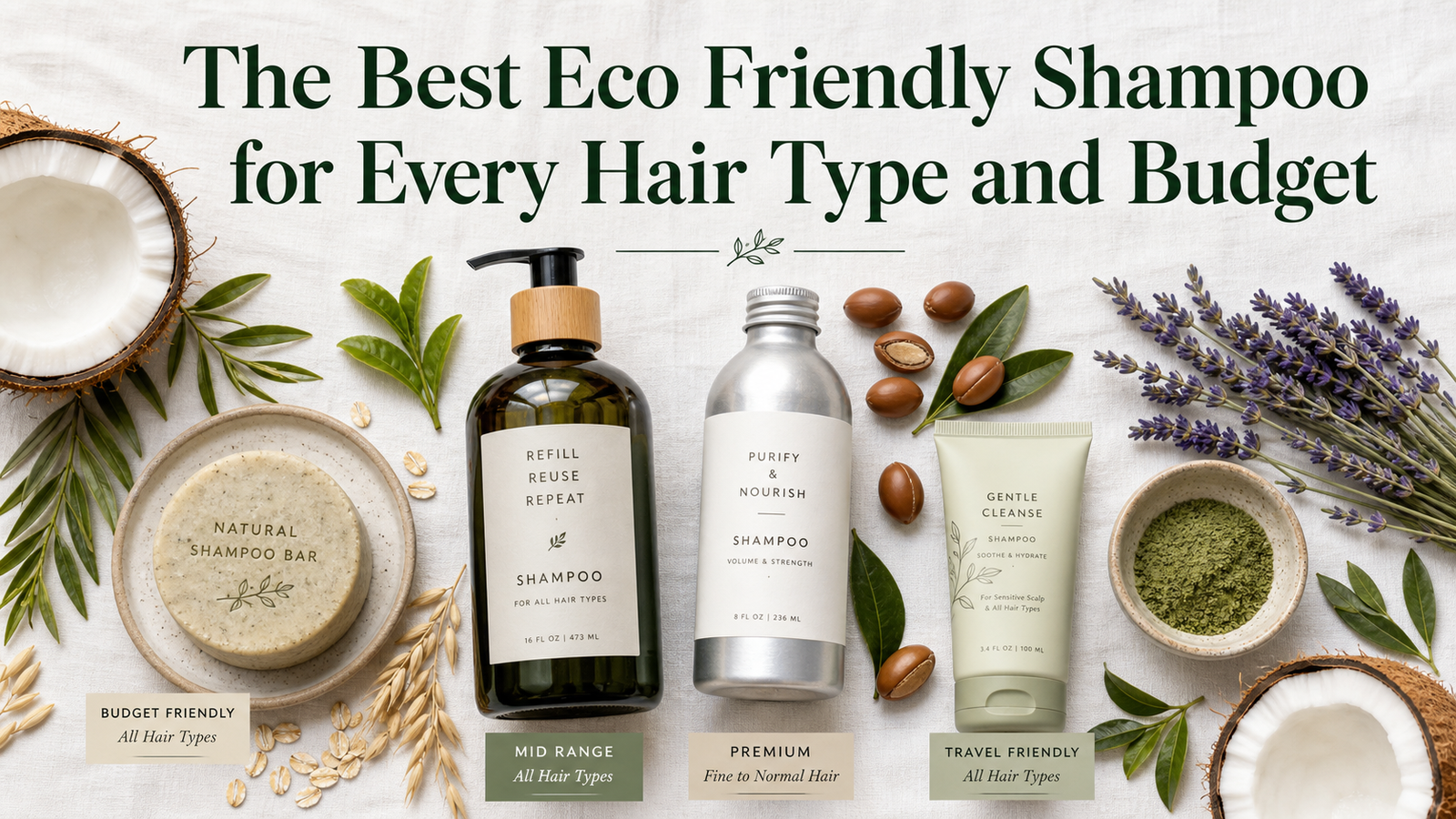
The Best Eco Friendly Shampoo for Every Hair Type
Flip your shampoo bottle over and read the label. Sodium laureth sulfate, dimethicone, methylchloroisothiazolinone — and that is usually just the first six lines. You massage these ingredients into your scalp every single day.
Most people use shampoo daily for their entire adult life. That makes it one of the highest-frequency chemical exposures in any personal care routine. Switching to a genuine eco friendly shampoo is one of the most impactful clean beauty swaps you can make.
Here is the problem: “clean,” “natural,” and “non-toxic” are unregulated terms. Any brand can use them on any product. There is no legal standard they must meet.
This guide cuts through the marketing language. It covers specific ingredients to avoid, certifications that actually mean something, and honest brand comparisons by hair type. The goal is one clear, informed switch — not a year of disappointing “natural” shampoos.
No fearmongering. No miracle claims. Just a practical guide to the best natural shampoo brands that have earned their clean credentials.
U.S. Shampoo Regulations Are Weaker Than You Think
U.S. personal care products fall under the 1938 Federal Food, Drug, and Cosmetic Act. That law has barely changed in over 85 years. The FDA does not review or approve shampoo formulas before they reach store shelves.
Brands must list ingredients on packaging. However, they do not have to disclose what is inside a “fragrance” declaration. That single word can legally represent hundreds of individual chemicals — including allergens, endocrine disruptors, and reproductive toxins.
Why Scalp Contact Matters More Than You Think
The scalp is one of the most permeable skin surfaces on the body. Studies show it absorbs topical compounds faster than forearm or back skin used in standard dermatology research.
Shampoo is not a true rinse-off product. You massage it into your scalp, let it sit during lathering, and residue remains after rinsing. A non-toxic shampoo that avoids high-concern ingredients is a practical response to this — not just a wellness trend.
How Conventional Shampoo Affects Your Water Supply
Every shower sends shampoo directly into municipal wastewater systems. Standard treatment removes some synthetic fragrance compounds — but not all. It does not reliably remove cyclic silicones (D4, D5, D6) either.
Cyclic silicones are persistent environmental contaminants. D4 and D5 are restricted above 0.1% in rinse-off cosmetics across the EU. However, they remain unrestricted in U.S. shampoos. Switching to a silicone-free, fragrance-free formula reduces your household’s chemical output with every wash.
The Ingredient Breakdown: What’s Actually in Drugstore Shampoo
Most conventional shampoos follow the same formula. They combine surfactants, conditioning agents, preservatives, and fragrance. Together, these represent the chemical profile that clean shampoo brands are built to replace.
Surfactants: How Conventional Shampoo Cleans Your Hair
Sodium lauryl sulfate (SLS) and sodium laureth sulfate (SLES) are the most common surfactants in conventional shampoos. They foam well and clean effectively. However, SLS is a known skin irritant that disrupts the scalp’s moisture barrier, which can trigger or worsen seborrheic dermatitis in sensitive individuals.
SLES is milder than SLS. But its manufacturing process can introduce 1,4-dioxane — a probable human carcinogen identified by the EPA. It does not appear on labels because it is a byproduct, not an intentional ingredient. The FDA recommends reducing it, but has not banned it.
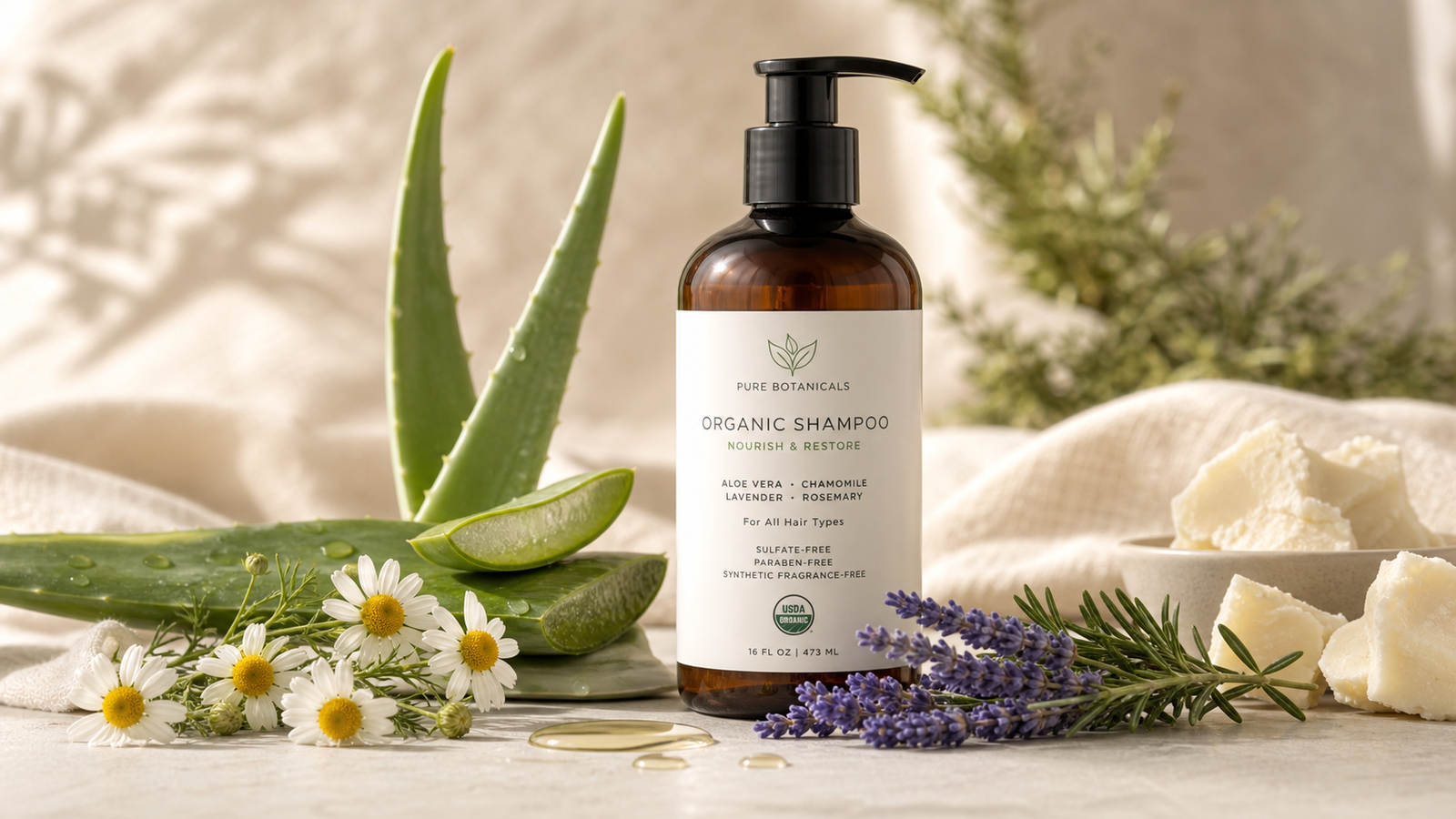
Sulfate free shampoo replaces SLS and SLES with milder options. Sodium cocoyl isethionate, coco glucoside, and decyl glucoside clean effectively without stripping or irritating the scalp.
Silicones: Why They Create a Hair Health Cycle
Dimethicone, cyclomethicone, and cyclopentasiloxane (D5) are silicone conditioning agents in most conventional shampoos. They coat the hair shaft with a synthetic polymer film. That film creates immediate smoothness, shine, and easy detangling.
Over time, silicone buildup accumulates. It weighs hair down, reduces volume, and blocks moisture from reaching the hair cortex. Removing it requires a sulfate shampoo or a chelating clarifying wash (meaning a wash specifically formulated to remove mineral and product buildup). This buildup cycle is why switching to a clean formula can feel rough for 2–4 weeks.
Preservatives: What Replaced Parabens (and Why It Matters)
Parabens (methylparaben, propylparaben, butylparaben) dominated personal care preservation for decades. They are effective and inexpensive. However, they are also estrogenic endocrine disruptors — meaning they mimic estrogen in the body — and multiple studies have detected them in human breast tissue samples.
Many brands moved away from parabens under consumer pressure. But the replacements are not always safer. Methylchloroisothiazolinone (MCI) and methylisothiazolinone (MI) are classified as contact allergens by the EU Scientific Committee on Consumer Safety. They are restricted in leave-on EU cosmetics but remain in use in U.S. rinse-off shampoos.
A clean preservative system uses phenethyl alcohol, sodium benzoate/potassium sorbate, or rosemary extract. These are gentler alternatives with better safety profiles at the concentrations used in formulation.
“Clean,” “natural,” “green,” and “non-toxic” are unregulated marketing terms. Any brand can use them on any product. A shampoo labeled “clean” can legally contain synthetic fragrance, MI/MCI preservatives, and undisclosed allergens.
The only meaningful verification is an EWG Skin Deep score of 1–2 at ewg.org/skindeep, COSMOS organic certification, or USDA Certified Organic status. Each requires independent, ingredient-level verification.
6 Shampoo Ingredients Worth Avoiding — and Why
These are the ingredients with the strongest evidence for concern in daily-use shampoo. The goal is calibrated judgment — not reflexive avoidance. Not every conventional ingredient is dangerous, and not every “natural” one is safe.
A known skin irritant and moisture barrier disruptor at concentrations used in personal care products. The strongest case for avoidance is for people with scalp sensitivity, eczema, or dermatitis. Better alternatives: sodium cocoyl isethionate, decyl glucoside, coco glucoside.
A single label term that can contain hundreds of individual compounds. Common allergens like linalool and limonene must be disclosed in EU leave-on products — but not in U.S. shampoos. For scalp-sensitive individuals, fragrance-free is the only verified safe standard.
Estrogenic endocrine disruptors found in human tissue samples. EU-restricted for children and high-exposure areas. Propyl- and butylparaben carry higher estrogenic activity than methyl- and ethylparaben. Safer preservative alternatives are widely available.
Common paraben replacements classified as contact allergens by EU safety authorities. Restricted in EU leave-on cosmetics. Still used in U.S. rinse-off shampoos. High-priority avoidance for anyone with a history of contact dermatitis or scalp reactions.
Persistent environmental contaminants classified as bioaccumulative by the EU. Restricted in EU rinse-off cosmetics above 0.1%. Their primary concern is environmental. From a hair perspective, they contribute to scalp buildup and reduce moisture penetration over time.
PEG compounds can be contaminated with 1,4-dioxane and ethylene oxide as manufacturing byproducts — neither of which appears on ingredient labels. Third-party testing has detected 1,4-dioxane in PEG-containing products at variable levels. EWG rates them at moderate concern.
You do not need to eliminate every flagged ingredient at once. Start with the swap that matches your top concern:
- Scalp sensitivity → avoid SLS and MI/MCI first
- Fragrance allergy → fragrance-free is non-negotiable
- Hormonal concern → avoid propyl- and butylparaben; check EWG Skin Deep for your current product
- Environmental priority → avoid cyclic silicones and PEG compounds
One category at a time is more sustainable than a complete overnight overhaul.
5 Certifications That Verify a Shampoo Is Truly Clean
Certification is the only way to verify clean claims independently of brand marketing. These five carry real weight in the personal care category.
EWG Verified
All ingredients must score 1 (lowest hazard) on EWG Skin Deep. Full fragrance disclosure required. Manufacturing practices reviewed. One of the most rigorous U.S. certifications available. Briogeo and Acure carry it on select products.
→ Verify at ewg.org/skindeep
USDA Certified Organic
At least 95% of ingredients must be certified organic. The remaining 5% must come from a restricted approved list. The most rigorous organic certification for personal care in the U.S. Innersense Organic Beauty holds this on several products.
→ Look for the USDA Organic seal on the label
COSMOS Organic / COSMOS Natural
European standard administered by Ecocert, BDIH, and Cosmebio. Requires certified organic ingredients and restricts synthetic fragrance and certain preservatives across the full formulation. Increasingly available on U.S. market products.
→ Verify at cosmos-standard.org
Leaping Bunny / PETA Cruelty-Free
Certifies no animal testing at any stage of development or ingredient sourcing. Does not certify ingredient safety or organic content. Evaluate alongside ingredient certifications — not instead of them.
→ Covers testing practices only, not ingredient quality
B Corp Certified
Brand-level certification for verified social and environmental performance. Does not certify individual product ingredients. It signals genuine organizational commitment to third-party accountability across the whole business.
→ Covers the company, not individual products
Shampoo Bar vs. Liquid: Which Format Is Right for You
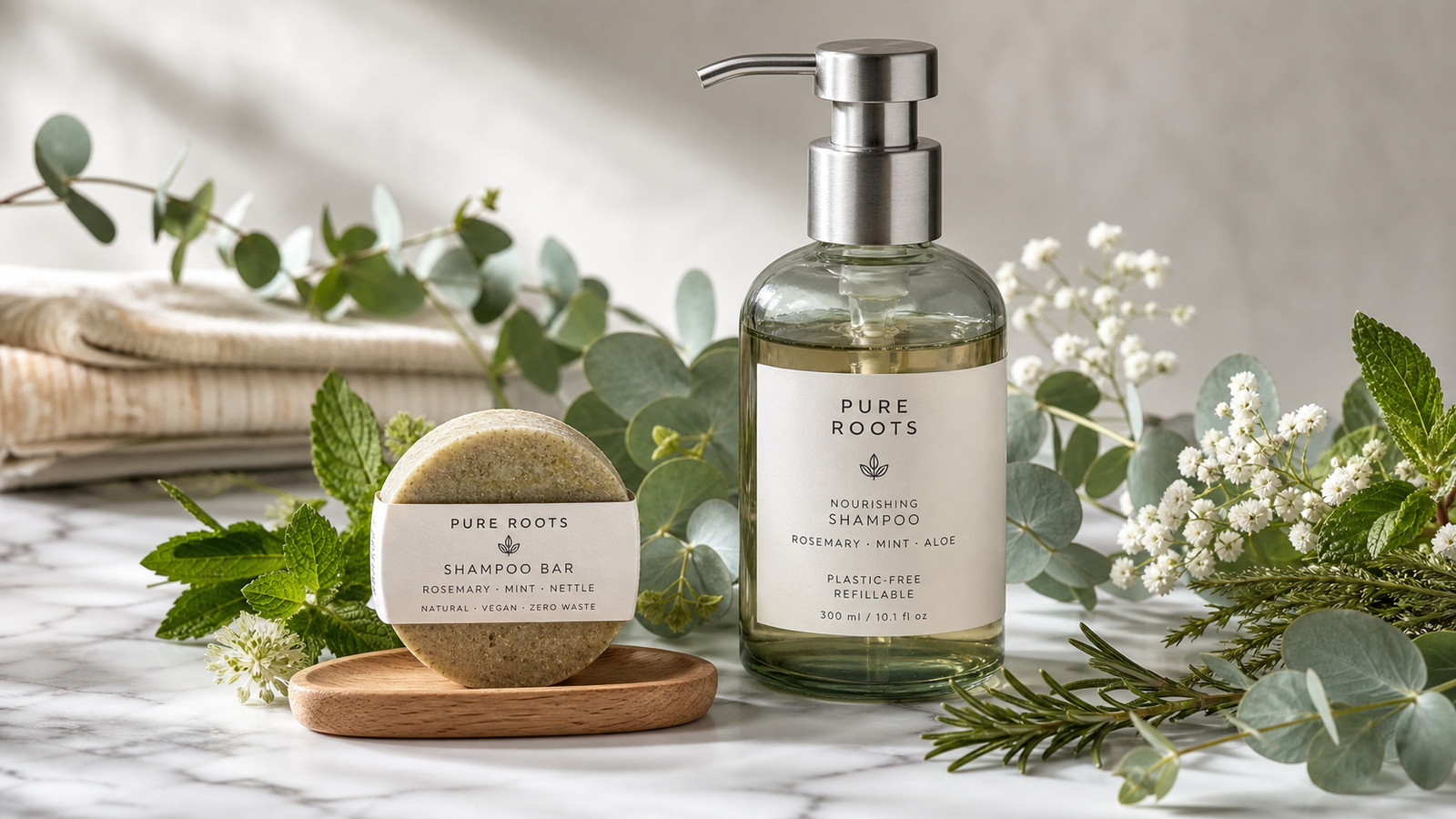
Shampoo bars are one of the most recommended eco swaps in zero-waste content. The environmental case is strong. However, the performance case is more nuanced than most sustainable living guides acknowledge.
Real Advantages of Choosing a Shampoo Bar
- Zero plastic packaging — the most complete plastic waste elimination available in the shampoo category
- Highly concentrated — most bars replace 2–3 liquid bottles, lowering your cost-per-wash despite the higher upfront price
- Travel-friendly — no liquid restrictions, no leak risk, minimal weight in your bag
- Lower manufacturing water footprint — conventional liquid shampoo is 70–80% water by weight; bars ship only the active ingredients
- Better formulas than a decade ago — modern sulfate-free bars from HiBar and Ethique perform well for most hair types in soft to moderately hard water
Honest Limitations Before You Switch to a Bar
- Hard water incompatibility — in hard water areas, bar surfactants react with calcium and magnesium ions to leave a waxy buildup on the hair shaft. A diluted apple cider vinegar rinse (1 tablespoon per cup of water) can help. However, it does not fully resolve the issue for all hair types. Check your water hardness before committing.
- Learning curve — apply the bar directly to your scalp (not lathered in hands) for best results. Most users find lather improves significantly after 2–3 uses as they adjust their technique.
- Not ideal for all hair types — very dry, highly porous, or chemically processed hair may find bars drying regardless of water hardness. Use a matched solid conditioner bar alongside any shampoo bar transition.
- Store it dry — a bar left sitting in water dissolves prematurely. Always use a draining soap dish between washes to get full value from each bar.
Look up your local water hardness in your municipal utility’s annual water quality report. Most publish levels in mg/L or grains per gallon (GPG).
- Soft (under 60 mg/L / 3.5 GPG) — shampoo bars will work well
- Moderately hard (60–120 mg/L / 3.5–7 GPG) — workable with a vinegar rinse on hand
- Hard to very hard (above 120 mg/L / 7 GPG) — a refillable liquid like Plaine Products is likely a better fit
The USGS also publishes a national water hardness map if your utility report is hard to find.
The 6 Best Eco Friendly Shampoo Brands — Verified and Tested
Each brand below was selected for independently verifiable ingredient credentials, reliable performance across its target hair types, and sustainability commitments that go beyond packaging color.
Quick-Reference Brand Comparison
| Brand | Best For | Key Certification | Price Range | Format |
|---|---|---|---|---|
| Briogeo | All hair types; full-range household | EWG Verified | $28–$42 | Liquid |
| Innersense | Curly, dry, color-treated hair | USDA Certified Organic | $22–$36 | Liquid |
| Plaine Products | Zero-plastic priority | Vegan, Cruelty-Free | $22–$26 | Refillable aluminum |
| HiBar | Shampoo bar entry point | Sulfate-free, plastic-free | $9–$12 | Bar |
| Rahua | Dry, damaged, color-treated hair | COSMOS Organic | $38–$46 | Liquid |
| Acure | Budget-conscious first switch | EWG Verified | $9–$13 | Liquid |
Briogeo — Best for All Hair Types
Briogeo is EWG Verified across its core shampoo line. Every product meets the strictest independent ingredient safety standard available for U.S. personal care. Formulas are sulfate-free, silicone-free, paraben-free, and fragrance-free across several key lines.
The range covers every common hair concern. The Be Gentle Be Kind line targets fine and color-treated hair. Scalp Revival addresses seborrheic dermatitis and buildup. Don’t Despair Repair handles damaged and chemically processed hair. Price: $28–42.
→ Shop Briogeo EWG Verified Clean Shampoo
Innersense Organic Beauty — Best for Curly and Dry Hair
Innersense holds USDA Certified Organic status on its core products. It offers fragrance-free options, color-safe formulas, and a Curly Girl Method compatible curl line. Additionally, its Sweet Spirit Leave-In and Hydrating Hair Masque are as well-reviewed as the shampoos themselves.
This is the strongest full-system brand for dry, curly, or color-treated hair. It suits buyers who want USDA certified organic credentials across a complete routine. Price: $22–36.
→ Shop Innersense USDA Certified Organic Shampoo
Plaine Products — Best Zero-Plastic Liquid Shampoo
Plaine Products uses a closed-loop refillable aluminum bottle system. You buy the shampoo, use it, return the empty bottle with a prepaid label, and receive a refill. Zero single-use plastic across the entire lifecycle.
Formulas are vegan, cruelty-free, sulfate-free, and silicone-free. One caveat: the refill system requires 1–2 weeks of planning ahead. It is not ideal for buyers who need next-day replenishment. Price: $22–26 per bottle.
→ Shop Plaine Products Refillable Zero-Plastic Shampoo
HiBar — Best Shampoo Bar for Beginners
HiBar makes sulfate-free solid bars by hair type: Volume (fine or oily), Moisturize (dry or damaged), and Maintain (normal). All come in plastic-free packaging and are sold at Target and major retailers. The primary surfactant is sodium cocoyl isethionate — a coconut-derived mild cleanser.
At $9–12 per bar (about $0.15–0.20 per wash), HiBar is the most accessible shampoo bar entry point with hair-type-matched formulas. Price: $9–12.
→ Shop HiBar Sulfate-Free Shampoo Bars by Hair Type
Rahua — Best for Dry and Damaged Hair
Rahua sources rahua oil (ungurahua nut oil — a nutrient-rich Amazonian plant oil) from indigenous communities using fair trade practices. That oil is the primary conditioning agent in its COSMOS certified organic shampoo. It performs exceptionally well on dry, damaged, and color-treated hair.
Rahua is the most premium-priced brand in this guide. It suits buyers with damaged or color-treated hair who want the most conditioning-forward clean shampoo available. Price: $38–46.
→ Shop Rahua Certified Organic Amazonian Plant-Based Shampoo
Acure — Best Budget Clean Shampoo
Acure is EWG Verified, vegan, and cruelty-free — and sold at Target, Whole Foods, and Amazon for $9–13 per bottle. That makes it the most affordable EWG Verified shampoo brand available. Its range covers clarifying, moisturizing, color-care, and volumizing formulas.
Performance is reliable for normal to oily hair. However, it is not the strongest pick for very dry or damaged hair. For a first clean shampoo switch, it is consistently the best starting point. Price: $9–13.
Find the Right Clean Shampoo for Your Specific Hair Type
Mismatched hair type selection is the top reason clean shampoo transitions fail. Find your type below and go straight to the right pick.
Clean Shampoo Picks by Hair Type
-
🛢️ Oily Scalp / Fine Hair
Briogeo Scalp Revival Charcoal + Tea Tree (EWG Verified, targets scalp buildup without stripping) or HiBar Volume bar (sulfate-free, lightweight, available at Target) -
🌿 Dry or Damaged Hair
Innersense Hydrating Cream Shampoo (USDA Organic, deeply conditioning, color-safe) or Rahua Classic Shampoo (COSMOS Organic, best-in-class for chemically damaged hair) -
🎨 Color-Treated Hair
Innersense Color Awakening Hairbath (USDA Organic, color-safe, gentle enough for daily use) or Briogeo Be Gentle Be Kind Banana + Coconut (EWG Verified, sulfate-free, color-safe) -
🌀 Curly Hair (Curly Girl Method Compatible)
Innersense I Create Volume Shampoo + Sweet Spirit Leave-In system (USDA Organic, Curly Girl Method compatible) or Briogeo Curl Charisma Rice Amino + Avocado (EWG Verified, sulfate-free, defines curl pattern) -
🩺 Sensitive Scalp or Dermatitis
Briogeo Scalp Revival (EWG Verified, fragrance-free option available) or Innersense fragrance-free formulas (USDA Organic, no essential oils for maximum sensitivity safety) -
🧼 Shampoo Bar Format
HiBar in your matching hair type formula (best accessible entry point) or Ethique in hard water areas paired with a matched solid conditioner bar -
💰 Budget-Conscious First Switch
Acure Clarifying Lemon + Echinacea (oily/normal hair) or Acure Mega Moisture (dry hair) — EWG Verified at $9–13, available at Target and Amazon
The 2–4 Week Transition: What to Expect After Switching
The transition period is real, predictable, and temporary. Knowing what to expect is the difference between giving up at week two and succeeding long-term. Most clean shampoo brands quietly bury this in their FAQ — so here it is upfront.
Why Hair Feels Different in the First Few Weeks
When you switch from a silicone-heavy shampoo to a silicone-free formula, your hair enters a detox phase. The silicone film built up over months is no longer being reapplied. However, it takes several washes to fully remove what is already there.
During this phase — typically 2–4 weeks — hair may feel dry, waxy, or flat. This is not the clean shampoo failing. It is the silicone removal process running its course. What feels like dryness is often hair finding its natural texture without a synthetic coating for the first time.
Five Steps to Make the Transition Faster and Smoother
- Start with a clarifying wash. Use a chelating shampoo (a formula designed to strip mineral and silicone buildup) on day one — even a conventional one, just once. This removes existing buildup in a single step instead of gradually, which shortens the transition significantly.
- Switch shampoo and conditioner at the same time. Keeping a silicone conditioner while using a clean shampoo defeats the purpose. The conditioner will re-deposit silicone that the shampoo is working to remove.
- Wash every other day if possible. Reducing wash frequency during the transition allows your scalp’s natural oil production to recalibrate. Many people find they need fewer washes per week after fully transitioning from sulfate shampoo.
- Commit to a full four weeks. Fine hair may clear in two weeks. Thick, coarse, or processed hair can take four to six weeks. Most people who abandon clean shampoo do so in week two or three — just before the transition resolves.
- Massage instead of relying on lather. Clean shampoos produce less foam than sulfate formulas. That is normal — it does not mean inadequate cleansing. Use a 60–90 second fingertip scalp massage instead of using foam volume as a proxy for clean.
Conventional vs. Eco Friendly Shampoo: Side-by-Side Breakdown
| Factor | Conventional Drugstore Shampoo | Eco Friendly Clean Shampoo |
|---|---|---|
| Primary surfactant | SLS or SLES — effective but harsh; SLES carries 1,4-dioxane contamination risk | Sodium cocoyl isethionate, coco glucoside, decyl glucoside — mild, plant-derived, no dioxane risk |
| Conditioning agents | Dimethicone, cyclopentasiloxane — synthetic polymers that build up and block moisture over time | Plant oils (argan, jojoba, rahua), panthenol, hydrolyzed proteins — biodegradable, no buildup |
| Preservative system | Parabens or MI/MCI — estrogenic concern (parabens) or contact allergen concern (MI/MCI) | Phenethyl alcohol, sodium benzoate/potassium sorbate — gentler, better safety profiles at formulation concentrations |
| Fragrance disclosure | “Fragrance” — undisclosed mixture; can contain hundreds of chemicals including allergens | Essential oil blends (disclosed) or fragrance-free; EWG/COSMOS brands require full fragrance disclosure |
| Certifications | “Dermatologist tested,” “hypoallergenic,” “natural” — unverified marketing terms with no third-party standard | EWG Verified, USDA Certified Organic, or COSMOS Organic — each requires independent ingredient-level verification |
| Packaging | Single-use plastic; rarely recyclable through curbside programs due to mixed-material construction | Plastic-free bars (HiBar), refillable aluminum (Plaine Products), or PCR plastic with take-back programs |
| Environmental footprint | Cyclic silicones and synthetic fragrance enter waterways; silicones are persistent contaminants | Biodegradable surfactants, no persistent silicone contaminants, RSPO-certified palm sourcing where applicable |
| Price per wash | $0.05–0.15 (drugstore); $0.20–0.40 (prestige conventional) | $0.10–0.20 (Acure, HiBar); $0.25–0.50 (Briogeo, Innersense); $0.40–0.65 (Rahua) |
Frequently Asked Questions
For most people, yes — after the transition period. Silicone-free formulas improve scalp health, moisture retention in dry hair, and curl definition over time. However, results depend on choosing a formula matched to your hair type. Start with the hair type guide above to find the right pick for you.
Sulfate-free means the shampoo uses no SLS or SLES as its primary cleanser. It matters most for color-treated hair (sulfates strip color faster), sensitive scalps (SLS is a known irritant), and dry or porous hair types. For normal or oily hair, the difference is subtler — but eliminating the 1,4-dioxane contamination risk from SLES is worthwhile regardless of hair type.
Yes. Several brands in this guide are specifically formulated for color-treated hair and are sulfate-free — the primary requirement for color longevity. Innersense Color Awakening Hairbath and Briogeo Be Gentle Be Kind are both verified color-safe. Avoid any shampoo with chelating agents like EDTA on recently colored hair, as they can lift color.
Modern sulfate-free bars like HiBar and Ethique are color-safe. Older soap-based bars that use sodium hydroxide (lye) as the saponification agent are not — their high pH can lift color and roughen the cuticle. Check the label: sodium cocoate or sodium palmate as the primary surfactant means it is soap-based and not color-safe. Sodium cocoyl isethionate means it is detergent-based and color-safe.
Look up the specific product on the EWG Skin Deep database and check for a score of 1–2. Alternatively, look for EWG Verified, USDA Certified Organic, or COSMOS Organic on the label. Do not rely on “clean,” “natural,” or “non-toxic” label language — these terms are unregulated and can appear on any product.
This is almost always the silicone transition period. Accumulated silicone from your previous shampoo is being removed, and the waxy feeling is buildup in the process of clearing. Do a chelating clarifying wash on day one — before your first use of the clean shampoo — and most people resolve the transition in 1–2 weeks rather than 4.
Acure is the most affordable EWG Verified shampoo brand. It costs $9–13 per bottle and is available at Target, Whole Foods, and Amazon. It performs reliably for normal to oily hair types. For dry or damaged hair at a similar price point, HiBar Moisturize bar ($9–12) is the next best option with a clean ingredient profile.
Ready to Make the Switch?
Start with the brand that matches your hair type and budget. If you are unsure, Acure is the lowest-risk entry point — EWG Verified at $9–13, available at Target and Amazon, and reliable for normal to oily hair on a first clean shampoo transition.
For dry, curly, or color-treated hair, Innersense is the strongest full-system option. For a completely plastic-free routine, HiBar (bar format) or Plaine Products (refillable liquid) are both strong choices with clean formulas.
→ Shop Briogeo (EWG Verified — all hair types)
→ Shop Innersense (USDA Organic — curly & dry hair)
→ Shop Plaine Products (zero-plastic refillable)
→ Shop HiBar (shampoo bar — plastic-free)
→ Shop Rahua (COSMOS Organic — damaged hair)
→ Shop Acure (EWG Verified — budget-friendly)