Zero Waste Home Swaps: 7 Room-by-Room Picks That Stick
This post has affiliate links. As an Amazon Associate I earn from qualifying purchases, at no extra cost to you. How I pick products.
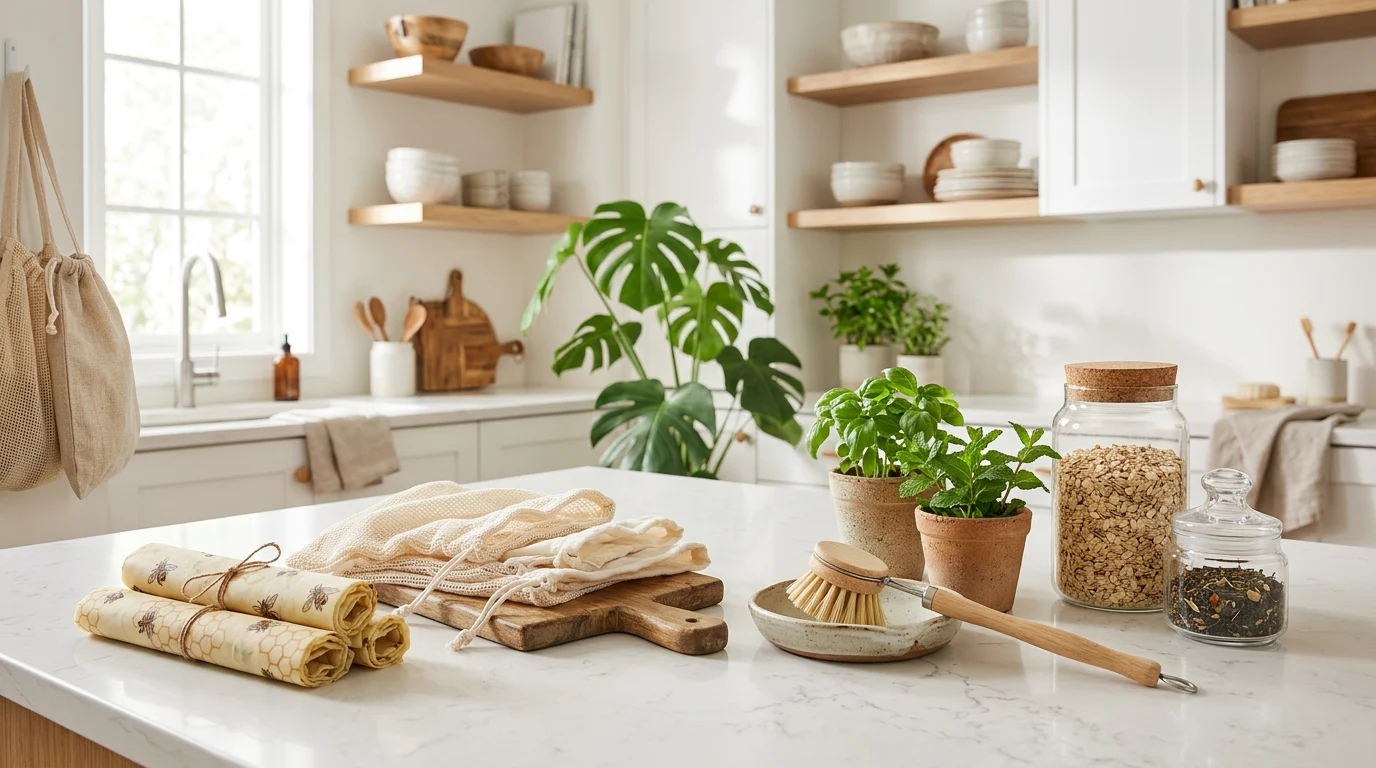
Zero waste home swaps work best one room at a time. Here are the seven that stuck for me in the kitchen, bathroom, and laundry room, plus the honest trade-off of each one.
Key Takeaways
- Americans made about 4.9 pounds of trash per person per day in 2018, the latest year in the EPA’s national data. So small daily swaps add up.
- Go one room at a time. Start where you toss the most single-use stuff, which for me was the kitchen.
- Most of these swaps are reusable or refillable, so you buy less plastic every month.
- “Biodegradable” is not a free-for-all word. The FTC says it should mean the whole product breaks down within about a year after normal disposal.
- You don’t need all seven. However, even one or two swaps in your busiest room is a real start.
For two years I thought I was making progress on zero waste home swaps. Turns out I was just moving plastic from one drawer to another.
The kitchen looked cleaner. But the bathroom still had six bottles of stuff I couldn’t pronounce.
In other words, I wasn’t reducing waste. I was reorganizing it.
So this guide covers the swaps that stuck for me, room by room. First the kitchen, then the bathroom, then the laundry. I tested all of it in a real apartment in 2026, and I’m not a natural minimalist.
Why zero waste home swaps work better room by room
Most zero waste guides hand you a list of 47 things to buy and call it a plan. That’s not a plan, though. It’s a reason to close the tab and do nothing.
Going room by room works because it gives you one focus. You finish one space, you see the result, and then you want to keep going.
I started with my kitchen because that’s where I used the most single-use plastic. One month in, I’d cut out paper towels, plastic wrap, and four cleaning products.
After that came the bathroom, and the laundry room was last. Honestly, it was also the easiest once I’d built the habit.
So why bother at all? Well, in 2018, the most recent year in the EPA’s national waste data, Americans made about 4.9 pounds of trash per person per day.
Also, the EPA’s own reduce and reuse tips include reusable rags, cloth bags, and reusable containers. In short, everyday swaps are exactly the kind of change it recommends.
Start here
Pick one room and stick with it for 30 days before you move on. Otherwise, trying to overhaul everything at once is how good intentions end up in the recycling bin.
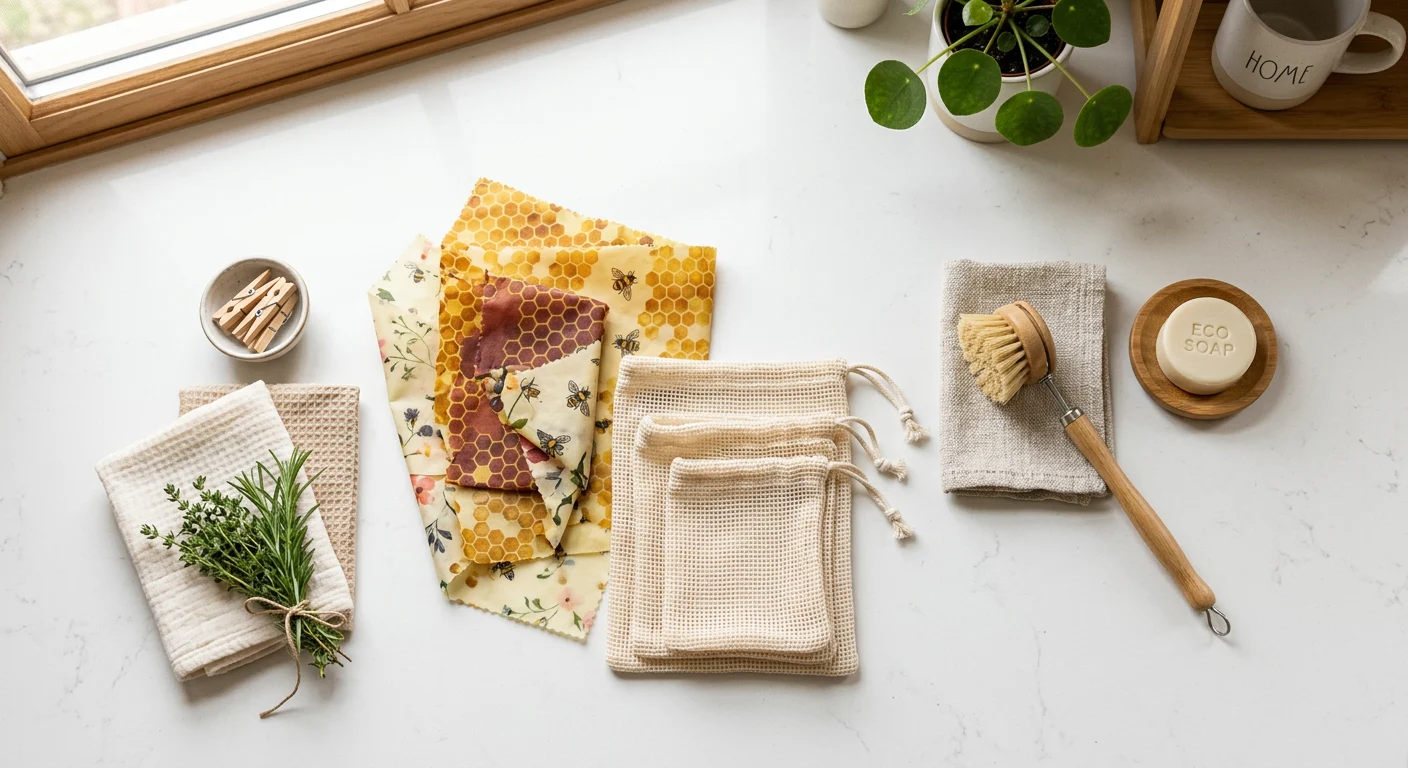
Kitchen swaps: where I cut the most plastic
In my apartment, the kitchen was where most of my single-use plastic lived. Paper towels, plastic wrap, and dish soap bottles all added up. Fortunately, each one has a reusable replacement, too.
1. Swap paper towels for a Swedish dishcloth
Swedish dishcloths are the one swap I recommend to everyone. According to Wettex, its cloth is a cotton and cellulose blend that soaks up to 15 times its weight. Wettex also says one cloth replaces up to 15 rolls of paper towels and can go in your compost when it wears out.
My parents were skeptical at first. But now my dad won’t use anything else.
Best for: spills and wipe-downs · Outside proof: none I could confirm; the claims above are Wettex’s own
The trade-off: in my kitchen they take a while to dry between uses. So I keep two or three on rotation.
2. Swap plastic wrap for beeswax wrap
Beeswax wrap is the swap people ask me about most. Bee’s Wrap says its wraps are made from GOTS-certified organic cotton, beeswax, plant oil, and tree resin. Then you press one around a bowl, half a lemon, or a sandwich with your hands.
I bought a set after noticing I went through a roll of plastic wrap every two weeks. Since then, I’ve had the same three wraps for eight months. Bee’s Wrap says they last up to a year with regular use and proper care.
Best for: bowls, cut fruit, sandwiches · Outside proof: GOTS organic cotton, per Bee’s Wrap
The trade-off: it doesn’t seal airtight the way plastic wrap does. Also, Bee’s Wrap says not to use it with raw meat or fish.
3. Swap bottled dish soap for a dish soap bar
A dish soap bar is the kitchen swap most people overlook. For example, Meliora’s bar is made with organic coconut and sunflower oil soap, and the company says it’s palm oil-free. Also, it comes in a plastic-free paperboard box, so there’s no bottle at all.
Meliora also says it has been a Certified B Corporation since 2015. In addition, it lists the bar as MADE SAFE certified.
Best for: cutting plastic at the sink · Outside proof: B Corp and MADE SAFE, per Meliora
The trade-off: you need a wet brush or sponge to work up a lather. It adds a few seconds per wash, and I think it’s worth it.
Worth knowing
“Biodegradable” is not an empty word under FTC rules. The FTC’s Green Guides say a company needs proof that the whole product breaks down within about a year after normal disposal. So be wary of that label on anything headed for a landfill.
Bathroom swaps: fewer bottles on the shelf
The bathroom was my second room. Shampoo, conditioner, body wash, and cleaner bottles take up a lot of plastic for a small space.
Honestly, this room took longer because I was attached to my routines. So swap one thing at a time, and give it two or three weeks before you decide it doesn’t work.
4. Swap bottled shampoo for a shampoo bar
Ethique is the bar brand I’ve tried most. According to Ethique, one shampoo bar lasts as long as three bottles of liquid shampoo. The company also says its shampoos have no SLS or SLES sulfates and come in home-compostable packaging.
My brother asked what I switched to after he noticed there were no bottles on my shower shelf. Since then, he’s been using the same bar for two months.
Best for: cutting shower bottles · Outside proof: none I could confirm; the claims above are Ethique’s own
The trade-off: a bar feels different from liquid shampoo. So give it a fair few weeks before you judge it.
I wasn’t reducing waste. I was reorganizing it.
5. Swap single-use cleaner bottles for a refillable concentrate
A refillable concentrate cuts the plastic from bathroom cleaner. You keep the spray bottle and refill it, instead of buying a new bottle every time.
I’ve used Branch Basics in my bathroom for about six months. It’s fragrance-free, and it cuts soap scum for me without any fumes. That matters, because my small bathroom has no window.
Also, the Concentrate is listed as MADE SAFE certified on MADE SAFE’s own product list. For a deeper look at how to check any cleaner, see my guide to eco friendly cleaning products that actually check out.
Best for: small bathrooms · Outside proof: MADE SAFE certified (Concentrate)
The trade-off: you dilute the concentrate yourself. After a week or two, though, it becomes routine.
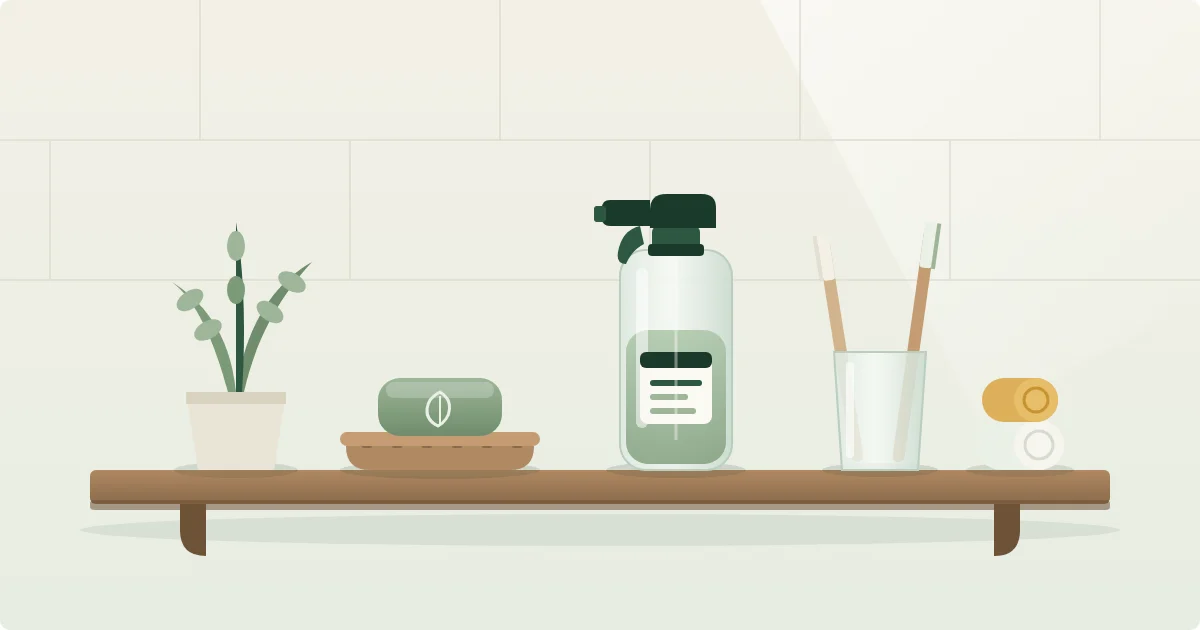
Laundry swaps: the easiest room of all
The laundry room was the easiest room for me, and it’s the one most people leave for last. In fact, two products cover almost all of it: detergent and dryer sheets.
6. Swap the detergent jug for laundry strips
Laundry strips are the clearest detergent swap. For example, Tru Earth says its strips are hypoallergenic and phosphate-free. It also says a 32-strip pack covers up to 64 loads and ships in fully recyclable packaging, with no plastic jug.
I sent a pack to my parents because my mom doubted something that thin could clean. Since then, she’s been using them for four months.
Best for: everyday loads · Outside proof: none I could confirm; the claims above are Tru Earth’s own
The trade-off: a strip is a fixed dose, not a scoop you can adjust. That takes some getting used to.
7. Swap dryer sheets for wool dryer balls
First, think about dryer sheets: they’re used once and then thrown out. Instead, wool dryer balls go back in the dryer load after load.
Friendsheep says its set of six lasts for over 1,000 loads and is fragrance-free. The company also says the balls can cut drying time by up to 40%.
Best for: replacing dryer sheets · Outside proof: none I could confirm; the claims above are Friendsheep’s own
The trade-off: they don’t add scent. So if you love the smell of dryer sheets, this one takes getting used to.
All 7 picks at a glance
Use this table to find your starting point. You don’t need all seven, so pick the one or two that match your biggest waste source.
| Swap | Replaces | Key claim | Pick it if |
|---|---|---|---|
| Wettex Dishcloth | Paper towels | Up to 15 rolls per cloth (Wettex) | You go through a roll a week |
| Bee’s Wrap | Plastic wrap | Lasts up to a year (Bee’s Wrap) | You wrap leftovers daily |
| Meliora Soap Bar | Dish soap bottles | Plastic-free box | You want a bottle-free sink |
| Ethique Shampoo Bar | Shampoo bottles | Lasts like 3 bottles (Ethique) | Your shower shelf is crowded |
| Branch Basics | Cleaner bottles | MADE SAFE certified | You clean a small, closed-in bathroom |
| Tru Earth Strips | Detergent jugs | Up to 64 loads per pack (Tru Earth) | You’re tired of heavy jugs |
| Friendsheep Balls | Dryer sheets | Over 1,000 loads (Friendsheep) | You want fewer things to rebuy |
When a swap isn’t worth it
Still, I’m not going to pretend every swap makes sense for every home. Here’s where I’d hold off.
- You still have plenty of the old stuff: use it up first. After all, tossing a half-full bottle to buy a greener one just creates more waste.
- You’re wrapping raw meat or fish: reach for a glass container with a lid instead. Bee’s Wrap itself says to skip raw meat and fish.
- A swap makes your routine harder: in that case, drop it and try another. After all, a swap you quit after a week saves nothing.
- Some rooms are already lean: then leave them alone. Put your effort where the trash can fills up fastest.
You don’t have to do this all at once
Cutting plastic out of your home isn’t a weekend project. Instead, it’s a series of small choices made one at a time.
So pick one room and one product this week. Then see how it goes before you add the next.
Your turn
Which room are you starting with? Tell me through the contact page, and I’ll suggest the one swap that would cut the most plastic there.
Frequently asked questions about zero waste home swaps
Where do I start with zero waste home swaps?
Start with the room where you throw away the most single-use items each week. For me, that was the kitchen, with paper towels, plastic wrap, and dish soap bottles. So swap one thing, use it for a few weeks, and then move on to the next.
Are zero waste swaps cheaper in the long run?
It depends on the swap and on what you pay now. Reusable items cost more up front, but you rebuy them less often. For example, Friendsheep says its dryer balls last over 1,000 loads, while a dryer sheet is used once.
Do shampoo bars work on all hair types?
Bars come in different formulas, so match the bar to your hair. For example, Ethique sells separate bars for needs like hydration and volume. Also, give a new bar a few weeks before you decide, because it feels different from liquid shampoo.
What does “biodegradable” mean on a cleaning product?
Under the FTC’s Green Guides, a company should have proof that the whole product breaks down and returns to nature within about a year after normal disposal. As a result, the FTC says items headed to landfills generally shouldn’t carry an unqualified biodegradable claim.
Can I use beeswax wrap to cover raw meat?
No. Bee’s Wrap says not to use its wraps with raw meat or fish, and to wash them only in cool water, so you can’t clean them with heat. Instead, use a glass container with a lid for raw meat.
How many zero waste swaps do I need to make a difference?
There’s no magic number. However, a swap you use every day beats five you forget about. So start with the one or two items you throw away most often, and build from there.
Sources (checked September 24, 2026)
- U.S. EPA, National Overview: Facts and Figures on Materials, Wastes and Recycling: 4.9 pounds per person per day in 2018, the latest year covered.
- U.S. EPA, What You Can Do: reuse tips including cloth bags, reusable containers, and reusable rags.
- Federal Trade Commission, Summary of the Green Guides: degradable claims and the one-year standard.
- Wettex USA, Swedish Dishcloths: cotton and cellulose, up to 15 times its weight, up to 15 rolls, compostable.
- Bee’s Wrap, FAQ: materials, GOTS cotton, lasts up to a year, no raw meat or fish, cool water only.
- Meliora, Dish Soap Bar: ingredients, palm oil-free, plastic-free box, MADE SAFE.
- Meliora, B Corp Month: certified B Corporation since 2015.
- Ethique, Product FAQ: one bar lasts as long as 3 bottles, no SLS or SLES, home-compostable packaging.
- Ethique, Shampoo Bars: separate bars such as hydrating and volumizing.
- MADE SAFE, Branch Basics The Concentrate: MADE SAFE certified.
- Branch Basics, Is Branch Basics Safe?: fragrance-free concentrate that you dilute to make each cleaner.
- Tru Earth, Eco-strips Laundry Detergent: hypoallergenic, phosphate-free, 32 strips for up to 64 loads, recyclable packaging.
- Friendsheep, Wool Eco Dryer Balls: over 1,000 loads, fragrance-free, up to 40% less drying time.